


Introduction:
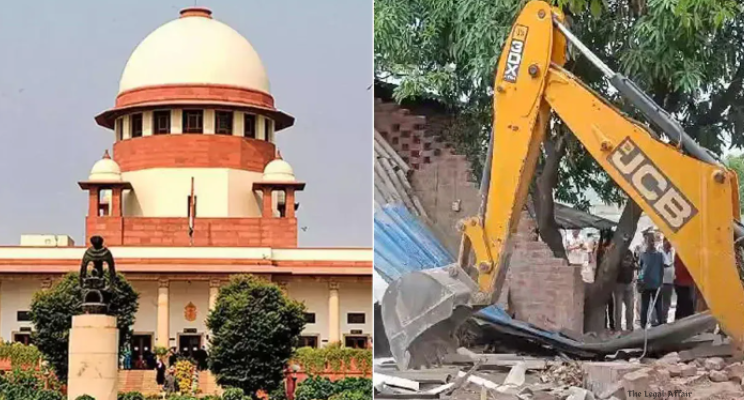
In a significant ruling, the Supreme Court of India, in the case Zulfiqar Haider & Anr. v. State of Uttar Pradesh & Ors., strongly criticized the Uttar Pradesh authorities for demolishing the houses of a lawyer, a professor, two widows, and another individual without following due process of law. A Bench comprising Justices Abhay S. Oka and Ujjal Bhuyan expressed shock at the State’s actions, noting that the demolitions were carried out within 24 hours of serving notices, depriving the affected individuals of their legal right to appeal. The Court took a firm stance against such arbitrary state action and ruled that the petitioners would be allowed to reconstruct their houses at their own cost, subject to an undertaking that they would file appeals within the prescribed time. The Bench further warned that if their appeals were ultimately dismissed, the petitioners would have to demolish their structures. The Supreme Court’s order came after the Allahabad High Court had earlier dismissed the petitioners’ plea against the demolition, holding that they were unauthorized occupants. However, the apex Court found serious procedural lapses in the demolition process, including inadequate notice and the failure to provide a fair opportunity for appeal. The matter has now been adjourned for further hearing.
Arguments of Both Sides:
The petitioners, including advocate Zulfiqar Haider and professor Ali Ahmed, along with two widows and another individual, contended that their demolitions were arbitrary, illegal, and carried out in gross violation of their rights. They argued that they were not trespassers but lessees who had applied for conversion of their leasehold interest into freehold. The lease for the Nazul Plot in Prayagraj, where their houses were situated, had expired in 1996, and their applications for freehold conversion had been rejected in 2015 and 2019. Despite this, they continued to reside on the land, believing that their conversion applications were still under consideration. The petitioners alleged that they had received demolition notices late on a Saturday night, and their homes were demolished the next day, giving them no chance to challenge the action before the appellate authority. They contended that this amounted to a flagrant violation of their constitutional rights, including Article 14 (right to equality) and Article 21 (right to life and livelihood). Their counsel also argued that the authorities had wrongly linked their land to deceased gangster-politician Atiq Ahmed, who was killed in 2023, despite there being no legal connection between them and Ahmed.
On the other hand, the State of Uttar Pradesh, represented by Attorney General R. Venkatramani, defended the demolitions, arguing that due process had been followed. The State claimed that notices had been served multiple times, starting from December 8, 2020, followed by further notices in January 2021 and March 2021. The Attorney General contended that the petitioners were illegally occupying government land, and their lease had expired decades ago. He further asserted that their applications for freehold conversion had been rejected, and therefore, they had no legal rights over the land. The State also emphasized that the land had been earmarked for public use and that there were numerous illegal occupations beyond the lease period that needed to be cleared. The Attorney General cautioned that granting relief to the petitioners could set a precedent that illegal occupants might exploit in future cases.
However, the Supreme Court strongly disagreed with the State’s defence, pointing out serious procedural lapses. Justice Oka noted that the demolition took place within 24 hours of serving the final notice, which was against the principles of natural justice. The Court also observed that earlier notices had been served via affixture, which is not an approved method under the law, and only the last notice was served through registered post. This, the Bench held, was a clear violation of the petitioners’ right to fair process. Furthermore, when the Attorney General argued that the petitioners were not homeless as they had alternate accommodations, Justice Oka responded sternly, stating that the State cannot justify illegal demolitions by arguing that the affected individuals own other houses. The Court held that irrespective of their financial or housing status, every citizen has the right to due process before their property is demolished.
Court’s Judgment:
After hearing both sides, the Supreme Court took a firm stand against the Uttar Pradesh government’s actions, condemning the hasty demolitions as a violation of legal principles. The Court ruled that the petitioners would be allowed to reconstruct their homes at their own expense, subject to specific conditions:
- Filing of Appeals – The petitioners must file appeals within the stipulated time before the relevant appellate authority under Section 27(2) of the UP Urban Planning and Development Act.
- No Equities Over the Land – The petitioners must not claim any ownership rights over the plot until the appeals are decided.
- No Third-Party Interests – The petitioners must not create any third-party rights in the reconstructed properties.
- Demolition if Appeal Fails – If the petitioners’ appeals are ultimately rejected, they must demolish the reconstructed structures at their own cost.
The Court emphasized that this order was being passed strictly in light of the gross irregularities committed in the case. Justice Oka underscored that the judiciary cannot tolerate such arbitrary and unfair actions by the State, stating that if the Court allows such violations in one case, it will set a dangerous precedent for future demolitions. The Bench also rejected the State’s argument that the demolitions were justified due to unauthorized occupation, ruling that due process must always be followed before any eviction or demolition is carried out. The Court also noted that the petitioners’ homes contained valuable personal belongings, including a professor’s entire library, which were destroyed in the hasty demolition. This, the Court observed, was an avoidable injustice that could have been prevented had the authorities acted fairly.
Significantly, the Court also criticized the Allahabad High Court’s dismissal of the petitioners’ plea, pointing out that the High Court had relied on a letter dated September 15, 2020, without giving the petitioners a fair opportunity to contest it. This, the Supreme Court held, was procedurally incorrect and warranted judicial intervention. The Supreme Court has now adjourned the matter for further hearing on March 21, 2025, allowing the petitioners time to file the necessary undertakings.
This landmark decision reaffirms the constitutional principle that no individual can be deprived of their property without following due process. The ruling sends a strong message to government authorities, cautioning them against abusing their demolition powers and reminding them that the rule of law must prevail over administrative expediency. By allowing the reconstruction of the demolished homes, the Supreme Court has upheld fundamental principles of fairness, justice, and due process, ensuring that affected individuals are not left helpless against arbitrary state action.