


Introduction:
The Madras High Court has dismissed a Public Interest Litigation (PIL) challenging the advertisement of “Vimal Elaichi”, which allegedly served as a surrogate advertisement for “Vimal Pan Masala”, observing that constitutional courts cannot exercise their extraordinary jurisdiction on the basis of speculation, social media rumours or unverified information. The Court emphasised that a public interest petitioner must place credible and verifiable material before the Court before seeking judicial intervention against an individual or commercial establishment.
A Division Bench comprising Chief Justice S.A. Dharmadhikari and Justice G. Arul Murugan delivered the judgment in a petition filed by D. Rakesh, a resident of Madurai, reported as 2026 LiveLaw (Mad) 541. The petitioner sought an inquiry into the advertising practices of PB Agro LLP, alleging that the company was indirectly promoting pan masala through advertisements ostensibly intended to market its elaichi product.
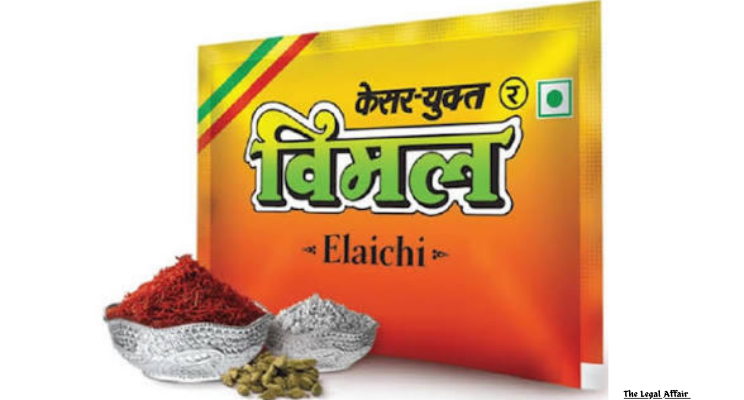
The controversy arose from advertisements of Vimal Elaichi, which were allegedly being displayed across television channels, newspapers, social media platforms and outdoor advertising spaces, including hoardings. The advertisements featured well-known actors and were extensively circulated. According to the petitioner, the scale of expenditure involved in promoting a cardamom-based product was disproportionate to the nature of the commodity being advertised. He questioned whether the real objective was to popularise Vimal Pan Masala under the guise of advertising Vimal Elaichi.
The petitioner claimed that PB Agro LLP manufactured both pan masala and Kesar Elaichi, a product comprising cardamom and saffron. He further pointed out that both products were registered with the Food Safety and Standards Authority of India (FSSAI). According to him, the similarity in branding and promotional strategies indicated that the elaichi advertisements were intended to maintain public familiarity with the pan masala brand without directly advertising the tobacco-related product.
The petition also referred to a notice issued by the Maharashtra Food and Drug Administration, which had allegedly linked Vimal Elaichi with Vimal Pan Masala. The petitioner argued that the Tamil Nadu authorities had failed to take comparable action despite the existence of an order issued by the State Commissioner of Food Safety concerning tobacco and nicotine-based chewable products.
On this basis, the petitioner sought directions for an investigation into the company’s advertising activities and appropriate action against the manufacturers. He also requested that the advertisement be stopped on the ground that it allegedly violated several statutory and regulatory provisions.
The legal framework invoked by the petitioner included the Food Safety and Standards Act, 2006, the Food Safety and Standards (Advertising and Claims) Regulations, 2018, the Consumer Protection Act, 2019, the Central Consumer Protection Authority’s Guidelines of 2022, the Cigarettes and Other Tobacco Products Act, 2003, and the Cable Television Networks Rules, 1994.
The case raised an important question concerning the limits of public interest litigation in matters involving alleged misleading advertisements and surrogate promotion of restricted products. While courts have the power to intervene where statutory authorities fail to discharge their legal obligations, such intervention cannot ordinarily be based on unsubstantiated allegations. The distinction between a legitimate public interest grievance and a speculative complaint was therefore central to the proceedings.
Arguments of the Parties:
The petitioner, D. Rakesh, contended that the advertisements for Vimal Elaichi were not merely ordinary commercial promotions but were allegedly designed to indirectly advertise Vimal Pan Masala. He argued that PB Agro LLP manufactured both products and that the promotional campaign for elaichi was being used to maintain the visibility and recognition of the pan masala brand.
According to the petitioner, the extensive advertising campaign across different media platforms, coupled with the involvement of prominent actors, raised serious doubts about the actual commercial purpose of the campaign. He submitted that it was difficult to believe that a company would incur substantial expenditure to advertise a product such as cardamom unless there was an additional commercial objective behind the promotion.
The petitioner further argued that the use of the same or similar brand identity for different products could enable manufacturers to circumvent restrictions on the direct advertisement of prohibited or regulated products. According to him, such a practice would defeat the purpose of legislation intended to protect consumers and prevent the promotion of tobacco-related products.
In support of his allegations, the petitioner referred to the notice issued by the Maharashtra Food and Drug Administration, which had reportedly associated Vimal Elaichi with Vimal Pan Masala. He sought to rely on this development to demonstrate that concerns regarding the advertising campaign were not entirely unfounded.
The petitioner also highlighted that the Commissioner of Food Safety in Tamil Nadu had issued an order concerning tobacco and nicotine-based chewable products. However, according to him, the State authorities had not taken any corresponding action against the manufacturing company despite the alleged connection between its products.
He maintained that the failure of the authorities to examine the advertising campaign amounted to an omission in the enforcement of applicable food safety and consumer protection laws. The petitioner therefore requested the High Court to direct the competent authorities to conduct an inquiry, examine the alleged surrogate advertising practices and take appropriate action against the company.
The petitioner’s case was founded on the argument that surrogate advertising, if established, could undermine the regulatory framework governing the promotion of restricted products. He sought judicial intervention to ensure that statutory restrictions were not defeated through the promotion of an apparently permissible product carrying the identity of another regulated product.
On the other hand, the respondents opposed the petitioner’s attempt to invoke the extraordinary jurisdiction of the High Court without first establishing a factual foundation for the allegations. The respondents’ position was that the petitioner had not produced sufficient material demonstrating that the Vimal Elaichi advertisement was actually being used to promote pan masala.
The State’s submissions, as reflected in the Court’s consideration of the matter, centred on the absence of a demonstrated legal obligation that had been ignored by the authorities. The petitioner had not approached the Commissioner of Food Safety or the Central Consumer Protection Authority with a formal complaint before filing the PIL.
Consequently, the authorities had not been given an opportunity to examine the grievance, verify the allegations or determine whether any violation of the applicable laws had occurred. The State’s position was consistent with the principle that a writ of mandamus cannot ordinarily be issued merely because a petitioner alleges administrative inaction without establishing that the concerned authority was required to perform a particular legal duty and had failed to do so.
The respondents’ stand also raised the question of whether a preliminary action taken by the authorities of another State could automatically justify judicial directions against authorities in Tamil Nadu. The existence of proceedings in Maharashtra, particularly when the relevant notice had itself been challenged before a court, could not independently establish that the advertisement was unlawful.
Court’s Judgment:
The Madras High Court dismissed the PIL, holding that the allegations concerning surrogate advertising were founded largely on suspicion, assumptions and unverified information rather than credible supporting material.
The Division Bench emphasised that public interest litigation is an extraordinary judicial remedy intended to protect individuals or sections of society who may be unable to approach the courts independently. Because of its public character and potentially serious consequences, the jurisdiction must be exercised with considerable caution.
The Court observed that a person invoking PIL jurisdiction cannot expect the judiciary to initiate an inquiry merely on the basis of rumours circulating on social media or information received from unverified sources. A petitioner must undertake adequate research and place reliable material before the Court to establish that the grievance warrants judicial consideration.
The Bench observed:
“Public interest litigation is an extraordinary legal remedy designed to assist those unable to approach the court themselves. Consequently, it demands rigorous and credible material rather than mere guesswork. This jurisdiction cannot be set in motion based on speculation, internet rumors, or unverified news reports lacking proper foundational research.”
Allegations based on suspicion cannot establish surrogate advertising
One of the principal issues considered by the Court was whether the petitioner had produced sufficient material to establish that Vimal Elaichi was being advertised as a means of indirectly promoting Vimal Pan Masala.
The Court noted that several submissions made by the petitioner were based on statements that he had been advised about the alleged advertising practices or had learnt about them through social media. The Bench found that the petitioner’s case substantially rested on suspicion rather than independently verified facts.
The Court also took note of the fact that elaichi, or cardamom, is a recognised food product. There was no legal prohibition against advertising such a product merely because the same manufacturer was allegedly associated with another product.
Importantly, even the petitioner had not established that the company was actually selling gutka or tobacco products through the advertisements in question. His contention was substantially that such a possibility could not be ruled out.
The Court was unwilling to accept this reasoning as a sufficient basis for ordering an investigation. It observed, in substance, that an inquiry cannot be directed merely because something potentially unlawful might be discovered during its course.
This aspect of the judgment reinforces an important principle governing writ jurisdiction: judicial proceedings cannot be converted into a mechanism for conducting exploratory investigations based entirely on conjecture. A petitioner seeking an inquiry must first demonstrate some credible factual basis indicating that a legal violation may have occurred.
The Court’s approach also highlights the distinction between a genuine concern regarding consumer protection and the legal responsibility to substantiate allegations before seeking judicial remedies. Although the prevention of surrogate advertising may involve significant public interest, the existence of such an interest does not dispense with the requirement of reliable evidence.
Surrogate advertising is a question of fact requiring examination by competent authorities
The Court further examined the petitioner’s allegation that the Vimal Elaichi campaign constituted surrogate advertising.
It observed that determining whether an advertisement is genuinely intended to promote the product displayed or is being used as an indirect promotional device for another product requires an examination of facts and circumstances.
Such an assessment may involve examining the nature of the products, their branding, the content of the advertisements, the manner in which they are presented to consumers and the relationship, if any, between the promotional campaigns.
The Court held that it could not declare the advertisement to be surrogate advertising merely on the basis of the statements contained in the petitioner’s affidavit without concrete supporting material.
This observation is significant because it recognises that the legal character of an advertisement cannot be determined solely by drawing inferences from the popularity of a brand or the expenditure incurred on a promotional campaign.
The fact that a manufacturer advertises a permissible food product does not, by itself, establish that the advertisement is intended to circumvent restrictions applicable to another product. There must be sufficient material connecting the promotional activity with the alleged prohibited objective.
The Court did not lay down that surrogate advertising is beyond judicial scrutiny or that such advertising cannot attract regulatory consequences. Rather, it declined to make such a determination in the absence of an adequate factual foundation.
The judgment therefore leaves the question of whether a particular advertisement violates applicable regulatory requirements to be examined by the competent authorities on the basis of relevant evidence.
Preliminary action by another State cannot independently justify directions
Another aspect of the petitioner’s case concerned the notice issued by the Maharashtra Food and Drug Administration, which allegedly connected Vimal Elaichi with Vimal Pan Masala.
The petitioner relied upon this development to argue that there were sufficient grounds for the Tamil Nadu authorities to investigate the company’s advertising activities.
However, the Court noted that one of the actors who had received a notice in Maharashtra had approached the court challenging the same. Consequently, the proceedings had not attained finality.
The Bench refused to treat the preliminary action taken by the authorities in another State as conclusive evidence of any violation. It observed:
“An action taken by one State, on its own order and at a preliminary stage, gives us no basis to direct the authorities in Tamil Nadu to proceed against anyone.”
This observation reflects the principle that administrative action initiated by one State cannot automatically establish the existence of a statutory violation in another State. The legality and factual basis of such action must be independently examined.
A notice or preliminary regulatory measure cannot be treated as a final determination of wrongdoing, particularly when the action itself is under challenge. The Court therefore declined to use the Maharashtra proceedings as a substitute for evidence supporting the allegations made in the PIL.
Failure to approach statutory authorities before seeking a writ of mandamus
A particularly important aspect of the judgment concerned the petitioner’s failure to submit any formal representation or complaint to the competent regulatory authorities before approaching the High Court.
The petitioner had alleged that the respondents were not taking action against the company. However, the Court noticed that his own affidavit disclosed that he had not made any representation to the authorities concerning the alleged violation.
The Bench held that an authority cannot ordinarily be accused of ignoring a grievance when the grievance has never been brought to its attention.
The Court observed:
“A mandamus needs a legal duty and a failure to perform it. The petitioner says the respondents ‘are not taking any action’. Yet, he admits in his affidavit that he made no representation to any of them. An authority that has never been told of a grievance cannot be said to have ignored it. The petitioner could have complained to the Commissioner of Food Safety or to the Central Consumer Protection Authority, however, he chose to come directly to this Court.”
The observation is rooted in the settled principles governing the issuance of a writ of mandamus under Article 226 of the Constitution.
A writ of mandamus is issued to compel a public authority to discharge a legal or statutory obligation. For such a direction to be justified, the petitioner must ordinarily demonstrate the existence of a corresponding legal duty and a failure or refusal by the authority to perform that duty.
In the present case, the petitioner had not established that the authorities had received a complaint and subsequently failed to examine it. In the absence of such a representation, the allegation of administrative inaction lacked the necessary foundation.
The Court specifically pointed out that the petitioner could have approached the Commissioner of Food Safety or the Central Consumer Protection Authority, both of whom are competent to examine complaints falling within their respective statutory jurisdictions.
The Central Consumer Protection Authority, established under the Consumer Protection Act, 2019, has powers relating to consumer rights violations, misleading advertisements and unfair trade practices. Similarly, the food safety authorities are empowered to examine matters falling within the scope of the Food Safety and Standards Act, 2006 and the regulations framed thereunder.
The existence of these statutory mechanisms was relevant to the Court’s assessment of whether the petitioner had approached the appropriate forum before invoking the extraordinary jurisdiction of the High Court.
The judgment does not suggest that a petitioner must invariably exhaust every alternative remedy before approaching the High Court under Article 226. However, where the grievance concerns an alleged failure by a statutory authority to investigate a particular complaint, the failure to bring the matter to that authority’s attention can be a significant consideration.
The Court ultimately found that the petition was premature, lacked credible supporting material and did not establish any failure on the part of the respondents to discharge a legal duty.
Accordingly, the Madras High Court dismissed the Public Interest Litigation.
The decision underscores that public interest litigation must be founded on genuine public concern supported by reliable facts. The extraordinary jurisdiction of constitutional courts cannot be invoked to initiate fishing inquiries or to obtain directions against individuals and companies on the basis of assumptions.
At the same time, the judgment preserves the role of competent statutory authorities in examining allegations of misleading or surrogate advertisements. A properly supported complaint before the appropriate authority may still be examined in accordance with law.
Ultimately, the ruling draws an important distinction between raising a legitimate regulatory concern and establishing a legally sustainable case for judicial intervention. Public interest litigation remains an important instrument for protecting public rights, but its credibility depends upon responsible pleadings, factual accuracy and the availability of material capable of supporting the relief sought.