


Introduction:
The Madhya Pradesh High Court has held that a litigant cannot be made to suffer merely because a statutory forum established under law is temporarily unable to function due to the vacancy of its Presiding Officer. Emphasising that administrative deficiencies cannot deprive an individual of an effective legal remedy, the Court directed a bank to immediately unlock a borrower’s residential property and restore possession to him after finding that his application for interim relief before the Debt Recovery Tribunal (DRT) had remained unheard for reasons beyond his control.
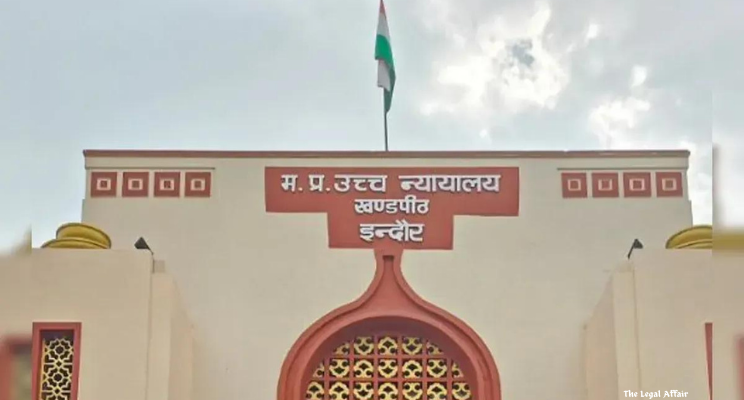
A Division Bench comprising Justice Subodh Abhyankar and Justice Jai Kumar Pillai delivered the ruling in an intra-court appeal challenging an order passed by a Single Judge of the High Court. The decision, reported as 2026 LiveLaw (MP) 455, addresses an important issue concerning access to justice when a statutory adjudicatory body becomes temporarily non-functional because of administrative vacancies.
The dispute arose from a housing loan of ₹13,61,902 obtained by the appellant, who was engaged in the transport business, from IIFL Housing Finance Ltd. The appellant had been regularly paying the loan instalments during 2020. However, his financial position deteriorated following the nationwide lockdown imposed during the COVID-19 pandemic, which adversely affected his business and eventually resulted in defaults in repayment.
The appellant claimed that he had informed the financial institution about his financial difficulties and had made efforts to arrange funds to regularise the loan account. His financial problems were further aggravated by serious medical emergencies within his family. His wife was diagnosed with cancer and required expensive medical treatment before eventually passing away in February 2024. Subsequently, in October 2024, the appellant himself suffered a heart attack and was required to undergo medical treatment.
Meanwhile, IIFL Housing Finance Ltd. initiated recovery proceedings under the Securitisation and Reconstruction of Financial Assets and Enforcement of Security Interest Act, 2002 (SARFAESI Act). An ex parte order was obtained from the Chief Judicial Magistrate directing the bank to take possession of the residential property.
The appellant contended that he had never received the statutory demand notice and became aware of the recovery proceedings only after receiving a notice requiring him to vacate the property. He further alleged that while he was away attending his daughter’s wedding, the bank locked his residence without providing him an effective opportunity to present his case.
Aggrieved by the bank’s action, the appellant initially approached the Madhya Pradesh High Court through a writ petition. The Court disposed of the matter by directing him to deposit 10% of the outstanding amount and requiring the Debt Recovery Tribunal to consider his application for interim relief. The Court also directed that no coercive action should be taken in the meantime.
In compliance with the direction, the appellant deposited ₹1,16,000 with the bank in two instalments and approached the DRT seeking interim protection. However, his application could not be heard on several scheduled dates because the post of Presiding Officer at the Tribunal was vacant.
Consequently, despite complying with the High Court’s direction and approaching the statutory forum, the appellant remained without an effective opportunity to obtain interim relief. Facing continued uncertainty regarding his residential property, he again approached the High Court. However, his subsequent writ petition was dismissed by a Single Judge, prompting him to file an intra-court appeal before the Division Bench.
The central issue before the Division Bench was whether a litigant could be denied meaningful judicial protection merely because the statutory tribunal designated to examine his grievance was temporarily unable to function. The case also required the Court to examine the extent to which the High Court could exercise its constitutional jurisdiction to prevent hardship where the statutory remedy had become practically inaccessible for reasons unrelated to the litigant.
Arguments of the Parties:
The appellant challenged the Single Judge’s decision on the ground that it failed to appreciate the exceptional circumstances in which he had been placed. His principal contention was that he had complied with the earlier directions of the High Court, deposited the amount required and approached the Debt Recovery Tribunal for consideration of his application for interim relief. However, despite taking all the steps expected of him, he was unable to obtain a hearing because the Tribunal had no Presiding Officer.
The appellant argued that the resulting delay was entirely attributable to an administrative deficiency and could not fairly be imposed upon him. He had approached the statutory forum within the framework contemplated by the earlier High Court order, but the forum itself was unable to discharge its adjudicatory responsibilities.
According to the appellant, the absence of a Presiding Officer had effectively deprived him of the opportunity to seek interim protection against the recovery measures initiated by the bank. Although the law provided a statutory remedy before the DRT, that remedy had become unavailable in practice.
He further relied upon the circumstances surrounding his loan default. He submitted that his inability to maintain regular repayments was not deliberate but arose from the financial consequences of the COVID-19 lockdown, which severely affected his transport business. His efforts to regularise the account were also affected by the medical expenses associated with his wife’s cancer treatment and his own subsequent heart attack.
The appellant also questioned the manner in which possession of his residential property had been taken. He maintained that he had not received the statutory demand notice and had only received a notice directing him to vacate the premises. He alleged that the bank locked his house while he was away attending his daughter’s wedding, thereby depriving him of possession without an effective opportunity to contest the recovery action.
A further submission was that the earlier order of the High Court had specifically contemplated consideration of his interim application by the DRT and protection against coercive action in the meantime. Having deposited ₹1,16,000 in compliance with that order, the appellant argued that he should not be left exposed to further recovery measures simply because the Tribunal had failed to function on the scheduled hearing dates.
The appellant therefore sought interference with the Single Judge’s order and appropriate protection of his residential property until the Tribunal became functional and decided his pending application.
On behalf of the respondent bank, the proceedings arose from the appellant’s default in repayment of the housing loan and the subsequent measures initiated under the SARFAESI Act. The bank had obtained an order from the Chief Judicial Magistrate authorising it to take possession of the secured property.
The bank’s recovery action was thus undertaken in the context of the statutory enforcement mechanism available to secured creditors. However, the material provided in the case summary does not record any specific detailed submission by the bank concerning the consequences of the Tribunal’s vacancy or a separate defence explaining why possession should not be restored.
The State was represented by Government Advocate Amit Bhatia, while Advocate Anil Kumar Namdev appeared for the appellant and Advocate Rohit Sabooc represented the respondent bank.
The principal question before the Division Bench was consequently whether the appellant could be left without effective interim protection when he had approached the statutory tribunal and complied with the earlier judicial directions, but the Tribunal was unable to hear his application because of the absence of its Presiding Officer.
Court’s Judgment:
The Madhya Pradesh High Court allowed the intra-court appeal and set aside the order passed by the Single Judge. The Division Bench held that a litigant cannot be made to suffer because a statutory forum created by law is temporarily non-functional owing to an administrative vacancy.
The Court considered the sequence of events and observed that the appellant had complied with the earlier direction to deposit ₹1,16,000 with the bank. He had also approached the Debt Recovery Tribunal seeking interim relief, as contemplated by the previous order of the High Court.
However, despite his compliance, the application remained pending because the post of Presiding Officer was vacant. The Tribunal could not take up the matter on several scheduled dates, leaving the appellant without an opportunity to obtain a decision on his request for interim protection.
The Division Bench found that this circumstance had not been adequately considered by the Single Judge while dismissing the subsequent writ petition.
A litigant cannot be penalised for administrative vacancies
The most significant aspect of the judgment is the Court’s recognition that the availability of a statutory remedy must be meaningful in practice and not merely theoretical.
The Court observed:
“In the present case, the Tribunal has done nothing, and the application for interim relief remains pending without any fault of the appellant. A litigant cannot be made to suffer merely because the Forum created by law is temporarily vacant”.
This observation reflects an important principle of access to justice. When legislation establishes a specialised adjudicatory forum to resolve particular disputes, litigants are ordinarily expected to approach that forum. However, the existence of such a remedy cannot become a reason to deny relief when the forum itself is unable to function.
A litigant who has taken the necessary steps to invoke a statutory remedy cannot reasonably be expected to bear the consequences of an administrative failure over which he has no control.
The Court’s reasoning recognises the distinction between a party who has failed to pursue the remedy available under law and a party who has approached the appropriate forum but has been prevented from obtaining a hearing because of institutional non-functioning.
In the present case, the appellant had not simply avoided the statutory mechanism. He had approached the DRT and filed an application for interim relief. The inability to obtain a hearing was attributable to the vacancy in the post of Presiding Officer.
The Division Bench considered it unjust to allow the appellant’s residential property to remain under the bank’s possession when his application for interim protection had not been adjudicated for reasons unrelated to his conduct.
Failure of the Single Judge to consider the practical difficulty
While examining the impugned order, the Division Bench found that the Single Judge had failed to appreciate the serious practical difficulty faced by the appellant.
The appellant had already complied with the financial condition imposed by the High Court by depositing ₹1,16,000. He had subsequently approached the DRT, but the Tribunal was unable to consider his application because of the absence of its Presiding Officer.
In these circumstances, the Division Bench held that the Single Judge had committed an error by dismissing the writ petition without adequately considering that the appellant had effectively been left without a functioning statutory remedy.
The Court’s intervention was therefore not based merely on the borrower’s financial difficulties or the personal hardships he had experienced. Rather, it was the combination of his compliance with the earlier judicial directions, the pendency of his interim application and the inability of the statutory forum to hear the matter that justified the exercise of the High Court’s jurisdiction.
The judgment underscores that courts must examine the practical availability of a remedy while deciding whether a litigant should be relegated to a statutory forum.
Where the designated forum is unable to discharge its functions, the High Court cannot ignore the resulting hardship merely because an alternative remedy exists on paper.
Role of Article 226 in ensuring access to justice
The decision also assumes significance in the context of the High Court’s extraordinary jurisdiction under Article 226 of the Constitution of India.
Article 226 empowers High Courts to issue appropriate writs, directions and orders for the enforcement of fundamental rights and for other purposes. Although courts ordinarily exercise restraint where an effective statutory remedy is available, the existence of an alternative remedy does not completely exclude constitutional judicial review.
The present case illustrates the importance of this principle in circumstances where the statutory remedy has become practically inaccessible.
The appellant had approached the DRT for interim protection against the bank’s recovery measures. However, the Tribunal’s inability to function meant that his application remained pending without any adjudication.
In such a situation, insisting that the appellant continue to await the functioning of the Tribunal, without considering the consequences for his residential property, would have risked making the statutory remedy ineffective.
The Division Bench therefore intervened to prevent the appellant from suffering further hardship due to circumstances beyond his control.
The decision does not establish that every vacancy in a statutory tribunal automatically entitles a litigant to approach the High Court or obtain an order in their favour. Rather, it demonstrates that constitutional courts can examine exceptional circumstances where the statutory forum is unavailable and the litigant is exposed to continuing prejudice despite having taken the necessary steps to pursue the remedy.
SARFAESI proceedings and the borrower’s right to seek statutory protection
The dispute also arose within the framework of the SARFAESI Act, 2002, which provides secured creditors with mechanisms to enforce security interests without initially requiring intervention by a civil court.
Under Section 13 of the Act, a secured creditor may initiate enforcement measures upon the borrower failing to discharge the liability after receiving the prescribed demand notice. Section 13(4) provides for measures that may be taken by the secured creditor, including taking possession of the secured assets.
Section 14 enables the secured creditor to seek assistance from the Chief Metropolitan Magistrate or District Magistrate, as applicable, for taking possession of the secured asset.
At the same time, the Act provides a statutory mechanism for borrowers and other aggrieved persons to challenge measures taken under Section 13(4).
Section 17 of the SARFAESI Act enables an aggrieved person to approach the Debt Recovery Tribunal by filing an application against the measures taken by the secured creditor. The Tribunal is empowered to examine whether the actions of the secured creditor are in accordance with the Act and the applicable rules.
The appellant’s application before the DRT was therefore part of the statutory framework available to challenge the bank’s recovery measures.
However, the existence of Section 17 would have offered little practical protection if the Tribunal could not hear the appellant’s application because of the vacancy in the Presiding Officer’s post.
The High Court’s intervention must be understood in this context. It ensured that the appellant was not left exposed to the consequences of recovery proceedings without an opportunity to obtain consideration of his request for interim relief.
Importantly, the Division Bench did not finally adjudicate the legality of the bank’s underlying recovery proceedings or determine the merits of the appellant’s objections under the SARFAESI Act. Those questions were left for consideration by the Debt Recovery Tribunal.
Restoration of possession and directions to the Debt Recovery Tribunal
After considering the circumstances, the Division Bench set aside the Single Judge’s order and directed the respondent bank to immediately open the appellant’s locked residence and hand over possession to him.
The direction provided immediate relief to the appellant, who had been deprived of access to his residential property while his application for interim protection remained pending before a non-functional Tribunal.
The Court also clarified that the Debt Recovery Tribunal was expected to hear and decide the pending interim applications in accordance with law as soon as it became functional.
The Bench specifically directed:
“The appeal is allowed in the above said terms. The Debt Recovery Tribunal is expected to hear and decide the pending interim applications, strictly, in accordance with law, as soon as it becomes functional, without being influenced by any observations made in this order”.
This clarification is particularly important because the High Court’s order was intended to address the immediate difficulty arising from the Tribunal’s non-functioning rather than determine the substantive rights and liabilities of the parties.
The Tribunal remains responsible for examining the pending applications independently and deciding them on their merits in accordance with the applicable legal provisions.
The High Court’s observations are not to influence that adjudication. Consequently, the bank’s rights under the SARFAESI Act and the appellant’s objections to the recovery measures remain subject to the decision of the competent Tribunal.
The judgment therefore strikes a balance between preventing immediate hardship to the borrower and preserving the statutory jurisdiction of the DRT to decide the underlying dispute.
Significance of the ruling
The decision carries wider significance beyond the individual dispute between the borrower and the financial institution. It highlights the responsibility of the judicial and administrative system to ensure that statutory adjudicatory institutions remain functional.
Tribunals are established to provide specialised and accessible adjudication in matters that require determination under particular statutory frameworks. Their effectiveness, however, depends upon the timely appointment of Presiding Officers and the availability of the necessary institutional infrastructure.
When vacancies prevent tribunals from hearing pending matters, litigants may be left in a difficult position, particularly where interim protection is necessary to prevent irreversible consequences.
The High Court’s ruling makes it clear that such institutional deficiencies cannot automatically be transferred to litigants who have complied with the law and approached the appropriate forum.
Ultimately, the Madhya Pradesh High Court allowed the appeal, set aside the Single Judge’s order and directed IIFL Housing Finance Ltd. to unlock the appellant’s residence and restore possession to him. The DRT was directed to consider the pending interim applications in accordance with law once it became functional.
The judgment reinforces an important principle of constitutional justice: access to a legal remedy must be real and effective. A statutory forum cannot become a source of injustice merely because it is temporarily unable to function. Administrative vacancies are matters for the State and the institutional authorities to address, and their consequences should not be imposed upon litigants who have done everything required of them to seek judicial protection.