


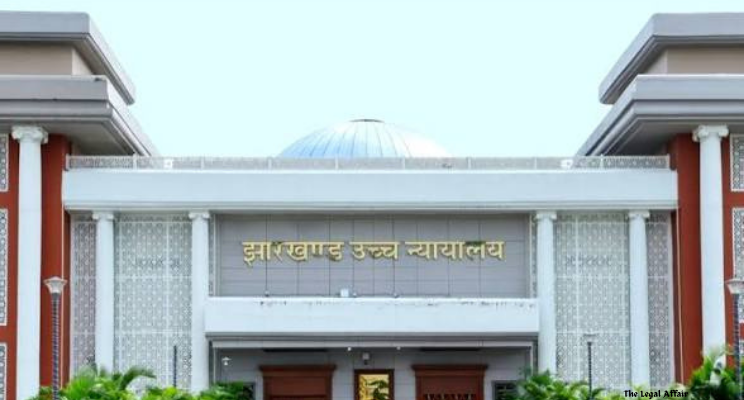
Introduction:
The Jharkhand High Court has reiterated that a preliminary order under Section 133 of the Code of Criminal Procedure, 1973 (CrPC), is an essential legal requirement in proceedings initiated for the removal of an alleged public nuisance. The Court has further clarified that when a person against whom such an order is made appears before the Magistrate and raises objections, the statutory procedure requires an opportunity to produce evidence in accordance with Section 138 CrPC. Failure to comply with these procedural safeguards can render the resulting order legally unsustainable.
Justice Anil Kumar Choudhary made these observations while hearing a petition filed by Sushil Kumar Biswas, who challenged two orders arising out of proceedings concerning an alleged obstruction of a way in Madhupur, Deoghar district. The challenge was directed against the order dated September 4, 2021, passed by the Additional Sessions Judge-VI, Deoghar, dismissing his criminal revision, and the earlier order dated May 13, 2017, passed by the Sub-Divisional Magistrate, Madhupur, under Section 133 CrPC. After examining the proceedings and the relevant order-sheet, the High Court found that the mandatory preliminary order contemplated under Section 133 CrPC had never been passed. It also found that the petitioner had not been afforded an opportunity to adduce evidence after filing his show-cause. Consequently, the Court set aside both impugned orders and remitted the matter to the Sub-Divisional Magistrate for a fresh decision in accordance with law.
The dispute arose from an application submitted by the opposite parties alleging that a way had been obstructed. Such complaints may give rise to proceedings under Section 133 CrPC, which empowers specified Executive Magistrates to take action in appropriate cases involving public nuisance. The provision is intended to address situations in which an unlawful obstruction or other nuisance affecting the public requires administrative intervention. However, the power is not unlimited. The Code prescribes a procedure that the Magistrate must follow before making an enforceable order requiring the removal of an alleged nuisance.
In the present case, the Sub-Divisional Magistrate had directed the removal of an alleged obstruction concerning Thoka No. 220, Holding No. 127. The order required the concerned parties to remove the obstruction within 15 days and warned that failure to comply could result in prosecution under Section 188 of the Indian Penal Code, 1860. The order therefore carried potential penal consequences, making compliance with the statutory procedure particularly important.
The proceedings had begun with the opposite parties’ allegation that a way was obstructed. On September 11, 2015, the Sub-Divisional Magistrate called upon the Circle Officer, Madhupur, to report whether the land in question was public land. The Circle Officer submitted a report dated October 3, 2015, stating that there was no obstruction of any road. Despite this report, the Sub-Divisional Magistrate eventually passed the order dated May 13, 2017, directing the removal of the alleged obstruction.
Biswas challenged the order on several grounds. He contended that the Magistrate had proceeded without first issuing the conditional preliminary order required under Section 133 CrPC and had failed to follow the subsequent procedure prescribed under Sections 137 and 138. Although he had submitted a show-cause, he maintained that he was not given an opportunity to produce evidence in support of his position. He also questioned the reliance placed on reports prepared in 2005 and 2006, before the proceedings were instituted, particularly when the Circle Officer’s report from October 2015 had stated that no road was obstructed.
The Additional Sessions Judge-VI, Deoghar, dismissed the criminal revision on September 4, 2021. Although the petitioner’s objections concerned the legality of the proceedings and the adequacy of the procedure followed by the Magistrate, the revisional court did not examine them in the detail necessary to resolve the dispute. Biswas therefore approached the Jharkhand High Court.
The central question before the High Court was not simply whether an obstruction existed on the land in question. It was whether the Sub-Divisional Magistrate had exercised the statutory power under Section 133 CrPC in accordance with the procedure prescribed by law. The Court’s decision reinforces the principle that proceedings intended to protect public rights must themselves comply with legal requirements, particularly when an order may compel a person to remove an alleged obstruction and expose that person to further legal consequences.
Arguments of the Parties:
Petitioner’s Contentions:
Sushil Kumar Biswas challenged the Sub-Divisional Magistrate’s order on the ground that the proceedings suffered from fundamental procedural defects. His principal contention was that the Magistrate had issued a final direction for the removal of an alleged obstruction without first passing the conditional preliminary order contemplated by Section 133 CrPC. According to the petitioner, the absence of this foundational step meant that the proceedings had not been conducted in the manner required by the statute.
Section 133 CrPC provides a mechanism through which an Executive Magistrate may require the removal of certain public nuisances. The procedure begins with the Magistrate forming the requisite opinion on the basis of the information and material available and issuing a conditional order calling upon the concerned person to comply or appear and show cause against it. The petitioner maintained that this preliminary stage was not a mere formality. It was the statutory starting point for the subsequent proceedings and was necessary to inform the affected person of the proposed action and provide an opportunity to contest it.
Biswas argued that the Sub-Divisional Magistrate had bypassed this requirement and proceeded directly to an order directing removal of the alleged obstruction within 15 days. In his submission, the resulting order could not be sustained because the statutory sequence had not been followed. The issue was especially significant because the order threatened further action under Section 188 IPC if the direction was not obeyed.
The petitioner also alleged non-compliance with Sections 137 and 138 CrPC. His objection was that, although he had submitted a show-cause in response to the proceedings, the Magistrate did not allow him to adduce evidence. He argued that the opportunity to respond to an allegation must be meaningful and cannot be reduced to the mere filing of a written explanation. Where the affected person disputes the existence of the alleged nuisance and contests the basis of the proposed action, the statutory procedure must be followed so that the relevant material can be examined before an adverse decision is made.
The absence of an opportunity to produce evidence was, therefore, presented as a substantive defect rather than a minor procedural irregularity. The petitioner maintained that the Magistrate had made an adverse determination without completing the inquiry contemplated by the Code. According to his case, this failure deprived the proceedings of the procedural safeguards intended to protect persons against whom action is proposed.
A further ground of challenge concerned the reports relied upon by the Sub-Divisional Magistrate. Biswas contended that the Magistrate had relied on a Circle Officer’s report dated March 17, 2005, and an Anchal Amin’s report dated August 24, 2006. Both reports predated the institution of the proceedings in the present matter. He questioned the suitability of relying on those earlier reports to decide whether an obstruction existed at the time the proceedings were initiated.
The petitioner also drew attention to the Circle Officer’s report dated October 3, 2015, which had been obtained during the proceedings themselves. That report stated that there was no obstruction of any road. Biswas argued that the Magistrate failed to give due consideration to this material while passing the order directing removal of the alleged obstruction.
His challenge thus involved both procedural and evidentiary concerns. On the procedural side, he questioned the absence of the preliminary conditional order and the failure to provide an opportunity to lead evidence after he submitted his show-cause. On the evidentiary side, he disputed the reliance on older reports and the apparent disregard of the later report indicating that no road was obstructed.
Biswas further challenged the revisional order dated September 4, 2021, passed by the Additional Sessions Judge-VI, Deoghar. He maintained that the revisional court had failed to address the material objections raised against the Magistrate’s order. In his submission, the dismissal of the revision without a proper examination of those objections left serious questions about the legality of the original proceedings unresolved.
The petitioner therefore sought the High Court’s intervention to set aside the orders passed by the Sub-Divisional Magistrate and the revisional court. His case was that the statutory safeguards governing proceedings under Section 133 CrPC had not been followed and that the resulting order could not lawfully remain in force.
Respondents’ Position:
The State was represented by Additional Public Prosecutor Mrs. Vandana Bharti. Mr. Onkar Nath Tewary appeared for the petitioner, while Mr. Ankit Kumar appeared for opposite party No. 2. No appearance was recorded for opposite party Nos. 3 and 4, and the supplied case summary also mentions Mr. Arvind Kr. Choudhary as an advocate in the appearance details without specifying the corresponding party.
The underlying proceedings had been initiated on an application by the opposite parties alleging obstruction of a way. Their grievance formed the basis for the Sub-Divisional Magistrate’s intervention under Section 133 CrPC. The proceedings were therefore concerned with the removal of an alleged obstruction said to affect the use of the way in question.
The opposite parties’ position, as reflected in the initiation of the proceedings, was that the alleged obstruction warranted action by the competent Magistrate. The order dated May 13, 2017, directed the concerned parties to remove the obstruction within 15 days and warned of possible prosecution under Section 188 IPC for non-compliance. The earlier reports from the Circle Officer and Anchal Amin also formed part of the material considered during the proceedings, although the petitioner disputed their relevance and the manner in which they had been relied upon.
However, the supplied case summary does not set out detailed submissions made by the State or the private opposite parties before the High Court in response to each of the petitioner’s objections. It would therefore be inappropriate to attribute specific legal arguments to them that are not reflected in the available account. The dispute before the High Court can nevertheless be understood from the impugned orders and the grounds raised by the petitioner.
The respondents’ underlying concern was the alleged obstruction of a way and the need for its removal through proceedings initiated by the competent authority. The High Court, however, had to determine whether the Magistrate’s order could stand in law when the record did not show compliance with the preliminary procedure prescribed under Section 133 CrPC or the opportunity to adduce evidence contemplated by Section 138.
The matter also required consideration of the revisional court’s role. Once the petitioner had challenged the legality of the Magistrate’s action, the Additional Sessions Judge was expected to consider the material objections relevant to the validity of the order. The High Court therefore examined not only the original order but also whether the revisional court had adequately addressed the procedural defects alleged by the petitioner.
The central issue was consequently one of statutory compliance and procedural fairness. Even where a complaint alleges a public nuisance requiring intervention, the Magistrate must exercise the powers conferred by the Code within the limits and through the process established by law. The need to address an alleged obstruction cannot eliminate the procedural protections afforded to the person against whom an order is proposed.
Court’s Judgment:
The Jharkhand High Court allowed the petition, set aside the impugned orders and remitted the matter to the Sub-Divisional Magistrate, Madhupur, for a fresh order in accordance with law. Justice Anil Kumar Choudhary reached this conclusion after examining the entire order-sheet and finding that the proceedings had not followed the mandatory requirements governing action under Sections 133 and 138 CrPC.
Preliminary Order Under Section 133 CrPC Is Mandatory:
The principal finding of the High Court was that no preliminary order under Section 133 CrPC had been passed in the proceedings. The Court emphasised that such an order is a sine qua non for initiating and conducting proceedings under the provision. In other words, the preliminary order is an indispensable statutory requirement, not a procedural step that the Magistrate may simply overlook.
Section 133 CrPC provides a summary mechanism for addressing specified forms of public nuisance. It empowers an Executive Magistrate, upon receiving the relevant information and forming the opinion required by law, to issue a conditional order directing a person to remove an unlawful obstruction or nuisance within the scope of the provision. The person concerned may comply with the direction or appear before the Magistrate and show cause against it.
The statutory structure is important because the preliminary order establishes the basis on which the proceedings move forward. It identifies the action proposed by the Magistrate and gives the affected person an opportunity to respond. The subsequent steps depend on whether the person complies with the order or contests it. The preliminary stage therefore cannot be treated as dispensable merely because a complaint has been made or the Magistrate considers the alleged nuisance to require attention.
The High Court observed that the requirement applies to a Sub-Divisional Magistrate, District Magistrate or other Executive Magistrate exercising powers under Section 133 CrPC. The authority must draw up the preliminary order contemplated by the provision before proceeding in the manner authorised by the Code.
In the present case, the Court examined the order-sheet and found no such preliminary order. The Sub-Divisional Magistrate had ultimately directed the removal of the alleged obstruction within 15 days, but the record did not establish that the mandatory preliminary step had been completed. This omission went to the legality of the proceedings themselves.
The Court’s conclusion underscores an important distinction between the existence of jurisdiction and the lawful exercise of that jurisdiction. An Executive Magistrate may be empowered to act against a public nuisance, but the power must be exercised through the procedure laid down by the legislature. An order cannot be sustained merely because the authority is generally competent to deal with the subject matter if the statutory conditions governing its exercise have not been fulfilled.
The High Court accordingly treated the absence of the preliminary order as a serious defect. The statutory process could not be replaced by a direct direction to remove the alleged obstruction. Compliance with the prescribed procedure was essential before an enforceable order could be made.
Opportunity to Produce Evidence Under Section 138 CrPC:
The Court also examined the consequences of the petitioner’s having filed a show-cause against the proposed action. Under the procedure prescribed by Section 133 CrPC, where the person concerned appears and contests the conditional order, the Magistrate must proceed in accordance with the applicable provisions of the Code. Section 138 addresses the stage at which the Magistrate considers the evidence after the person has appeared and shown cause against the conditional order.
The High Court noted that when a person against whom the preliminary order is made appears and shows cause, the Magistrate is required to take evidence in the manner applicable to a summons case. This requirement enables the competing positions to be examined on the basis of evidence rather than resolved without a proper opportunity for the affected person to establish the grounds of opposition.
In the present proceedings, Biswas had submitted a show-cause. Despite that, the Court found that the parties had not been given an opportunity to produce evidence in accordance with Section 138 CrPC. The Magistrate had proceeded to issue the direction for removal of the alleged obstruction without completing the evidentiary process required by law.
The Court considered this omission significant. Filing a show-cause is not merely a procedural formality after which the Magistrate may immediately proceed to an adverse order. Where the statutory framework requires an opportunity to produce evidence, the authority must provide that opportunity and consider the material in accordance with the Code.
This safeguard is especially relevant when the existence of the alleged nuisance is disputed. In such circumstances, the affected person must be able to contest the allegation through the procedure prescribed by law. The Magistrate must then determine the matter on the basis of the applicable statutory requirements and the evidence properly placed before the authority.
The failure to provide an opportunity to adduce evidence also meant that the petitioner’s objections could not be considered through the procedure envisaged by Section 138. The High Court therefore found that the order dated May 13, 2017, was not sustainable because the mandatory requirements of Sections 133 and 138 CrPC had not been followed.
The ruling reinforces the principle that procedural safeguards are not obstacles to effective administration. Rather, they ensure that the exercise of public power remains lawful, reasoned and fair. A proceeding designed to remove a public nuisance must protect public interests while also respecting the rights of the person against whom coercive directions are proposed.
Earlier Reports and the October 2015 Report:
Another aspect of the dispute concerned the reports relied upon by the Sub-Divisional Magistrate. The petitioner had objected to the reliance on a Circle Officer’s report dated March 17, 2005, and an Anchal Amin’s report dated August 24, 2006. Both reports had been prepared before the institution of the proceedings in the present matter.
The petitioner contrasted those reports with the Circle Officer’s report dated October 3, 2015, which had been obtained after the Sub-Divisional Magistrate called for information about whether the land in question was public land. According to the report, there was no obstruction of any road.
The existence of these differing materials was relevant to the petitioner’s challenge because the proceedings concerned an alleged obstruction, and the reports related to the physical and administrative circumstances surrounding the disputed land. The petitioner maintained that the Magistrate had relied on older reports while failing to properly consider the report obtained during the proceedings.
The High Court took note of the petitioner’s grievance concerning the reports. Its principal finding, however, was that the proceedings suffered from mandatory procedural defects. The absence of the preliminary order and the failure to providean opportunity to adduce evidence were sufficient to