


Introduction:
The Delhi High Court has emphasised that the existence and influence of touts in government offices cannot be viewed in isolation from the conduct of public officials who are responsible for providing the relevant services. Observing that such intermediaries cannot operate freely without the involvement, protection or encouragement of officials working within the administrative system, the Court underscored the need to examine the wider institutional circumstances that allow corruption and unofficial payments to persist. The observations were made by Justice Vimal Kumar Yadav while dismissing an appeal filed by Rajinder Singh, also known as Babloo, who had been convicted under Section 8 of the Prevention of Corruption Act, 1988, for accepting Rs. 1,300 from a person seeking a duplicate driving licence. The Court upheld his conviction and directed him to surrender forthwith to serve the sentence imposed by the Trial Court.
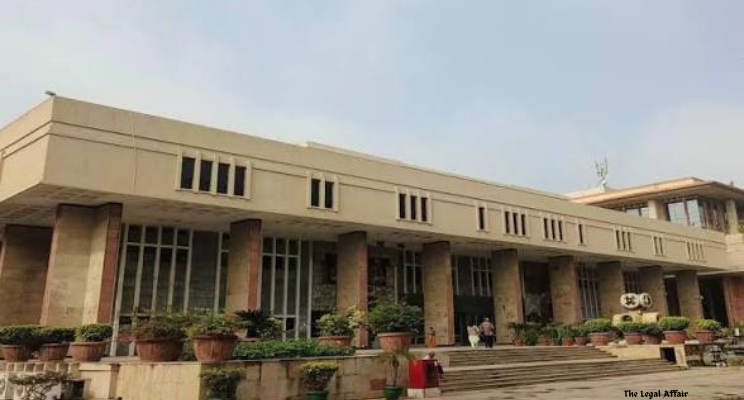
The case originated from an incident at the Transport Authority office in Janakpuri in December 2006. The complainant had misplaced his driving licence and approached the relevant authority to obtain a duplicate. According to the prosecution, Singh approached the complainant and offered to arrange the issuance of the duplicate licence by completing the necessary formalities in exchange for a total payment of Rs. 1,300, which included the prescribed government fee. What appeared to be an offer to facilitate an ordinary administrative service subsequently became the subject of a corruption investigation when the complainant approached the Anti-Corruption Branch.
A trap was organised to verify the allegations. The prosecution maintained that the complainant handed over the tainted currency notes during the transaction and that the money was subsequently recovered from Singh and his associate. The incident led to criminal proceedings under the Prevention of Corruption Act, a statute designed to address corruption-related conduct and protect the integrity of public administration. The central issue before the High Court was whether the prosecution had established Singh’s involvement in the alleged transaction despite the fact that the complainant and another material witness did not support the prosecution case during the trial.
The Trial Court had convicted Singh under Section 8 of the Prevention of Corruption Act and sentenced him to one year and six months of rigorous imprisonment, together with a fine of Rs. 10,000. Challenging that decision, Singh approached the Delhi High Court, contending that the evidence was insufficient to sustain the conviction. His appeal required the Court to examine the credibility and consistency of the witnesses who supported the prosecution, the significance of the recovery of the money and the effect of hostile testimony on the overall evidentiary record.
Beyond the factual dispute, the case also raised a broader question about the functioning of government offices and the role played by unofficial intermediaries. In many administrative settings, citizens approach public authorities to obtain routine documents, licences, permissions or certificates. When intermediaries claim that they can secure such services in exchange for money, concerns arise not only about the conduct of those intermediaries but also about the possibility that official duties are being improperly delegated, obstructed or exploited. The Court’s observations addressed this wider concern by questioning how touts acquire influence within government offices and whether their activities can continue without some degree of support or tolerance from officials entrusted with performing the underlying functions themselves.
At the outset, the Court posed a pointed question: “Who were the pawns and who were the players?” The question reflected the distinction between those who visibly participate in an alleged transaction and those who may enable an improper system to operate from behind the scenes. While the immediate appeal concerned Singh’s individual criminal liability, the Court used the case to highlight the institutional implications of touting in public offices. Nevertheless, its observations about the wider administrative problem did not displace the essential task before it: determining whether the evidence on record justified maintaining the appellant’s conviction.
Arguments of the Parties:
Appellant’s Contentions:
Rajinder Singh challenged his conviction primarily on the ground that the prosecution had failed to establish the essential facts necessary to prove the alleged offence. His principal argument was that the complainant and other material witnesses had turned hostile during the trial. According to the appellant, the failure of these witnesses to support the prosecution’s version materially weakened the case against him and created serious doubts about whether the alleged demand and acceptance of illegal gratification had actually taken place.
The appellant’s challenge focused on the evidentiary value of the prosecution’s case. In corruption proceedings, the circumstances surrounding an alleged payment may be disputed, and the prosecution must establish the relevant facts through admissible and credible evidence. Singh’s argument was that, once the complainant and another material witness failed to affirm the prosecution’s account, the remaining evidence was insufficient to prove his guilt beyond reasonable doubt. The fact that a trap had been organised and currency notes had allegedly been recovered could not, in his submission, automatically establish every element of the offence.
The significance of the complainant’s testimony was particularly important because the prosecution’s case arose from his request for a duplicate driving licence and the alleged offer made by Singh to facilitate its issuance. If the complainant did not support the prosecution’s version in court, the defence could legitimately question whether the alleged demand had been proved through reliable evidence. Singh accordingly maintained that the prosecution could not secure a conviction merely by relying on the surrounding circumstances of the trap operation without establishing the alleged transaction through dependable testimony.
His challenge also required the High Court to consider whether the evidence of the remaining witnesses was sufficiently consistent and credible to overcome the difficulties created by the hostile testimony. A witness turning hostile does not necessarily mean that the prosecution case must fail, but it may require the court to scrutinise the remaining evidence with care. The appellant’s position, in substance, was that the prosecution had not met the required standard of proof and that the conviction therefore could not safely be sustained.
The appellant also sought relief against the sentence imposed by the Trial Court. The conviction carried a sentence of one year and six months of rigorous imprisonment and a fine of Rs. 10,000. By challenging the evidentiary foundation of the conviction, Singh sought to avoid the consequences of the judgment and obtain relief from the sentence. The High Court, however, had to assess the case on the complete evidentiary record rather than treating the hostility of particular witnesses as conclusive proof that the prosecution had failed.
Respondent’s Contentions:
The State, represented by Additional Public Prosecutor Mr. Satinder Singh Bawa, opposed the appeal and supported the conviction recorded by the Trial Court. The prosecution’s case rested on the testimony of the panch witness, the raiding officer and other police officials involved in the trap proceedings. Although the complainant and another witness had not supported the prosecution, the State relied on the evidence of the witnesses who continued to affirm the material circumstances of the alleged transaction.
The panch witness was central to the prosecution’s response. According to the evidence considered by the High Court, this witness consistently supported the prosecution version and testified to having witnessed the demand and transaction. The State’s position was that the testimony could not be discarded merely because the complainant had subsequently failed to support the case. What mattered was whether the evidence of the panch witness remained credible, consistent and sufficient when assessed alongside the other circumstances established during the investigation.
The prosecution also relied on the testimony of the raiding officer and other police officials. Their evidence was relevant to the conduct of the trap operation, the handing over of the tainted currency notes and the subsequent recovery of the money from Singh and his associate. The State maintained that these circumstances, considered together with the panch witness’s account, provided a coherent evidentiary basis for sustaining the conviction.
The prosecution further relied on receipts relating to licence fees that were recovered from Singh. These documents were considered relevant because the transaction arose from an offer to arrange a duplicate driving licence in exchange for a payment that included the government fee. The receipts formed part of the circumstances assessed by the Court in determining whether the prosecution’s account was supported by the available material.
The High Court also took note of Singh’s previous conviction under the Prevention of Corruption Act. The circumstance was considered alongside the other material before the Court when assessing the prosecution’s case and the allegation of involvement in touting activities. However, the essential question in the appeal remained whether the evidence relating to the present incident established Singh’s guilt. The State’s position was that the prosecution had produced sufficient evidence through the panch witness, the raiding officer and the supporting circumstances to justify the Trial Court’s decision.
The respondent’s case, therefore, was that the appellant’s argument gave excessive weight to the complainant’s hostility while overlooking the testimony of witnesses who had consistently supported the prosecution. The State urged the High Court to assess the evidence as a whole and to uphold the conviction because the testimony of the panch witness and raiding officer provided reliable support for the prosecution’s version.
Court’s Judgment:
The Delhi High Court dismissed Singh’s appeal, finding no sufficient basis to interfere with the conviction recorded by the Trial Court. Justice Vimal Kumar Yadav examined the effect of the hostile testimony, the evidence provided by the panch witness and raiding officer, and the other circumstances relied upon by the prosecution. The Court concluded that the evidence supporting the prosecution’s case remained sufficiently strong to establish the appellant’s involvement in the transaction.
Hostile Witnesses Do Not Automatically Defeat the Prosecution:
An important aspect of the Court’s reasoning concerned the fact that the complainant and another material witness had not supported the prosecution during the trial. The Court did not treat this development as automatically fatal to the case. Instead, it considered whether the remaining testimony and supporting circumstances were capable of establishing the appellant’s complicity.
The legal significance of a witness turning hostile must be assessed carefully. Such testimony does not, by itself, erase the entire evidentiary record or require a court to reject all other evidence presented by the prosecution. The court must examine the testimony that remains available, determine whether it is credible and evaluate it alongside the other material on record. The ultimate question is whether the evidence as a whole satisfies the applicable standard of proof.
In the present case, the panch witness continued to support the prosecution and testified to witnessing the demand and transaction. The High Court attached considerable importance to this testimony, particularly because it was consistent with the prosecution’s account of the trap proceedings. The Court also considered the testimony of the raiding officer and other police officials who participated in the operation.
The Court’s approach demonstrated that the credibility of the prosecution case could not be determined solely by counting the witnesses who supported or opposed it. The quality, consistency and evidentiary value of the testimony were more important than the number of witnesses who ultimately affirmed the prosecution’s version. Where reliable evidence remains available, the court must assess that evidence on its own merits rather than treating a hostile witness as conclusive proof that the prosecution has failed.
The Court found that the evidence of the panch witness and the raiding officer was “strong, unwavering and unflinching.” This assessment was central to the dismissal of the appeal. The Court considered their testimony sufficiently dependable to establish Singh’s complicity notwithstanding the complainant’s failure to support the prosecution. The decision thus rested on the Court’s evaluation of the complete record rather than on the assumption that the complainant’s testimony was the only evidence capable of proving the alleged transaction.
Evidence of the Trap Proceedings and Supporting Circumstances:
The High Court also considered the circumstances surrounding the trap operation. The prosecution had alleged that Singh offered to arrange the issuance of a duplicate driving licence in exchange for Rs. 1,300, including the prescribed government fee. After the complainant approached the Anti-Corruption Branch, a trap was laid, the tainted currency notes were handed over during the transaction and the money was subsequently recovered from Singh and his associate.
The recovery of currency, considered in isolation, does not necessarily resolve every question in a corruption case. Its significance depends on the surrounding evidence and the circumstances in which the money changed hands. The Court therefore considered the recovery alongside the testimony of the panch witness and the raiding officer. It was the combined evidentiary effect of these circumstances, rather than the mere existence of a trap, that supported the conclusion that Singh had participated in the alleged transaction.
The receipts relating to licence fees recovered from Singh were another circumstance taken into account by the Court. Their relevance arose from the nature of the alleged arrangement, which concerned the processing of a duplicate driving licence and included a payment said to cover the government fee. The Court treated the receipts as material that further substantiated the prosecution’s case.
The High Court also referred to Singh’s previous conviction under the Prevention of Corruption Act while considering the circumstances and the allegation of his involvement in touting activities. Such a circumstance must be understood within the context of the Court’s assessment of the record and should not be taken to mean that a previous conviction, by itself, establishes guilt in a separate case. The present conviction was upheld on the basis of the evidence that the Court found persuasive in relation to the incident under consideration.
Taken together, the testimony of the panch witness and raiding officer, the circumstances of the trap and the supporting material persuaded the Court that the appellant’s challenge did not warrant interference with the Trial Court’s findings. The Court accordingly declined to set aside the conviction.
Questioning the Role of Touts in Government Offices:
Apart from resolving the evidentiary challenge, Justice Vimal Kumar Yadav made broader observations about the functioning of touts in government offices. The Court questioned how unofficial intermediaries could exercise influence within public institutions unless they received some form of engagement, protection or encouragement from officials working inside those institutions.
The Court observed: “It is not possible for touts to have a field day and wield such influence in any office unless they are engaged, protected and encouraged by the government officials sitting behind the bureaucratic shield, allowing the touts to facilitate work, which they as ‘Public Servants’ were supposed to perform themselves.”
These observations identified a structural concern that extends beyond the conduct of an individual intermediary. Government offices are established to provide public services through prescribed procedures and accountable officials. When a person approaches an authority for a routine document, the service should ordinarily be available through the official process. If an intermediary claims to be able to secure that service for an additional payment, questions arise about whether the system is functioning transparently and whether citizens are being exposed to unnecessary barriers or unofficial demands.
The Court’s reasoning highlighted the difference between the person visibly collecting money and the officials whose duties may be affected by the existence of such an arrangement. Touts can become influential when they appear capable of navigating administrative procedures more effectively than ordinary members of the public. That influence may encourage citizens to believe that routine work cannot be completed without paying an intermediary. The Court’s observations suggested that the continued operation of such a system demands scrutiny of the administrative environment in which it develops.
At the same time, the observations should not be read as a finding that every official in a government office is necessarily involved whenever a tout is found operating there. The Court’s remarks expressed a broader concern about the conditions that permit touting to flourish. They emphasised the need for public institutions to ensure that official functions are performed by the officials entrusted with them and that unofficial intermediaries do not acquire influence through improper arrangements.
The Court also drew attention to the responsibilities attached to public office. It observed that some public servants fail to discharge their duties with the required sense of responsibility and, “blinded by materialistic desires, sacrifice their public functions at the altar of greed, selfishness and materialism.” The language conveyed the Court’s concern that corruption is not merely a financial irregularity but also a betrayal of the trust placed in public institutions.
Public servants exercise authority on behalf of the State and are expected to carry out their functions impartially, responsibly and in accordance with law. When personal gain takes precedence over official responsibility, the consequences can extend beyond a single transaction. Such conduct can undermine confidence in administrative processes, disadvantage citizens who seek services through lawful channels and create an environment in which unofficial payments appear necessary for routine work.
The Court’s observations therefore placed the individual prosecution within a wider discussion about institutional accountability. The alleged payment concerned a duplicate driving licence, but the concern was broader: a public service should not become dependent on the influence of an intermediary who claims to facilitate work that the responsible officials are already required to perform.
“Who Were the Pawns and Who Were the Players?”:
The Court’s opening question, “Who were the pawns and who were the players?”, captured the central theme of its observations on touting. It raised the possibility that the individual who appears at the centre of an improper transaction may not be the only person whose conduct deserves scrutiny. In somesituations, intermediaries may serve as visibl