


Introduction:
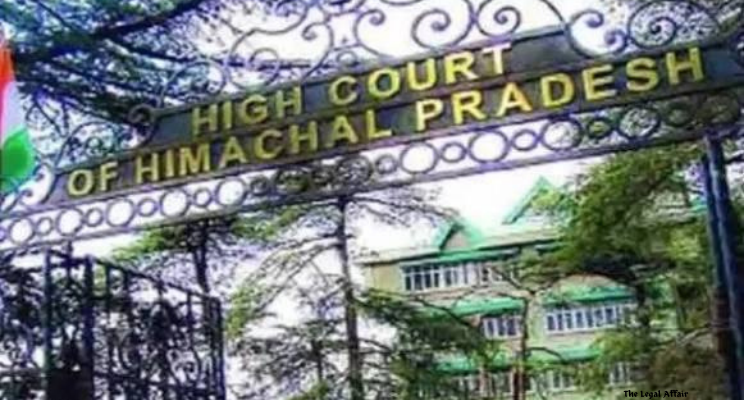
The Himachal Pradesh High Court has held that landowners are entitled to interest on compensation for the period during which the authorities delayed depositing the awarded amount, particularly when no stay order had been passed by a competent court restraining payment. The Court made it clear that administrative instructions directing officials to withhold compensation cannot override statutory obligations under the National Highways Act, 1956, or justify depriving landowners of timely payment for their acquired property.
Justice Sandeep Sharma ruled that the petitioners were entitled to interest at the rate of 7.5% per annum for the 367-day period during which the compensation amount remained undeposited. The Court observed that once compensation had been determined through an award, the authorities could not withhold its deposit merely because administrative directions had been issued or arbitration proceedings were contemplated. In the absence of a judicial order staying the award, the statutory process for depositing and disbursing compensation was required to proceed.
The dispute arose from the acquisition of land belonging to the petitioners at Village Bhuppur-II, Tehsil Paonta Sahib, District Sirmaur, for the construction and four-laning of National Highway No. 72, specifically the Paonta Sahib-Ballupur bypass. The acquisition was undertaken under the National Highways Act, 1956, which provides a special statutory framework for acquiring land for national highway projects and determining and disbursing compensation to persons whose properties are acquired.
The Competent Authority for Land Acquisition passed Award No. 3/2022 on February 14, 2022, determining compensation of ₹3,78,76,160 in favour of the petitioners. However, despite the determination of compensation, the amount was not deposited with the Competent Authority until February 16, 2023. This resulted in a delay of 367 days.
Even after the amount was deposited, the authorities withheld its disbursement on the basis of administrative instructions issued pending arbitration proceedings challenging the award. The petitioners eventually received the compensation during the pendency of their writ petition before the High Court. However, they continued to seek interest for the period during which the authorities had delayed depositing the awarded amount.
The authorities sought to justify the delay by referring to the circumstances surrounding the acquisition, including the petitioners’ alleged delay in handing over possession of the acquired land. The dispute also required the Court to examine the effect of the arbitration proceedings and the absence of any interim judicial order staying the award during the relevant period.
A significant aspect of the case was the statutory scheme under Sections 3D and 3H of the National Highways Act. Section 3D(2) provides that upon publication of the declaration of acquisition under the provision, the land vests absolutely in the Central Government, free from all encumbrances. Sections 3H(1) and 3H(2), in turn, regulate the deposit and disbursement of compensation determined under the Act.
The central question before the High Court was whether the authorities could postpone the deposit and payment of compensation on the basis of administrative instructions when no competent court had stayed the award. The Court also had to consider whether the alleged delay by the landowners in handing over possession could be relied upon to deny them interest for the period during which the compensation remained undeposited.
The High Court answered these questions in favour of the petitioners. It held that the statutory obligation to deposit compensation could not be displaced by administrative directions and that, in the absence of a stay order, the landowners were entitled to interest for the period of delay. The Court accordingly directed payment of interest at 7.5% per annum for the relevant 367-day period.
Arguments of the Parties:
The petitioners approached the Himachal Pradesh High Court seeking interest on the compensation awarded for their acquired land. Their grievance was that although the Competent Authority had determined compensation of ₹3,78,76,160 through Award No. 3/2022 dated February 14, 2022, the amount was deposited only on February 16, 2023.
According to the petitioners, the delay of 367 days was attributable to the authorities and not to any judicial restraint on the operation of the award. They maintained that once the compensation had been determined, the statutory authorities were required to take the necessary steps for depositing and disbursing the amount in accordance with the National Highways Act.
The petitioners’ claim was not limited to the release of the principal compensation amount. Although they received the compensation during the pendency of the writ proceedings, they argued that the subsequent payment did not eliminate the financial prejudice caused by the delay. They therefore sought interest for the period during which the amount remained undeposited.
Their case rested on the statutory obligations imposed by Sections 3H(1) and 3H(2) of the National Highways Act. They contended that the authorities could not indefinitely postpone payment of compensation through administrative instructions, particularly when no competent court had restrained the deposit or disbursement of the amount.
The petitioners also relied upon the legal consequences flowing from Section 3D(2) of the Act. Since the acquired land vests absolutely in the Central Government upon publication of the acquisition declaration, the authorities could not treat the compensation obligation as something that could be postponed at their discretion. The statutory consequences of acquisition had to be accompanied by compliance with the provisions governing compensation.
The absence of a stay order was particularly important to their claim. The arbitration proceedings challenging the award did not, by themselves, establish that the compensation could lawfully remain undeposited. The petitioners maintained that unless the award was stayed by a competent forum, the authorities remained bound to follow the statutory procedure.
On the other hand, the authorities opposed the claim for interest and sought to justify the delay in payment. They relied upon the petitioners’ alleged delay in handing over possession of the acquired land, contending that the circumstances surrounding possession had a bearing on the timing of compensation.
The authorities also relied upon administrative instructions directing the Competent Authority not to disburse the compensation while arbitration proceedings challenging the award were pending. Their position was that the amount had been withheld in view of those proceedings and the instructions issued in that regard.
The issue therefore required the Court to distinguish between an administrative decision to withhold compensation and a judicial order legally restraining its payment. It also required consideration of whether the pendency of arbitration proceedings, without an operative stay order during the relevant period, could justify the authorities’ failure to deposit the awarded amount.
The competing positions brought into focus the statutory character of compensation under the National Highways Act. While the authorities sought to explain their conduct through administrative instructions and the circumstances relating to possession, the petitioners insisted that such considerations could not override the obligations expressly imposed by the legislation.
Court’s Judgment:
The Himachal Pradesh High Court allowed the petitioners’ claim for interest and held that they were entitled to interest at the rate of 7.5% per annum for the 367-day delay in depositing the compensation amount. Justice Sandeep Sharma found that the compensation had been deposited with the Competent Authority only on February 16, 2023, despite the award having been passed on February 14, 2022.
The Court considered the fact that the arbitration proceedings challenging the award had been initiated subsequently. It specifically noted that no stay order had been passed by a competent court during the period when the compensation ought to have been deposited. The Arbitrator stayed the award only on July 23, 2024, which was much later than the relevant period of delay.
This distinction was central to the Court’s reasoning. The mere existence or pendency of proceedings challenging an award does not necessarily suspend the legal effect of that award. Unless a competent forum grants an interim order staying its operation, the authorities cannot assume that they are free to disregard the statutory obligations arising from it.
The Court therefore rejected the justification based on administrative instructions. It held, in substance, that internal directions issued by the authorities could not override the requirements of the National Highways Act. An administrative instruction directing the Competent Authority to withhold compensation could not take the place of a judicial stay order or independently create a legal basis for postponing payment.
The Court’s interpretation was closely connected with the statutory consequences of acquisition under Section 3D(2) of the National Highways Act, 1956. This provision states that upon publication of the declaration under Section 3D(1), the land vests absolutely in the Central Government, free from all encumbrances.
The effect of this provision is significant. Once the statutory requirements for acquisition culminate in the declaration contemplated under Section 3D, the land vests in the Central Government by operation of law. The acquisition is not merely a proposal to take over the property at some future stage. It produces the legal consequence of vesting, which must be read alongside the provisions governing determination, deposit and disbursement of compensation.
The Court relied upon this statutory framework to reject the authorities’ attempt to justify withholding compensation on the basis of the petitioners’ alleged delay in handing over possession. The statutory scheme could not be displaced by administrative explanations where the acquisition had taken effect and the compensation had already been determined.
The Court also examined the obligations imposed under Section 3H of the National Highways Act. Section 3H(1) requires the amount determined under Section 3G to be deposited by the Central Government with the Competent Authority before taking possession of the land. Section 3H(2) provides for the Competent Authority to pay the deposited amount to the person or persons entitled to receive it.
These provisions establish a statutory mechanism for ensuring that compensation determined for acquired land is deposited and made available to those entitled to it. The obligation is not left entirely to administrative discretion. The Central Government is required to deposit the amount with the Competent Authority, while the Competent Authority is responsible for disbursing it in accordance with the statutory requirements.
The High Court emphasised that the authorities could not issue administrative directions that effectively suspended these statutory obligations. Once the compensation award had been passed, the authorities were required to act in accordance with the Act unless a competent court or forum had issued an order restraining them from doing so.
The Court’s reasoning reflects the broader principle that executive instructions cannot override or dilute a statutory mandate. Administrative directions may regulate internal functioning and guide officials in carrying out their duties, but they cannot authorise action contrary to the governing legislation. Where Parliament has prescribed a procedure for depositing and disbursing compensation, administrative authorities must act within that framework.
The Court also rejected the suggestion that the petitioners’ alleged delay in handing over possession could justify denying interest. It noted that the acquired land vested in the Central Government under Section 3D(2) and that the relevant statutory provisions imposed obligations regarding the deposit and disbursement of compensation.
The authorities could not rely upon an alleged delay in possession as a general justification for withholding compensation without demonstrating a legally sustainable basis for doing so. In particular, the absence of a stay order during the relevant period meant that the administrative authorities had no judicial restraint preventing them from proceeding with the statutory deposit.
An important feature of the judgment was the Court’s distinction between the date on which the award was passed, the date on which the compensation was deposited and the date on which the award was subsequently stayed. These events had different legal consequences and could not be treated as interchangeable.
The award was passed on February 14, 2022, but the compensation was deposited only on February 16, 2023. The arbitration proceedings did not result in a stay during this interval. The Arbitrator granted a stay only on July 23, 2024. Therefore, the later stay could not retrospectively justify the authorities’ failure to deposit the compensation during the preceding period.
The Court observed that since there had been a delay of one year in depositing the awarded amount and no stay order had been passed by a competent court during that period, the petitioners ought to have received compensation together with interest for the period from February 15, 2022, to February 16, 2023.
Justice Sandeep Sharma stated:
“Since there was a delay in deposit of award amount for one year and during afore period, no stay order by any competent court of law was passed, petitioners ought to have been released amount of compensation alongwith interest for the period with effect from 15.2.2022 to 16.2.2023.”
The Court thus recognised that the landowners should not bear the financial consequences of an unjustified delay attributable to the authorities. The fact that the principal compensation had eventually been deposited and paid during the pendency of the writ petition did not extinguish the claim for interest arising from the earlier period.
Interest in this context serves an important compensatory purpose. Where an amount legally payable to a landowner is withheld for a prolonged period, the landowner is deprived of the use and benefit of that money. The subsequent payment of the principal amount does not necessarily compensate for the period during which the amount remained unavailable. The direction to pay interest addresses that delay and recognises the financial consequences of withholding compensation without lawful justification.
The Court accordingly directed the authorities to pay interest at 7.5% per annum for the 367-day period of delay. The relevant period was identified as running from February 15, 2022, to February 16, 2023. The direction was based on the delay in depositing the compensation and the absence of any stay order during that interval.
The judgment is significant for land acquisition proceedings under the National Highways Act because it reinforces that compensation obligations are governed by statute and cannot be suspended through internal administrative instructions. Authorities cannot treat the pendency of arbitration proceedings as an automatic bar to depositing or releasing compensation when no interim order has restrained them from doing so.
It also clarifies that the legal effect of a stay order must be assessed with reference to the period during which it operates. A stay granted at a later stage cannot, merely by being passed, retrospectively validate an earlier failure to comply with statutory obligations during a period when no such restraint existed.
The ruling further protects landowners against administrative delays after their property has been acquired. While the State and its instrumentalities are entitled to pursue lawful remedies against an award, those remedies must be exercised through the procedures recognised by law. The authorities cannot substitute administrative instructions for an order of a competent judicial or arbitral forum.
Ultimately, the Himachal Pradesh High Court held that the petitioners were entitled to interest at 7.5% per annum for the 367-day delay in depositing the compensation of ₹3,78,76,160. The Court’s decision reinforces the principle that the acquisition of private property carries corresponding statutory obligations regarding compensation. Once an award has been passed, the authorities must comply with the applicable provisions unless a competent forum has lawfully restrained them from doing so.
The judgment, dated October 8, 2026, serves as a reminder that administrative convenience or internal directions cannot override statutory rights. Landowners whose property is acquired for public infrastructure projects are entitled not only to compensation determined under the law but also to protection against unjustified delays in its deposit and payment.