


Introduction:
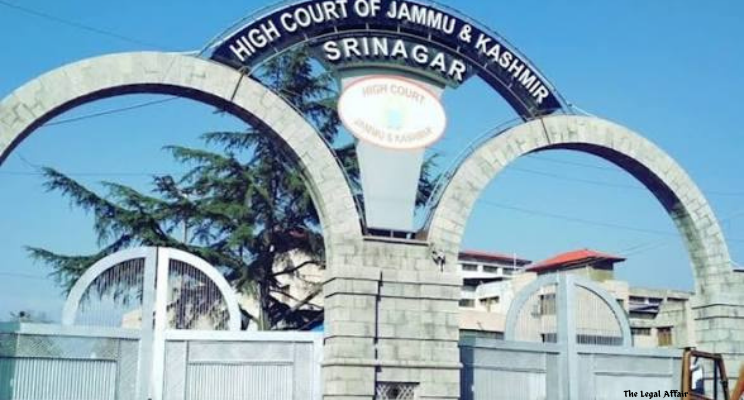
The High Court of Jammu & Kashmir and Ladakh at Srinagar has held that a defendant who fails to comply with a conditional order granting leave to defend a summary suit within the time stipulated by the court cannot revive the lost right to defend merely by depositing the outstanding amount after a decree has already been passed. The Court clarified that a subsequent deposit cannot operate retrospectively to cure the earlier default or undo the legal consequences flowing from non-compliance with the condition imposed by the trial court.
The ruling reiterates the importance of complying with conditional orders passed under Order XXXVII of the Code of Civil Procedure, 1908 (CPC), which provides a special and expedited procedure for the recovery of certain categories of claims. Unlike an ordinary civil suit, a summary suit does not automatically permit the defendant to contest the plaintiff’s claim. The defendant must first obtain leave to defend from the court by satisfying the requirements prescribed under the provision. Where such leave is granted subject to a condition, compliance with that condition within the stipulated period becomes crucial to the continuation of the defence.
Justice Moksha Khajuria Kazmi delivered the judgment while deciding a Civil First Appeal preferred by the Union Territory of Jammu and Kashmir and other appellants against the judgment and decree passed by the Additional District Judge (Bank Cases), Srinagar. The trial court had decreed a summary suit instituted by the respondents for recovery of approximately Rs. 57.23 lakh, together with interest and costs, after the appellants failed to deposit the entire amount required under the conditional order granting them leave to defend.
The dispute arose from electrical works allegedly executed by the respondents at the MLA Hostel in Srinagar. The respondents claimed that they had carried out the works at a cost of Rs. 37.82 lakh. According to their case, the funds had been contributed by the Legislative Assembly Secretariat, Jammu and Kashmir, and released in favour of the Directorate of Estates to meet the expenditure incurred. They instituted a suit under Order XXXVII CPC seeking recovery of Rs. 57.32 lakh.
The Estates Department, representing the appellants, sought leave to defend the suit. The trial court allowed the application, but made the permission conditional upon the deposit of Rs. 37.82 lakh before the court and the filing of a written statement within 30 days. The appellants challenged the conditional order before the High Court, but their petition was dismissed.
Thereafter, the appellants deposited Rs. 19.01 lakh through a cheque on March 26, 2023. However, the remaining amount of Rs. 18.81 lakh was not deposited within the time granted by the trial court. Instead, the appellants sought details from the Treasury Officer regarding the availability of funds so that the outstanding amount could be arranged and deposited.
In the meantime, the trial court proceeded with the matter and, on August 12, 2023, decreed the suit in favour of the respondents for approximately Rs. 57.23 lakh, along with interest and costs. The balance amount of Rs. 18.81 lakh was deposited only on July 25, 2025, nearly two years after the decree had been passed.
Aggrieved by the decree, the appellants approached the High Court through a Civil First Appeal. They argued that a substantial part of the amount directed to be deposited had already been paid and that the delay in depositing the remaining amount had occurred due to circumstances beyond their control. They sought interference with the trial court’s decision, contending that the court had not adequately considered the circumstances surrounding the delayed deposit.
The principal issue before the High Court was whether the deposit of the outstanding amount after the passing of the decree could be treated as compliance with the earlier conditional order and thereby restore the appellants’ right to defend the summary suit. The Court answered the question in the negative and dismissed the appeal, holding that the appellants had failed to comply with the condition within the prescribed period and had not provided any cogent explanation for their default.
Arguments of the Parties:
The appellants, the Union Territory of Jammu and Kashmir and other concerned authorities, challenged the decree primarily on the ground that the trial court had failed to appreciate the substantial compliance already made with the conditional order granting leave to defend.
They submitted that the trial court had directed them to deposit Rs. 37.82 lakh as a condition for defending the summary suit. In compliance with that direction, they had deposited Rs. 19.01 lakh through a cheque on March 26, 2023. According to the appellants, this substantial payment demonstrated their intention to comply with the court’s direction and contest the respondents’ claim.
The appellants explained that the remaining amount of Rs. 18.81 lakh could not be deposited immediately because they needed information regarding the funds available with the Treasury. They had, therefore, approached the Treasury Officer seeking details of the available funds so that the balance amount could be arranged. Their contention was that the delay had resulted from these administrative and financial circumstances and should not have been treated as a complete failure to comply with the court’s direction.
They further argued that the trial court ought to have considered the peculiar circumstances that prevented the timely deposit of the remaining amount. Since a substantial portion of the amount had already been deposited, they maintained that the court should not have proceeded to decree the suit without adequately considering the steps taken by them towards fulfilling the condition.
The appellants essentially sought to persuade the High Court that their partial compliance, coupled with the circumstances surrounding the delayed payment, warranted interference with the decree. Their case was that the subsequent deposit of the outstanding amount demonstrated that they had ultimately fulfilled the financial condition imposed by the trial court and that their defence should not have been foreclosed.
On the other hand, the respondents opposed the appeal and supported the decree passed by the Additional District Judge. They contended that the appellants had failed to comply with the condition imposed while granting leave to defend, despite having been afforded an opportunity to contest the summary suit.
The respondents also relied upon the statements made by the appellants in their application seeking leave to defend. According to them, the appellants had admitted that electrical works worth Rs. 37.82 lakh had been executed by the respondents. They argued that this admission was relevant to the dispute concerning the amount directed to be deposited as a condition for granting leave to defend.
The respondents emphasised that the trial court had clearly directed the appellants to deposit the entire amount of Rs. 37.82 lakh. The deposit of Rs. 19.01 lakh did not satisfy that condition because the remaining Rs. 18.81 lakh continued to remain unpaid within the stipulated period.
They further pointed out that the balance amount was deposited only on July 25, 2025, whereas the trial court had already passed the decree on August 12, 2023. The subsequent payment, therefore, could not retrospectively validate the appellants’ earlier non-compliance or restore a right to defend that had already been lost as a consequence of their failure to meet the condition.
The respondents maintained that the trial court had acted within its jurisdiction in proceeding to decree the suit after the appellants failed to fulfil the condition attached to the grant of leave to defend. They argued that accepting a payment made years after the decree as sufficient compliance would undermine the purpose of the conditional order and defeat the procedural discipline contemplated under Order XXXVII CPC.
The respondents accordingly urged the High Court to dismiss the appeal and uphold the decree, submitting that the appellants had neither complied with the court’s direction within time nor produced any satisfactory explanation for their failure to do so.
Court’s Judgment:
The High Court dismissed the Civil First Appeal and upheld the judgment and decree passed by the Additional District Judge (Bank Cases), Srinagar. Justice Moksha Khajuria Kazmi held that the appellants had failed to comply with the condition imposed while granting leave to defend within the stipulated period. The subsequent deposit of the outstanding amount, made after the suit had already been decreed, could not be treated as retrospective compliance so as to revive their right to contest the proceedings.
The Court examined the sequence of events leading to the passing of the decree. It noted that the trial court had granted the appellants leave to defend the summary suit subject to two conditions: depositing Rs. 37.82 lakh before the court and filing a written statement within 30 days.
The conditional order was significant because the permission to defend was not granted unconditionally. The appellants were required to fulfil the financial condition imposed by the trial court within the prescribed period in order to avail themselves of the opportunity to contest the respondents’ claim.
The Court took note of the fact that the appellants had deposited Rs. 19,01,000 on March 26, 2023. However, the remaining amount of Rs. 18,81,000 was deposited only on July 25, 2025. Thus, although a substantial portion of the amount had been paid, the entire amount required under the conditional order had not been deposited within the stipulated time.
An important circumstance considered by the High Court was that the suit had already been decided and decreed in favour of the respondents on August 12, 2023. The balance amount was deposited almost two years after the decree. The Court observed that the appellants could not rely upon this later payment to claim that they had complied with the original direction within time.
The Court held that the date of compliance was material. A conditional order granting leave to defend requires the defendant to fulfil the imposed condition within the period specified by the court. A payment made after the expiry of that period, particularly after the suit has been finally decreed, does not automatically erase the consequences of the earlier default.
In this context, the Court observed that the appellants had indisputably failed to comply with the condition imposed by the trial court through its order dated December 21, 2022, within the stipulated period. It categorically held that the deposit of the remaining Rs. 18,81,000 on July 25, 2025, long after the judgment and decree dated August 12, 2023, could not be construed as compliance with the direction retrospectively to revive the right to defend the suit.
The Court also considered whether the appellants had offered any satisfactory explanation for their failure to deposit the balance amount within the time granted. It found that they had not placed any cogent material on record justifying the delay.
The appellants had referred to their request to the Treasury Officer for information about the funds available for depositing the outstanding amount. However, the Court was not persuaded that this circumstance provided a sufficient explanation for their failure to comply with the judicial direction within the stipulated period. Merely stating that administrative or financial arrangements were being made could not, in the absence of a convincing explanation supported by material, excuse non-compliance with a specific condition imposed by the court.
The High Court therefore found no reason to interfere with the trial court’s decision. It held that once the appellants failed to fulfil the condition attached to the grant of leave to defend, the trial court could not be faulted for proceeding to decree the suit.
The reasoning is rooted in the special procedural framework under Order XXXVII CPC. This provision creates an expedited mechanism for deciding specified categories of suits, including certain claims based on written contracts and other recognised instruments. Its purpose is to prevent defendants from delaying the recovery of claims that fall within the scope of the provision by requiring plaintiffs to undergo the entire process of an ordinary civil trial in every case.
Under the summary procedure, a defendant does not acquire an unconditional right to contest the plaintiff’s claim merely upon entering appearance. The defendant must seek leave to defend and satisfy the court that there are grounds warranting permission to contest the suit. Depending on the circumstances, the court may grant leave unconditionally or impose conditions that must be fulfilled before the defendant can proceed with the defence.
The discretion to impose conditions is intended to balance the plaintiff’s entitlement to an expeditious remedy against the defendant’s opportunity to contest a claim that may genuinely be disputed. Where the court considers that the defendant should be permitted to defend the suit only after complying with a specified condition, the defendant is expected to honour that direction within the time allowed.
In the present case, the trial court had not rejected the appellants’ request for leave to defend outright. Instead, it had afforded them an opportunity to contest the suit, subject to depositing the amount of Rs. 37.82 lakh and filing a written statement within 30 days. The appellants were therefore aware of the condition attached to the permission granted to them.
The High Court’s decision underscores that a defendant cannot treat a conditional order as an optional direction or assume that partial compliance will automatically preserve the right to defend. Where the court has clearly specified the amount to be deposited and the time for compliance, the defendant must fulfil the condition within that period or seek appropriate relief from the court before the consequences of default arise.
The Court’s approach also reflects the distinction between compliance within the prescribed period and a subsequent attempt to cure a default after the proceedings have concluded. The two cannot be treated as equivalent in circumstances where the trial court has already acted upon the failure to comply and passed a decree.
The subsequent deposit may establish that the appellants eventually paid the outstanding amount, but it does not, by itself, establish that they complied with the earlier judicial direction when compliance was required. Treating such a deposit as retrospective compliance would effectively allow a party to disregard the time fixed by the court and fulfil the condition at a later stage, even after the other side has obtained a decree.
The Court’s reasoning also highlights the importance of finality in judicial proceedings. Once a decree has been passed following the defendant’s failure to fulfil a condition imposed while granting leave to defend, a later payment cannot automatically reopen the proceedings or restore the defence. Any challenge to the decree must be examined in accordance with the applicable legal principles and cannot succeed merely because the outstanding amount was eventually deposited.
Another significant aspect of the judgment was the Court’s examination of the appellants’ explanation for the delay. The Court did not consider the mere fact that a substantial amount had been deposited to be sufficient. It examined whether the appellants had provided a convincing justification for failing to deposit the remaining amount within the time allowed.
The absence of a cogent explanation weighed against the appellants. The High Court found that they had not demonstrated any legally sufficient reason that would justify disregarding the condition imposed by the trial court. In the absence of such material, there was no basis to conclude that the trial court had acted illegally or arbitrarily in decreeing the suit.
The respondents’ reliance on the appellants’ admission concerning the execution of electrical works worth Rs. 37.82 lakh also formed part of the rival submissions. However, the central basis of the High Court’s decision was the appellants’ failure to comply with the conditional order within the stipulated period and the fact that the remaining amount was deposited only after the decree had been passed.
The Court consequently found no perversity or illegality in the judgment and decree under challenge. It held that the trial court had acted within the applicable procedural framework when it proceeded to decree the suit after the appellants failed to fulfil the condition attached to the grant of leave to defend.
The appeal was accordingly dismissed, leaving the decree in favour of the respondents intact.
The judgment serves as an important reminder that procedural opportunities granted by a court, particularly under the summary procedure prescribed by Order XXXVII CPC, must be exercised in accordance with the conditions attached to them. A defendant who receives conditional leave to defend cannot assume that depositing the outstanding amount at any later stage will automatically restore the right to contest the suit. Timely compliance, or a legally sustainable request for appropriate relief before the stipulated period expires, remains essential.
At the same time, the decision is based on the particular facts before the High Court, including the clear conditional direction, the failure to deposit the entire amount within time, the absence of a cogent explanation and the subsequent passing of the decree. It should not be understood as laying down that every delay in complying with a conditional order is incapable of being addressed by a court under any circumstances. The ruling establishes that, in the circumstances of this case, a deposit made after the decree could not retrospectively cure the appellants’ default or revive their right to defend the summary suit.