


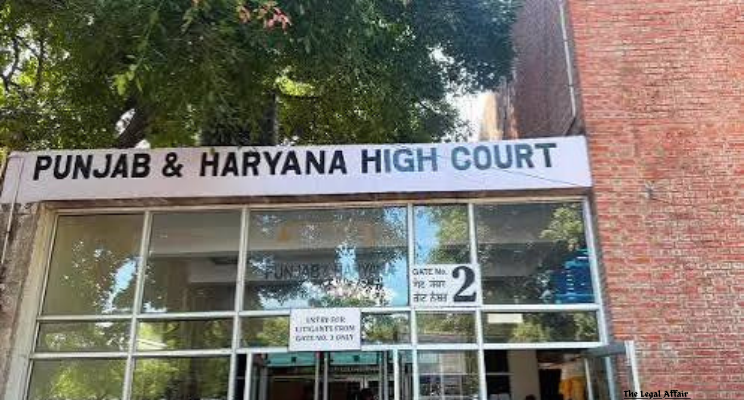
Introduction:
The Punjab and Haryana High Court has taken an important step towards preventing the misuse of official position by public servants facing corruption charges, after the Haryana Government undertook that officers and officials caught red-handed in trap or raid cases and subsequently released on bail would not be posted back to the same post or station. The State has further undertaken to transfer such officials away from the jurisdiction connected with the criminal proceedings, preferably beyond the adjoining districts, to prevent any possibility of influencing witnesses, tampering with evidence or obstructing a fair trial.
Justice Sumeet Goel took the Haryana Government’s affidavit on record and directed that the State would remain bound by the instructions furnished before the Court. The Bench also issued a strong warning that any deviation or variation from the undertaking without prior permission of the competent court would invite penal consequences for the Chief Secretary, Haryana, or the officers responsible for such non-compliance.
The issue arose during the consideration of a regular bail petition filed by an accused who had been booked in December 2025 by the State Vigilance and Anti-Corruption Bureau under Sections 7 and 7A of the Prevention of Corruption Act, 1988, read with Sections 61(2) and 308(2) of the Bharatiya Nyaya Sanhita, 2023.
The proceedings assumed wider significance because the Court had previously expressed concern over a recurring administrative practice in which public servants accused of corruption were reinstated into active service after obtaining bail, sometimes even in the same department, office or geographical jurisdiction connected with the prosecution.
While granting interim bail to the petitioner on August 27, 2026, the Court had observed that reinstating accused public servants in positions where they could exercise influence over the complainant, witnesses, official records or subordinate employees could seriously undermine the fairness of criminal proceedings. The concern was particularly significant where the accused belonged to a law-enforcement or investigating agency and could potentially regain access to sensitive records and personnel connected with the investigation.
Although the Court acknowledged that suspension, reinstatement and posting are primarily matters falling within the administrative authority of the employer, it emphasised that judicial intervention becomes necessary when administrative decisions have the potential to interfere with the administration of criminal justice.
Consequently, the Chief Secretary, Haryana, was directed to explain the existing framework governing the reinstatement and subsequent posting of public servants facing corruption allegations. The State was specifically required to clarify whether the decision to revoke suspension involved consultation with the prosecuting agency or trial court and whether any mechanism existed to assess the possibility of witness intimidation or manipulation of official records.
In compliance with these directions, the Chief Secretary submitted an additional affidavit dated October 28, 2026, placing on record instructions issued by the Haryana Government’s Vigilance Department on October 27, 2026. These instructions established a transfer policy for officers and officials apprehended red-handed in trap and raid cases and subsequently released on bail.
The High Court thereafter considered the State’s undertaking, the petitioner’s period of incarceration, the status of the criminal trial and the absence of any allegation that the petitioner had misused the liberty granted under the interim bail order.
The matter thus involved two interconnected issues: the protection of a fair criminal trial against possible administrative interference and the right of an accused person to personal liberty while criminal proceedings remain pending.
Arguments of the Parties:
The proceedings involved competing considerations relating to the petitioner’s personal liberty and the State’s responsibility to ensure that public servants facing corruption allegations do not misuse their official positions to influence the criminal justice process.
On behalf of the petitioner, Mr. Shivansh Malik, Advocate, represented the accused and sought the continuation of the interim bail already granted by the High Court. The petition arose from criminal proceedings initiated by the State Vigilance and Anti-Corruption Bureau under Sections 7 and 7A of the Prevention of Corruption Act, along with the relevant provisions of the Bharatiya Nyaya Sanhita.
The petitioner’s entitlement to bail was examined against the background of his period of custody, the progress of the investigation and the anticipated duration of the trial. The Court had earlier recorded that the petitioner was arrested on April 2, 2026, and that the investigating agency filed the challan on May 26, 2026.
Despite the filing of the challan, none of the 28 prosecution witnesses had been examined when the matter was considered. The petitioner had already remained in custody for four months and 23 days when interim bail was granted on August 27, 2026.
The Court had also taken note of the fact that the rival contentions raised by the parties involved issues that required consideration during trial. There was nothing before it to indicate that the petitioner was likely to abscond or interfere with the evidence. Further, the petitioner was not involved in any other FIR.
These circumstances were relevant to the petitioner’s claim that continued incarceration was not necessary, particularly when the investigation had progressed to the stage of filing the challan and the trial was yet to commence its substantive examination of prosecution witnesses.
The State, represented by Mr. Gurmeet Singh, Additional Advocate General, Haryana, was required to address the Court’s concerns regarding the administrative treatment of public servants accused of corruption after their release on bail.
The principal issue was not merely whether such officials could be reinstated following the grant of bail, but whether their subsequent posting could create circumstances in which they might exercise influence over the complainant, prosecution witnesses, investigating personnel or official records connected with the case.
The State was accordingly required to explain the safeguards governing suspension and reinstatement and whether the existing administrative framework provided for an assessment of the risks associated with restoring an accused official to the same office or jurisdiction.
In response, the Haryana Government placed an additional affidavit on record through the Chief Secretary. The affidavit referred to the instructions issued by the Vigilance Department on October 27, 2026, specifically addressing the transfer of officers and officials accused in trap and raid cases.
Under the instructions, an officer or official apprehended red-handed and subsequently released on bail would not be posted against the same post or at the same station. Instead, the official would be transferred to a station away from the concerned jurisdiction, preferably beyond the adjoining boundary districts.
The stated purpose of the arrangement was to ensure a fair and impartial trial and eliminate the possibility of the accused exercising undue influence over the complainant or witnesses.
The State further clarified that where the concerned official belonged to a district cadre, the transfer would be made to another distant station within the district.
The affidavit also stated that all concerned authorities had been directed to ensure strict compliance with the instructions.
The State’s undertaking was therefore intended to address the institutional concerns raised by the High Court by establishing a specific administrative safeguard against the possibility of interference with criminal proceedings.
It is important to note that the available case summary does not reproduce the detailed oral submissions of either side on every aspect of the bail application. The competing considerations reflected in the proceedings were nevertheless clear: the petitioner’s claim to liberty in the absence of demonstrated misuse of bail, and the State’s obligation to prevent the misuse of official authority by public servants facing corruption allegations.
Court’s Judgment:
The Punjab and Haryana High Court considered the matter from two distinct but closely connected perspectives. The first concerned the administrative safeguards necessary to protect the integrity of corruption prosecutions, while the second involved the petitioner’s entitlement to continued release on bail.
State’s undertaking regarding transfer of officials accused in corruption cases
The most significant aspect of the proceedings was the Haryana Government’s decision to introduce specific instructions governing the posting of officers and officials apprehended red-handed in trap and raid cases.
The Court had previously expressed serious concern over what it described as a deeply concerning trend of public servants being reinstated into active service after obtaining bail in cases registered under the Prevention of Corruption Act.
The Bench observed that the situation becomes particularly prejudicial when an accused public servant is reinstated in the very department, office or geographical area forming the subject matter of the prosecution.
Such a posting may create opportunities for the accused to exercise official influence over persons connected with the criminal proceedings. The potential consequences include interference with documentary evidence, intimidation or coercion of witnesses and misuse of administrative authority to obstruct the investigation or trial.
The Court particularly emphasised the heightened risks where the accused belongs to a law-enforcement or investigating agency. In such circumstances, reinstatement may restore access to sensitive official records, investigation-related information and subordinate personnel who could be connected with the prosecution.
The concern was therefore not limited to the possibility of direct interference with witnesses. It also extended to the broader institutional risks arising when a person facing corruption allegations is permitted to exercise authority within the same administrative structure connected with the alleged offence.
Administrative discretion cannot undermine the administration of justice
The Court acknowledged that matters relating to suspension, reinstatement and posting ordinarily fall within the domain of the employer and the competent administrative authorities.
Ordinarily, courts do not substitute their own administrative preferences for decisions taken by the government in matters of service management. However, the exercise of administrative discretion cannot be entirely separated from its legal consequences, particularly when such decisions have a direct bearing on pending criminal proceedings.
The Bench made it clear that judicial authorities cannot remain oblivious to ground realities where administrative oversight has the potential to undermine the administration of justice.
This observation is important because it recognises that a decision concerning the posting of a government employee may have consequences beyond the ordinary service relationship between the employee and the government.
Where the accused is facing prosecution for corruption and the posting decision could provide an opportunity to influence witnesses or interfere with evidence, the matter acquires a direct connection with the fairness of the criminal trial.
The Court’s approach does not mean that every public servant released on bail must automatically remain suspended. Rather, it highlights the importance of ensuring that administrative decisions concerning reinstatement and posting take into account the nature of the allegations, the concerned jurisdiction and the possibility of interference with the criminal justice process.
Directions to the Chief Secretary, Haryana
In its earlier order dated August 27, 2026, the Court had directed the Chief Secretary, Haryana, to submit a detailed response explaining the framework governing the reinstatement of public servants accused of corruption.
The State was specifically required to clarify whether existing administrative protocols contemplated consultation with the prosecuting agency or the trial court before revoking suspension.
The Court also sought an explanation regarding the manner in which the competent authority assessed the possibility of witness tampering, manipulation of official records or other forms of interference before permitting an accused official to resume active service.
These questions were significant because the decision to reinstate an accused public servant should not be considered exclusively from the standpoint of service administration. The potential impact on the pending prosecution must also receive appropriate consideration.
Haryana Government introduces transfer safeguards
In response to the Court’s directions, the Chief Secretary submitted an additional affidavit dated October 28, 2026.
The affidavit placed on record a communication issued by the Haryana Government’s Vigilance Department on October 27, 2026, concerning the transfer of officers and officials accused in trap and raid cases.
Under the newly communicated instructions, officers and officials apprehended red-handed in such cases and released on bail would not be posted at the same station or against the same post.
Instead, they would be transferred to a station away from the jurisdiction concerned in the criminal proceedings, preferably beyond the adjoining boundary districts.
The instructions expressly stated that the arrangement was intended to ensure a fair and impartial trial and prevent any possibility of undue influence being exercised upon the complainant or witnesses.
The Government also addressed the position of officials belonging to district cadres. In such cases, the concerned official would be transferred to another distant station within the district.
The affidavit confirmed that all concerned authorities had been directed to ensure strict implementation of these instructions.
The policy represents an administrative safeguard intended to create a reasonable separation between an accused public servant and the geographical or institutional environment connected with the alleged offence.
By preventing the accused from returning to the same post and station, the Government seeks to reduce the possibility of misuse of official authority during the pendency of criminal proceedings.
State bound by its affidavit; deviation may invite penal consequences
After considering the additional affidavit, Justice Sumeet Goel took the State Government’s instructions on record and expressly directed that Haryana would remain bound by the undertaking furnished before the Court.
The Court did not treat the affidavit as a mere statement of the Government’s intended administrative policy. Instead, it attached judicial significance to the undertaking and made compliance obligatory.
The Bench further warned that any deviation or variation from the instructions without obtaining prior permission from the competent court would indubitably invite penal consequences for the Chief Secretary, Haryana, or the officers concerned.
This warning carries considerable significance for public administration.
It establishes that once a government furnishes a specific undertaking before a constitutional court and the court records that undertaking as binding, the concerned authorities cannot subsequently disregard it through an independent administrative decision.
The direction also places responsibility upon senior administrative officials to ensure that the policy is implemented consistently throughout the concerned departments.
The possibility of penal consequences is intended to discourage arbitrary departures from the undertaking and ensure that the safeguards introduced by the Government are not rendered ineffective through administrative inaction or selective compliance.
Consideration of the petitioner’s regular bail application
Apart from examining the State’s undertaking, the High Court also considered whether the petitioner was entitled to continuation of the interim bail granted earlier.
The petitioner had been arrested on April 2, 2026, in connection with the corruption case registered by the State Vigilance and Anti-Corruption Bureau. The investigating agency subsequently filed the challan on May 26, 2026.
When the Court considered the matter, the prosecution proposed to examine 28 witnesses, none of whom had yet been examined.
The Bench noted that the petitioner had already spent four months and 23 days in custody before receiving interim bail on August 27, 2026.
While granting interim relief, the Court had observed that the rival contentions raised by the parties involved debatable questions that would require examination during the trial.
It also found no material indicating that the petitioner was likely to abscond or interfere with the evidence. The fact that he was not involved in any other FIR was another relevant consideration.
The Court was therefore of the view that continued incarceration was not justified merely because the criminal proceedings remained pending, particularly when the investigation had culminated in the filing of the challan and the trial had not yet progressed to the examination of witnesses.
The principle underlying this consideration is that pre-trial detention should not be used as a form of punishment. The purpose of arrest and detention during criminal proceedings is to secure the accused’s presence, protect the investigation and trial, and prevent interference with the administration of justice.
The filing of the challan does not automatically entitle an accused to bail. Nevertheless, the completion of the investigation, the nature of the allegations, the possibility of evidence tampering, the likelihood of absconding and the anticipated duration of the trial remain relevant considerations.
In this case, the Court had already assessed these circumstances while granting interim bail.
Interim bail made absolute
While reconsidering the petition, the Court noted that there was no allegation that the petitioner had misused the liberty granted to him under the interim bail order.
The absence of any reported violation of the bail conditions was significant because the Court was required to assess whether the petitioner had demonstrated that he could remain on bail without obstructing the criminal proceedings.
Finding no reason to withdraw the interim protection, the Bench made the interim bail order absolute.
However, the Court ensured that the petitioner’s liberty remained subject to appropriate safeguards.
In addition to the conditions that may be imposed by the Chief Judicial Magistrate or the Duty Magistrate, the petitioner was directed not to misuse the liberty granted to him, tamper with evidence, remain absent from any date fixed for trial, commit any further offence or attempt to delay the proceedings.
The petitioner was also directed to deposit his passport, if he possessed one, before the trial court.
Further, he was required to furnish his mobile phone number to the Investigating Officer or the Station House Officer. He could not change the number without obtaining prior permission from the trial court or the Illaqa Magistrate.
These conditions were intended to ensure the petitioner’s availability during the proceedings and prevent any conduct that could prejudice the prosecution.
The Court also clarified that the State or the complinant would be at liberty to seek cancellation of bail if the petitioner violated any of