


Introduction:
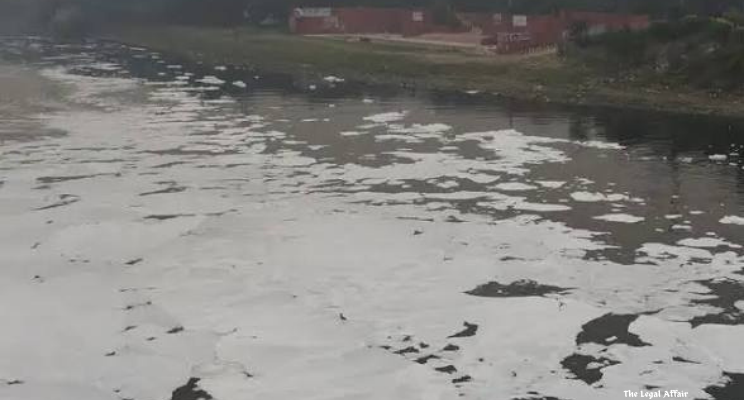
The Supreme Court of India has expressed serious concern over the continuing deterioration of the Yamuna River despite substantial public expenditure on various river-cleaning initiatives. The Court observed that the persistent pollution of the river reflects deep-rooted failures in civic administration across the towns, cities and villages situated along its banks. It emphasised that the problem cannot be addressed merely by spending more money on sewage treatment infrastructure when untreated wastewater, industrial effluents and other pollutants continue to enter the river through hundreds of drains.
A Bench comprising Justice Manoj Misra and Justice Manmohan made these observations while examining issues concerning the pollution of the Yamuna and the effectiveness of measures undertaken by different States and Union Territories for its protection and restoration. The Court highlighted that approximately 520 drains discharge wastewater into the river, demonstrating the magnitude of the pollution problem and the inadequacy of existing administrative arrangements.
The Bench observed that the condition of the Yamuna is a reflection of the overall state of civic governance in the areas through which the river flows. It remarked that everything wrong with civic administration in the towns, cities and villages along the riverbanks is reflected in the poor health of the river and the numerous drains discharging wastewater into it. The Court expressed particular dissatisfaction with the fact that, despite huge amounts of public money being spent on cleaning the river, the level of pollution had continued to increase rather than decline.
The proceedings raised important questions concerning environmental governance, inter-State coordination, administrative accountability and the enforcement of pollution-control obligations. The Yamuna is not confined to the jurisdiction of a single State or municipal authority. Its pollution is influenced by activities taking place across multiple States, Union Territories and districts. Consequently, the Court considered it necessary to introduce a coordinated monitoring mechanism capable of identifying where and under whose administrative jurisdiction the quality of the river deteriorates.
The Court accordingly entrusted the Central Pollution Control Board (CPCB) with the responsibility of monitoring water quality at the points where the Yamuna and major drains enter and exit each State, Union Territory and district. The objective is to establish measurable responsibility for the deterioration of water quality instead of allowing different authorities to shift responsibility onto one another.
The Court also recognised that environmental protection requires more than the construction of sewage treatment plants (STPs). Unless untreated sewage and industrial pollutants are prevented from entering the river at their source, additional treatment infrastructure alone cannot deliver meaningful results.
The directions issued by the Supreme Court represent an important intervention in environmental governance because they seek to transform the approach towards river conservation from one based primarily on expenditure and infrastructure creation to one founded on measurable environmental outcomes, continuous monitoring and accountability for non-compliance.
Arguments of the Parties:
The proceedings involved several authorities and stakeholders responsible for the management, monitoring and protection of the Yamuna River. The appearance details indicate participation by the Union Government, pollution-control authorities, State authorities and other respondents. However, the available case summary does not reproduce the complete written submissions or individual oral arguments advanced by each party. Accordingly, the competing positions can be understood from the issues examined by the Court and the deficiencies identified in the existing environmental-management framework, without attributing specific submissions to individual counsel.
The principal concern underlying the proceedings was the continuing deterioration of the Yamuna despite the implementation of various river-cleaning programmes and the expenditure of substantial public funds. The effectiveness of the existing action plans, sewage treatment infrastructure and administrative monitoring arrangements was therefore brought into focus.
From the perspective of the authorities responsible for environmental protection, the challenge involved managing pollution generated across several jurisdictions and ensuring coordination between different departments and implementing agencies. The Yamuna receives wastewater through numerous drains, making it necessary to monitor not only the river itself but also the sources contributing to its contamination. The existence of multiple municipal bodies, industrial establishments, treatment facilities and government departments further complicates the enforcement of environmental standards.
The need for sewage treatment infrastructure and the implementation of river-cleaning programmes formed an important part of the broader administrative response. However, the Court’s examination revealed that the mere existence of treatment facilities could not be treated as proof of effective pollution control. The performance of existing STPs, their compliance with prescribed standards and the actual quality of water discharged from them were matters requiring independent verification.
The deficiencies identified in Delhi’s Yamuna Action Plan illustrated the seriousness of the problem. The Court noticed an apparent contradiction concerning the status of 35 water bodies and wetlands situated in Zone ‘O’ of Delhi. Although the action plan indicated that there were no encroachments on these water bodies and wetlands, an annexure submitted by the Delhi Government itself identified all 35 as encroached upon.
This discrepancy raised concerns regarding the accuracy of official environmental assessments and the reliability of information supplied by the implementing authorities. Environmental action plans, the Court’s approach indicated, cannot be considered effective merely because they contain favourable descriptions of existing conditions. Their findings must correspond with actual ground realities.
Another significant issue concerned the functioning of Delhi’s sewage treatment infrastructure. The Court noted that none of the 37 existing STPs in Delhi complied with all the prescribed standards. This raised questions about the effectiveness of the existing treatment facilities and the adequacy of regulatory supervision.
The broader environmental concern was that untreated sewage and industrial effluents continued to enter the Yamuna through the drainage network. Consequently, constructing additional STPs without ensuring that existing facilities operate efficiently would not adequately address the pollution crisis.
The proceedings also highlighted the importance of ensuring that the CPCB possesses sufficient institutional support to perform its monitoring responsibilities. Effective environmental supervision requires access to treatment facilities, operational records, discharge-quality information and technical infrastructure. Without cooperation from the concerned authorities and plant operators, even a well-designed monitoring mechanism may fail to produce meaningful results.
The Court therefore considered it necessary to establish a framework under which the CPCB could independently inspect treatment facilities, collect samples, verify operational data and assess the quality of wastewater discharged into the river. Such monitoring would require cooperation from both government departments and private entities managing wastewater and effluent-treatment infrastructure.
Another important aspect was the allocation of responsibility among the States and Union Territories sharing the Yamuna. Since pollution can originate at different points along the river’s course, the authorities responsible for one geographical area cannot be permitted to disregard the consequences of their actions for downstream regions.
The need for a common approach to environmental protection was therefore central to the proceedings. The Court considered that the States and Union Territories sharing the river must recognise their collective responsibility while remaining accountable for the pollution contributed from their respective jurisdictions.
These concerns ultimately led the Court to formulate a system of continuous monitoring, independent verification, financial accountability and coordinated administrative action.
Court’s Judgment:
The Supreme Court adopted a comprehensive approach to the Yamuna pollution crisis and emphasised that environmental protection must be measured through actual improvements in water quality rather than the amount of money spent or the number of treatment facilities constructed.
At the outset, the Bench expressed dissatisfaction with the continued deterioration of the river despite substantial expenditure on cleaning initiatives. It observed that the pollution of the Yamuna was not merely an isolated environmental problem but a reflection of the failure of civic administration throughout the areas situated along its banks.
The Court specifically referred to the approximately 520 drains discharging wastewater into the river. It observed that the poor condition of these drains and the river itself demonstrated the inability of the existing civic and environmental-management systems to prevent pollution at its source.
The observation was significant because it shifted attention towards the administrative causes of environmental degradation. The Court made it clear that the responsibility for protecting the Yamuna cannot be discharged merely by announcing schemes, allocating funds or constructing treatment facilities. Authorities must ensure that the infrastructure actually functions and that pollutants are prevented from entering the river.
State-wise and district-wise monitoring of water quality
One of the most significant directions issued by the Court concerned the establishment of a systematic monitoring mechanism under the supervision of the CPCB.
The Court directed the CPCB to monitor the quality of water at the points where the Yamuna and major drains enter and exit each State, Union Territory and district.
The purpose of this exercise is to identify the precise geographical locations where deterioration in water quality occurs. By comparing the quality of water at entry and exit points, the monitoring mechanism would help determine whether pollution levels have increased while the river passes through a particular administrative jurisdiction.
The Bench made it clear that if water quality deteriorates on any parameter while passing through or exiting a State, Union Territory or district, the concerned administrative jurisdiction would be held accountable and penalised.
The Court observed:
“If the water quality deteriorates on any parameter while flowing through, or exiting a State/Union Territory or a District therein, then that State/Union Territory or District within the State/Union Territory shall be held accountable and penalised.”
This direction introduces an important element of measurable environmental accountability. Instead of allowing authorities to blame pollution originating elsewhere, the monitoring system would help establish responsibility through scientific assessment of water quality.
The CPCB was further directed to suggest an appropriate formula for calculating environmental compensation. Such compensation may be recovered by the concerned States from polluters and negligent officials after conducting an appropriate inquiry.
The direction is particularly important because it connects environmental deterioration with financial consequences. Authorities and polluting entities would be required to bear responsibility for the environmental damage attributable to their activities or negligence.
Pollution must be controlled at its source
The Court also emphasised that the Yamuna cannot be cleaned effectively unless industrial pollution and untreated sewage are stopped at their sources.
It observed that constructing additional sewage treatment plants would not, by itself, resolve the problem. The existence of treatment infrastructure is meaningful only when the facilities operate properly and ensure that wastewater is treated in accordance with the prescribed environmental standards before being discharged.
This approach reflects the broader principle underlying environmental jurisprudence that prevention of pollution is as important as remedial action. Once untreated sewage and industrial effluents enter a river, the resulting environmental damage may be difficult and expensive to reverse.
The Court’s observations therefore require authorities to concentrate on preventing pollution rather than relying exclusively on measures intended to address contamination after it has already occurred.
The deficiencies in Delhi’s sewage-treatment infrastructure provided an important illustration of this problem. The Bench noted that none of Delhi’s 37 existing STPs complied with all the prescribed standards.
This finding raised serious concerns about the effectiveness of the existing treatment network. It also demonstrated that the mere availability of sewage treatment facilities cannot be equated with compliance with environmental obligations.
The authorities must ensure that every treatment facility performs its intended function and that the quality of treated wastewater satisfies the applicable standards.
Discrepancies in Delhi’s Yamuna Action Plan
The Court also examined inconsistencies in the Yamuna Action Plan concerning the protection of water bodies and wetlands situated in Delhi’s Zone ‘O’.
It noticed that the action plan claimed that there were no encroachments on 35 water bodies and wetlands in the designated area. However, an annexure submitted by the Delhi Government itself identified all 35 water bodies and wetlands as encroached upon.
The contradiction was significant because it raised questions about the accuracy of official reporting and the effectiveness of the administrative mechanisms responsible for protecting ecologically sensitive areas.
The Court’s approach indicates that environmental planning must be based on accurate information and verified ground conditions. Authorities cannot rely upon reports that present an inaccurate picture of the environmental situation.
The Bench also called for the protection of Delhi’s Zone ‘O’ as a green zone. It directed that existing structures be removed in accordance with law and that occupants be rehabilitated wherever they are legally entitled to such rehabilitation.
The direction seeks to balance environmental restoration with the legal rights of persons occupying the affected areas. While encroachments and unauthorised structures cannot be permitted to defeat environmental protection, their removal must follow the applicable legal procedure, including rehabilitation obligations wherever recognised by law.
Application of the Doctrine of Common But Differentiated Responsibilities
Another important aspect of the judgment was the Court’s invocation of the doctrine of Common But Differentiated Responsibilities.
The doctrine recognises that environmental protection may involve shared responsibilities among different entities, but the extent and nature of those responsibilities may vary depending on their respective contributions to environmental degradation and their capacity to address the problem.
Applying this principle to the Yamuna, the Court emphasised that all States and Union Territories sharing the river must recognise it as one continuous ecological system.
The river cannot be treated as a collection of unrelated stretches falling under separate administrative jurisdictions. Pollution generated in one region may adversely affect the quality of water in another, making coordinated environmental management essential.
At the same time, the principle does not require every State or Union Territory to bear identical responsibility regardless of its contribution to pollution. Rather, the obligations must correspond to the extent of pollution attributable to the concerned jurisdiction and its capacity to take corrective measures.
The Court’s approach reinforces the idea that environmental protection is a collective responsibility, but collective responsibility cannot become an excuse for the absence of individual accountability.
Installation of tamper-proof smart energy meters
To ensure transparency in the functioning of wastewater-treatment infrastructure, the Court issued specific directions concerning the installation of smart energy meters.
It directed all sewage treatment plants, Common Effluent Treatment Plants (CETPs) and government-commissioned biogas plants to install tamper-proof smart energy meters within one month.
The requirement is intended to facilitate independent verification of the operational status of these facilities. Energy consumption can provide important information about whether a treatment plant is functioning and whether its operations correspond with the capacity and performance claimed by its operator.
The Court further directed that treatment plants must upload live data concerning their operations and the quality of their discharge.
This requirement would allow the CPCB to access operational information without depending exclusively on periodic reports supplied by the plant operators themselves.
The introduction of real-time monitoring is particularly relevant because environmental violations may occur between scheduled inspections. A system based on live operational data can help regulatory authorities identify irregularities more promptly and take corrective action.
Quarterly surprise inspections and environmental compensation
The Supreme Court also strengthened the inspection mechanism by directing the CPCB to conduct quarterly surprise inspections.
These inspections are intended to verify whether treatment plants are functioning properly, whether the data being uploaded corresponds with actual operations and whether the quality of discharged wastewater meets prescribed standards.
The element of surprise is important because advance notice may allow non-compliant facilities to temporarily alter their operations before an inspection.
The Court further directed that environmental compensation would be recoverable for every day of non-compliance.
This direction seeks to discourage prolonged violations and ensure that polluters and negligent operators do not treat environmental penalties as an occasional or insignificant expense.
The daily-compensation mechanism also reinforces the principle that environmental obligations are continuous. Compliance is not established merely because a facility was functioning properly on the date of an inspection. Treatment plants must maintain prescribed standards throughout their operations.
Comprehensive assistance to the CPCB
Recognising the extensive responsibilities entrusted to the CPCB, the Court issued detailed directions requiring cooperation from all concerned government authorities, departments and private entities.
The Court directed all Central and State bodies, including ministries, organisations, instrumentalities, authorities and departments, to provide the CPCB and its authorised officers with necessary administrative, logistical, technical, operational and infrastructural assistance.
The cooperation must also extend to expert and academic institutions engaged by the CPCB for monitoring and technical assessments.
The Court further directed public and priate entities, concessionaires, operators and agencies managing wastewater, sol