


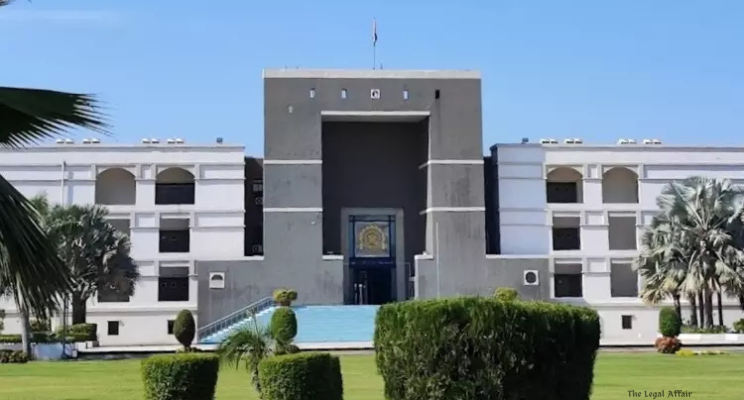
Introduction:
In a significant ruling that strengthens the principle of commercial unity and the spirit of arbitration, the Gujarat High Court, in Adani Enterprise Ltd. v. M/s SMS Carbon and Minerals Pvt. Ltd. [C/ARBI.P/76/2023], held that when several agreements are part of a single commercial project, all such agreements can be referred to a common arbitration proceeding, and a single arbitrator can be appointed to adjudicate all disputes arising therefrom. The judgment, delivered by a Bench led by Chief Justice Sunita Agarwal, was pronounced in a petition filed under Section 11 of the Arbitration and Conciliation Act, 1996, by Adani Enterprise Ltd. (“Petitioner”) seeking the appointment of a sole arbitrator to resolve its dispute with SMS Carbon and Minerals Pvt. Ltd. (“Respondent”). The case revolved around a series of coal sale and purchase agreements and corresponding service contracts that were executed as part of a unified commercial transaction between the parties. The Court observed that the General Condition of Contracts (GCC) and the General Terms and Conditions (GTC), both dated 04.04.2022, were integral and governing instruments of the ten separate but interlinked agreements executed between the parties. Relying on the precedents set by the Supreme Court in Ameet Lalchand Shah and Others v. Rishabh Enterprises and Another (2018) and Mahanagar Telephone Nigam Ltd. v. Canara Bank and Others (2020), the Court held that a pragmatic, commercial, and common-sense approach must be adopted to interpret commercial contracts, ensuring that arbitration clauses are not rendered redundant due to technicalities.
Arguments on Behalf of the Petitioner:
The Petitioner, represented by Dr. Abhisht K. Thaker, submitted that the dispute arose out of a single commercial arrangement for the sale of imported steam coal and associated services between the parties. The Petitioner contended that although there were ten different contracts—five coal sale and purchase agreements and five service agreements—they were all governed by the same GCC and GTC, both dated 04.04.2022, and were therefore interconnected parts of a single commercial project. It was further submitted that the contractual framework clearly provided an arbitration clause under Clause 17 of the GCC, evidencing the parties’ mutual intention to resolve disputes through arbitration. The Petitioner argued that the Respondent’s failure to lift the contracted coal within the agreed “free period” of 45 days, as stipulated under Clause 9 of the contract, constituted a breach. Despite being granted an additional two-month extension, the Respondent did not lift the coal, compelling the Petitioner to issue a notice dated 10.02.2023 invoking arbitration and proposing the appointment of a sole arbitrator. The Respondent, however, disagreed with the proposed name of the arbitrator through its reply dated 11.03.2023, leading to a deadlock. Consequently, the Petitioner invoked Section 11 of the Arbitration and Conciliation Act, 1996, seeking the Court’s intervention for the appointment of a sole arbitrator.
The Petitioner argued that the doctrine of composite reference to arbitration, as recognized in Ameet Lalchand Shah (2018), clearly applies to the present case since all agreements were executed within a short span of time and formed part of the same commercial venture. The Petitioner also relied upon the judgment in Mahanagar Telephone Nigam Ltd. v. Canara Bank (2020), where the Supreme Court emphasized that the intention of the parties to arbitrate should be the guiding principle, and a technical or hyper-legalistic approach must not defeat the purpose of arbitration. The Petitioner maintained that referring each of the ten contracts to separate arbitrations would not only result in multiplicity of proceedings but also risk conflicting findings on identical issues. Therefore, the only logical, efficient, and legally sound approach would be to consolidate all disputes under one arbitral tribunal.
Arguments on Behalf of the Respondent:
The Respondent, represented by Advocate Mr. Salil M. Thakore, resisted the petition and argued that each agreement between the parties was separate, distinct, and independent, involving different quantities of coal and executed on different dates between 04.04.2022 and 06.04.2022. The Respondent contended that the arbitration clause in one contract cannot automatically extend to other agreements, particularly when those agreements pertain to different subject matters and consideration. It was argued that the contracts did not expressly provide for a consolidated arbitration or for the appointment of a single arbitrator for multiple agreements. Therefore, referring all the contracts to a single arbitration would be contrary to the principle of party autonomy and the specific terms of each agreement.
The Respondent also submitted that the invocation of arbitration by the Petitioner was premature, as the Respondent had raised legitimate concerns regarding the non-fulfillment of certain contractual obligations by the Petitioner. The Respondent further contended that the GCC and GTC, though referred to in the contracts, did not automatically make all agreements part of a single commercial transaction, as each purchase and service contract had its own performance obligations. The Respondent requested the Court to reject the Section 11 petition and allow the parties to resolve each dispute under its respective contract-specific arbitration clause, if any.
Court’s Analysis and Judgment:
After a thorough examination of the pleadings, contract documents, and relevant judicial precedents, the Gujarat High Court delivered a detailed and reasoned judgment allowing the petition and appointing a sole arbitrator to adjudicate all disputes arising between the parties. The Bench, led by Chief Justice Sunita Agarwal, observed that both the General Condition of Contracts (GCC) and the General Terms and Conditions (GTC) dated 04.04.2022 were integral governing instruments for the ten contracts executed between the parties—five coal sale and purchase agreements and five service agreements. The Court found that these contracts were not independent but were executed as part of one cohesive commercial project, designed to achieve a single business objective.
The Court noted that adopting a narrow or fragmented interpretation would lead to unnecessary multiplicity of proceedings and could result in inconsistent arbitral awards on similar factual matrices. Relying on the Supreme Court’s ruling in Ameet Lalchand Shah and Others v. Rishabh Enterprises and Another (2018), the Court observed that when multiple agreements are interdependent and form part of one composite transaction, they can be referred to a single arbitration. In that case, the Supreme Court had appointed one arbitrator for several agreements after concluding that they collectively constituted one commercial arrangement.
The Bench also relied on Mahanagar Telephone Nigam Ltd. v. Canara Bank and Others (2020), where the Apex Court emphasized that the true test lies in ascertaining the intent of the parties to resolve disputes through arbitration. The Court reiterated that the arbitration agreement need not follow a rigid formula; instead, what matters is the demonstrated intent of the parties to refer disputes to arbitration. The Gujarat High Court, applying these principles, held that the multiple agreements executed between Adani Enterprise Ltd. and SMS Carbon and Minerals Pvt. Ltd. were interlinked through the GCC and GTC and therefore formed one integrated commercial framework.
Addressing the Respondent’s argument that each contract was separate, the Court stated that while the quantities of coal and execution dates might differ, the underlying purpose of the contracts was singular—the purchase, sale, and delivery of imported steam coal along with associated services under a unified set of terms. The Court emphasized that commercial contracts must be interpreted with a “common-sense approach” and not through a pedantic or technical lens that defeats the intention of the parties.
The Bench further observed that Clause 17 of the GCC contained an arbitration clause that covered “any dispute arising out of or in relation to” the agreement. Such wording, the Court held, was wide enough to encompass all disputes arising under the interconnected contracts. The Court therefore concluded that all disputes between the parties—arising out of the ten interrelated contracts—should be referred to a single arbitration proceeding before one arbitrator to ensure efficiency, consistency, and fairness.
In conclusion, the Gujarat High Court allowed the Section 11 petition filed by Adani Enterprise Ltd., appointed a sole arbitrator to adjudicate all disputes between the parties, and directed that the arbitration proceedings be conducted in accordance with the Arbitration and Conciliation Act, 1996. The decision not only reinforces the principle of composite reference in arbitration but also aligns with the judiciary’s pro-arbitration stance aimed at promoting speedy and unified resolution of commercial disputes.