


Introduction:
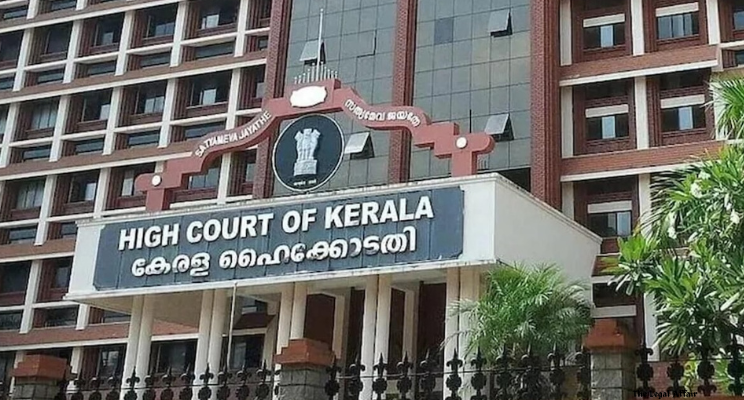
In a landmark affirmation of the constitutional right to free speech, the Kerala High Court in Manu S v. State of Kerala and Others [2025 LiveLaw (Ker) 726] quashed criminal proceedings against a man who was prosecuted for posting a Facebook comment critical of contributions to the Chief Minister’s Distress Relief Fund (CMDRF). The case, registered suo motu by the Ernakulam Central Police Station in August 2019, had invoked Section 505(1)(b) of the Indian Penal Code and Sections 118(b), 118(c), and 120(o) of the Kerala Police Act. The petitioner’s comment had merely expressed the view that providing direct help to flood victims was preferable and that contributions to official relief funds might be misused. Delivering the judgment, Justice V.G. Arun observed that mere dissent or criticism cannot be criminalized under the guise of maintaining public order, as freedom of expression is the lifeblood of democracy. The Court reiterated that Article 19(1)(a) of the Constitution guarantees every citizen the right to express opinions, and such expression can be curtailed only under the limited grounds enumerated in Article 19(2). The ruling thus reinforced that fear of governmental displeasure or public backlash cannot justify restricting a citizen’s voice on social media.
Arguments on Behalf of the Petitioner:
The petitioner, represented by advocates Suvin R. Menon, Parshathy S.R., Achuth Krishnan R., and Cristy Theresa Suresh, contended that his Facebook post was an exercise of his constitutionally guaranteed right to free speech and expression under Article 19(1)(a). The defense asserted that the post neither incited violence nor disturbed public order, and therefore, the invocation of penal provisions was a clear case of misuse of law. They argued that expressing skepticism about government schemes or funds, such as the CMDRF, is a legitimate democratic act and cannot be equated with promoting enmity, fear, or alarm among the public.
The counsel highlighted that the case was registered suo motu by the police without any complaint from an aggrieved individual, reflecting an overreach of authority and a chilling effect on citizens’ right to dissent. The defense relied heavily on the Kerala High Court’s earlier ruling in Gowri Sankari V.S. and Another v. State of Kerala and Others [2025 LiveLaw (Ker) 496], where the Court had held that prosecution for social media posts critical of government actions amounts to an abuse of judicial process unless such posts threaten public order or the sovereignty of India.
The petitioner’s counsel contended that Section 505(1)(b) IPC applies only to statements intended to cause fear or alarm leading someone to commit an offence against the State or public tranquility. In this case, the Facebook comment was a personal opinion expressing a preference for direct donations to flood victims. There was no evidence of fear, alarm, or inducement of any unlawful act. They argued that the post did not target any community, institution, or individual but was a general expression of concern over possible misuse of funds, a subject that falls squarely within the bounds of public discourse.
As for the charges under Sections 118(b), 118(c), and 120(o) of the Kerala Police Act, the petitioner maintained that these provisions could not be invoked for mere expression of opinion. Section 118(b) deals with knowingly spreading false information about essential services, Section 118(c) concerns damage to essential services, and Section 120(o) penalizes acts likely to cause nuisance or danger to the public. The petitioner’s post, they argued, did not involve any falsehood, damage, or nuisance but was a legitimate comment within the framework of democratic dialogue. The defense emphasized that penal provisions must be interpreted narrowly to prevent arbitrary curtailment of free expression. The Court was urged to quash the FIR as a violation of constitutional safeguards and as an abuse of the criminal justice system intended to silence dissent.
Arguments on Behalf of the Respondent-State:
The State, represented by Public Prosecutor Vipin Narayanan, contended that the case must be viewed in the context of the prevailing circumstances in 2019, when Kerala was reeling from devastating floods. During that period, the CMDRF was a crucial mechanism for mobilizing relief and rehabilitation efforts. The prosecution argued that the petitioner’s Facebook comment, suggesting that contributions to the CMDRF might be misused, could discourage people from donating to the fund, thereby undermining essential public welfare efforts.
The State submitted that such comments could indirectly hinder the delivery of essential services, attracting the provisions of Section 118(c) of the Kerala Police Act. It was contended that in times of crisis, maintaining public faith in government initiatives is vital for ensuring cooperation and effective governance, and hence, the petitioner’s post had the potential to cause public mischief or disorder. The prosecution also argued that while freedom of speech is protected under Article 19(1)(a), it is subject to reasonable restrictions under Article 19(2), particularly concerning public order and the integrity of the State.
Further, the State maintained that the police had acted in good faith to prevent misinformation and ensure that the morale of citizens and donors was not undermined. They insisted that the law should be interpreted in a manner that safeguards collective public interests during emergencies, and therefore, the initiation of criminal proceedings was justified.
Court’s Analysis and Judgment:
Justice V.G. Arun, after hearing both sides and examining the records, delivered a judgment that stands as a robust defense of the constitutional right to free speech. The Court began by affirming the central role of Article 19(1)(a) in sustaining democracy, noting that the “free flow of opinions and ideas is essential to sustain the collective life of the citizenry.” The Court emphasized that fear of setback to government initiatives cannot be a ground to invoke restrictions under Article 19(2).
The Court held that the petitioner’s Facebook comment—merely expressing preference for direct donations to flood victims and hinting at possible misuse of official funds—did not contain any element of incitement or intent to cause fear or alarm. Justice Arun observed that only when speech reaches the level of incitement or poses a genuine threat to public order can the State impose restrictions. The mere fact that the comment was “not palatable” to a section of people does not justify criminal prosecution.
The Court meticulously analyzed Section 505(1)(b) IPC, which penalizes statements made with intent to cause fear or alarm leading to offences against the State or public tranquility. It concluded that the petitioner’s post could not, “by any stretch of imagination,” be seen as one intended to create such fear or induce any person to commit an offence. The Court clarified that discomfort or disagreement with a statement does not transform it into an offence under this provision.
With regard to the Kerala Police Act, Justice Arun held that none of the invoked sections were applicable. On Section 118(c), which pertains to causing damage to essential services, the Court observed that the prosecution had not shown any evidence that the petitioner’s post affected or disrupted any service. On Section 120(o), the Court stated that a solitary social media comment cannot be considered a public nuisance or act endangering public safety. The Court also ruled that Section 118(b), which deals with false information about essential services, must be interpreted strictly. Citing Section 82 of the Act, it clarified that “essential services” are limited to services provided by the police, fire brigade, and other institutions bound by government orders. Since the petitioner’s post did not relate to any such service, the provision was inapplicable.
In essence, the Court found that the FIR was a disproportionate response to a benign act of expression. Justice Arun underscored that criminal law cannot be used to silence dissent or discourage citizens from expressing opinions about government policies. The ruling cited the principle that the legitimacy of speech must be judged by its intent and effect, not by subjective reactions. The Court reiterated that democracy thrives on criticism, and penalizing critical speech amounts to an attack on the very foundation of free expression.
Finally, the Court allowed the petition and quashed all criminal proceedings against the petitioner. Justice Arun’s ruling reaffirmed that the right to dissent is not a privilege but a cornerstone of constitutional democracy. The decision sends a clear message to law enforcement authorities that social media expression, even if critical or unpopular, must not be criminalized unless it crosses the clear threshold of incitement or threat to public order.