


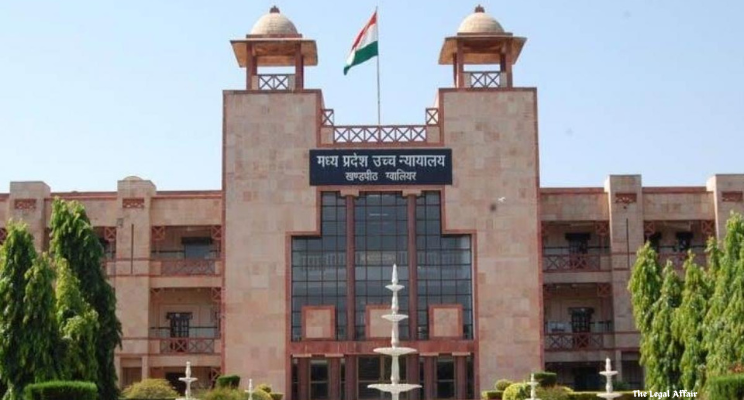
Introduction:
The Madhya Pradesh High Court has granted a decree of divorce to a husband, a public servant, on the ground of cruelty, establishing that the wife’s act of making false allegations of alcohol addiction against him constituted a serious form of mental cruelty. A division bench of Justice Vishal Dhagat and Justice Anuradha Shukla delivered the judgment in the case titled MK v MA [2025:MPHC-JBP:52433], thereby setting aside the judgment and decree of the Family Court of Mandla, which had previously rejected the husband’s petition for divorce based on desertion and cruelty. The couple, both public servants—the husband a Class IV employee and the wife an Officer Cadre—were married in June 2004 and have two children. They have been living separately since 2017, although the husband contended their relationship effectively ended earlier. The court’s pivotal observation was that using unfounded allegations of addiction to humiliate a spouse in their social and professional circle amounts to cruelty, especially when the spouse remains resolute in not resuming cohabitation.
Arguments on behalf of the Appellant/Husband (MK):
The husband, represented by Advocate Pradeep Kumar Naveria, contended that the Family Court erred in rejecting his divorce petition and sought relief primarily on the ground of cruelty.
Cruelty Due to False Allegations: The primary argument was that the wife’s conduct constituted cruelty. Specifically, the husband argued that the wife’s finding and assertion that he was an alcoholic and that he had harassed her were false and baseless. He submitted that these unfounded allegations were a severe form of mental cruelty, especially given his status as a public servant, which exposed him to social humiliation and contempt.
Lack of Intent to Cohabit: It was contended that the wife was neither interested in resuming marital ties nor in cooperating with the legal process, as she actively contested the divorce without any intent to reconcile, thereby prolonging the emotional distress.
Desertion Period Not Mandatory: While the Family Court relied on the two-year mandatory period for desertion not being fulfilled (as the petition was filed in 2018 and the date of separation was disputed), the husband’s main focus in the appeal shifted convincingly to the grounds of cruelty, arguing that the relationship was irretrievably broken and characterised by the wife’s malicious conduct.
Arguments on behalf of the Respondent/Wife (MA):
The wife, represented by Advocate Jagadish Prasad Kanojia, countered the husband’s claims, asserting that she was the victim of marital misconduct and justifying her separate residence.
Cruelty by Husband: The wife claimed that she was the one subjected to physical and mental cruelty by the husband, which had necessitated her earlier filing of a petition under the Protection of Women from Domestic Violence Act, 2005 (though a compromise was reached in that matter).
Allegations of Alcoholism and Character: She alleged that the husband used to cast aspersions on her character and also asserted that he suffered from an “addiction to intoxication” (alcoholism). She claimed her separate residence since 2017 was for “her own safety and that of her future children.”
Motive for Divorce: The wife contended that the husband’s desire to dissolve the marriage was motivated by an intention to “solemnise a second marriage” and to “avoid his liability towards the children,” thus portraying the husband as the errant party attempting to shirk responsibilities.
Proof of Alcoholism: To substantiate her claim of alcoholism, the wife presented certain documents to the Family Court.
Court’s Judgement and Rationale:
The division bench of the Madhya Pradesh High Court meticulously examined the evidence and the wife’s allegations, ultimately concluding that her conduct amounted to cruelty.
1. Failure to Prove Alcoholism Allegations:
The Court first scrutinised the wife’s central and most damaging allegation against the husband: alcoholism.
The bench noted the documents presented by the wife to the Family Court to prove the allegations of alcoholism.
However, upon judicial review, the Court found that the said documents “did not substantiate the allegations of alcoholism.”
Furthermore, the Court specifically observed that “since 2011, there have been no episodes of alcoholism in the husband’s life.”
Thus, the High Court held that the allegations of alcoholism made against the husband were “not duly proved.”
2. False Allegations Constitute Mental Cruelty:
Having established that the allegations of alcohol addiction were unfounded, the Court focused on the impact of making such false claims. The bench observed that the concept of mental cruelty is not static and that “new instances of cruelty may crop up depending upon the human behaviour.”
The Court noted the difference in their professional standings—the husband as a Class IV employee and the wife in an Officer Cadre—both being public servants.
The bench differentiated normal marital bickering from serious acts, stating that the “persistent resolve of the wife to see her husband being humiliated in his social circle as an alcoholic was a serious affair.”
The judgment concluded that the wife’s actions were deliberate and malicious:
“In the case on hand, the wife, in order to avoid marital obligations, has made unfounded allegation of habit of intoxication against the appellant/husband and has thus exposed him to social sham and contempt by compromising his social position of a public servant.”
This act of subjecting a spouse, especially a public servant, to unwarranted social contempt through false allegations was deemed to be a grave form of mental cruelty.
3. Cruelty from Refusal to Cohabit:
The Court also took into account the wife’s firm stance of not resuming cohabitation despite actively contesting the divorce petition.
The bench observed that the wife has been living separately since 2017 and maintained a “resolute in not resuming the cohabitation.”
This persistent refusal to live together, combined with the false allegations, demonstrated a malicious intent to keep the marital relationship suspended without any possibility of reconciliation, which itself contributes to mental cruelty.
4. Setting Aside Family Court’s Decision:
The High Court disagreed with the Family Court’s decision to reject the divorce petition. While acknowledging the Family Court’s finding that the mandatory two-year period for desertion was not met (as the petition was filed in 2018 and the required period began from the 2017 separation), the High Court’s allowance of the appeal was solely and successfully based on the ground of cruelty.
The operative part of the judgment allowed the appeal:
“We accordingly allow this appeal on the ground of cruelty committed by making false allegation of addiction to intoxication and also contesting the divorce petition despite being resolute in not resuming the cohabitation.”
The Court, therefore, granted the decree of divorce to the husband on the grounds of cruelty and set aside the decree and judgment of the Family Court.