


Introduction:
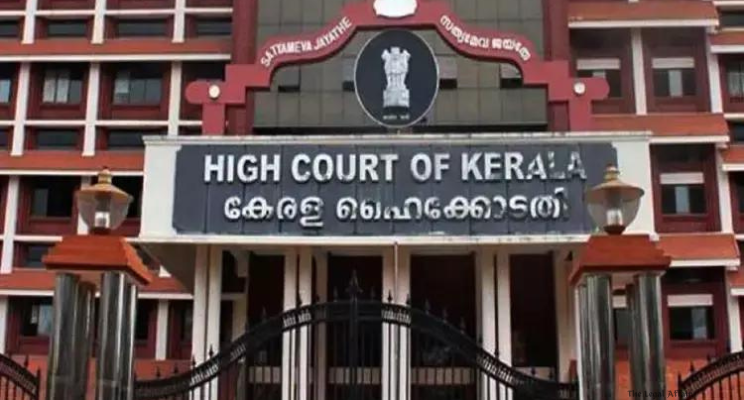
The Kerala High Court, in a significant ruling clarifying the scope of a Supreme Court order, has affirmed that National Highway Authority of India (NHAI) concessionaires holding valid work orders issued prior to March 21, 2024, are exempt from obtaining separate Environmental Clearance (EC) for the extraction, sourcing, or borrowing of ordinary earth needed for linear projects like roads and pipelines. This decision, delivered by a division bench of Justice Devan Ramachandran and Justice M B Snehalatha, addressed an intra-court reference in the case of Anirudh Karthikeyan v State of Kerala and Others (ICR(WP(C)) 25/ 2025). The central issue was whether the Supreme Court’s clarificatory order applied not just to the NHAI itself, but also to its concessionaires, and whether the exemption required specific clauses in their work orders. The ruling ensures that ongoing infrastructure development under pre-existing contracts can continue without disruption, provided necessary environmental safeguards are implemented.
Arguments Pertaining to the Interpretation of the Supreme Court Order:
While the content does not explicitly detail distinct, formal arguments from the Petitioner and Respondents on the core legal question (which was addressed by the High Court suo motu as an intra-court reference to clarify the law), the underlying positions and legal backdrop can be inferred:
Inferred Position for the Concessionaires/NHAI (Supporting Exemption):
- Scope of Supreme Court Clarification: The primary argument supporting the exemption would stem from the Supreme Court’s clarificatory order of May 15, 2024. The parties benefiting from this interpretation would argue that the SC’s intent was to shield all ongoing projects initiated under Work Orders issued before March 21, 2024, from the need for a fresh EC.
- Inclusion of Concessionaires: It would be argued that NHAI is merely the awarding authority, and the execution is carried out by concessionaires. Logically, protecting the Work Order must mean protecting the entity (the concessionaire) executing that work, otherwise the clarification would be meaningless and the projects would stall.
- Preventing Project Stall: Requiring every concessionaire with a pre-existing work order to now stop work and obtain a fresh EC would lead to significant delay and financial loss to massive public infrastructure projects, contradicting the spirit of the Supreme Court’s order to allow continuation.
Inferred Position Against the Exemption/Need for EC (or seeking clarity):
- Strict Interpretation of EC Requirement: The position seeking stricter compliance (potentially represented by the original Petitioner in the underlying matter) would rely on the Supreme Court’s main ruling in Noble M. Paikada v. Union of India, which quashed Item 6 of Appendix IX of the MoEF&CC notifications, thereby withdrawing the general exemption for linear projects.
- Separate Legal Entities: It could be argued that concessionaires are separate legal entities from the NHAI and must independently comply with environmental laws unless explicitly exempted. The mere existence of a work order might not transfer the EC exemption to them.
- Need for Specific Work Order Provisions: A stricter view might argue that the exemption should only apply if the work orders themselves contained specific clauses authorizing the extraction of ordinary earth in lieu of an EC, ensuring environmental responsibility was built into the contract from the start.
Submissions by NHAI Counsel:
The Counsel for NHAI (represented by Bidan Chandran and P M Rafeek for the Respondents) provided a crucial update that helped guide the Court’s final decision:
- New Notification and Safeguards: The Counsel informed the Court that a new notification dated March 17, 2025, had been issued. This notification was designed to ensure full compliance with the Supreme Court’s main judgment by introducing Standard Operating Procedures (SOPs) and robust environmental safeguards for all linear projects, both ongoing and future. This submission demonstrated the NHAI’s commitment to balancing project continuity with environmental protection.
Court’s Judgement and Rationale:
The Kerala High Court’s ruling focused on interpreting the Supreme Court’s intent and ensuring practicality in the execution of major public works while upholding the necessity of environmental safeguards.
1. Inclusion of Concessionaires in the SC Clarification:
The key finding of the High Court was that the Supreme Court’s clarification on project continuity unquestionably extends to the NHAI concessionaires. The bench reasoned that the Supreme Court’s explicit reference to “Work Orders issued by the ‘NHAI'” before the cut-off date was decisive.
The Court observed:
“Clarification by the Hon’ble Supreme Court cover not merely the ‘NHAI’, but the concessionaires also, because otherwise, it would not have stated with precision that all projects for which Work Orders by the ‘NHAI’ was issued before 21.03.2024 can continue and will remain unaffected by its declarations.”
The bench concluded that had the Supreme Court intended to restrict the benefit only to the NHAI as an entity, it would have used simpler language; its precision in mentioning work orders to concessionaires clearly indicated an intent to protect the execution of the contracts, which primarily lies with the concessionaires.
2. EC Exemption Confirmed for Pre-Cut-off Work Orders:
The Court firmly held that all projects covered by NHAI work orders issued before March 21, 2024, remain exempt from obtaining fresh ‘EC’ for the required extraction of ordinary earth. This was a direct affirmation of the Supreme Court’s clarificatory order. The High Court also noted that whether a work order was defined or prepared in a particular manner was a matter dependent on the facts of individual cases, suggesting that the general principle of continuity takes precedence over specific contractual definitions for the purpose of the EC exemption.
3. Mandatory Application of Environmental Safeguards:
Crucially, the Court made the EC exemption inseparable from the observance of environmental safeguards. The concessionaires’ right to proceed without a fresh EC is not absolute.
The bench ruled:
“In rundown, it is luculent that the express intent of the Hon’ble Supreme Court is to allow even concessionaires… to engage in extraction, sourcing, and borrowing of ordinary earth for linear projects, without having to apply for or obtain an ‘EC’. However, this inextricably ought to be as per the safeguards stipulated, or to be stipulated by the ‘NHAI’…”
The Court referenced the earlier Kerala High Court decision in Pradeep Kumar P. v. State of Kerala, which had directed the NHAI to ensure transparency and environmental protection in its works. The bench also recorded the NHAI counsel’s submission regarding the new March 17, 2025, notification which introduced Standard Operating Procedures (SOPs) and safeguards. The Court thus made it clear that the exemption is conditional upon observing the existing and newly introduced safeguards, ensuring environmental compliance is maintained even without a separate EC.
The Court therefore concluded by allowing the concessionaires to proceed with their projects, leaving other specific contractual or factual issues open for future adjudication.