


Introduction:
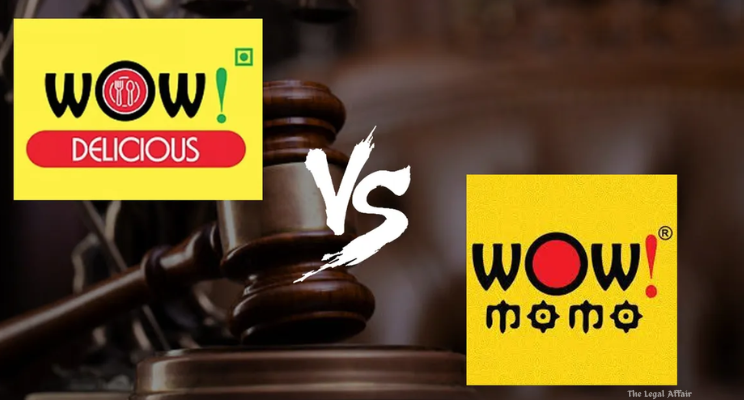
In a significant ruling that reinforces the importance of brand identity and consumer association in the food and beverage industry, the Delhi High Court granted an interim injunction in favour of WOW MOMO FOODS PRIVATE LIMITED against the Hong Kong-based WOW BURGER & ANR. The Division Bench comprising Justice C. Hari Shankar and Justice Om Prakash Shukla overturned the single-judge order dated September 12, 2024, which had previously denied WOW MOMO interim relief. The Court observed that the earlier ruling failed to appreciate the aspect of infringement arising from the deceptive similarity between the marks “WOW MOMO” and “WOW BURGER,” particularly in the context of fast-food services. The Bench held that a consumer of average intelligence and imperfect recollection would likely presume an association between the two marks, thus satisfying the test of confusion under Section 29(2)(b) of the Trade Marks Act, 1999. This landmark decision not only secured interim relief for the Indian quick-service restaurant chain but also underscored the doctrine of “idea infringement” — emphasizing that replication of the conceptual idea behind a trademark can amount to infringement, even when direct imitation is absent.
Arguments on Behalf of the Appellant (WOW MOMO FOODS PRIVATE LIMITED):
The appellant, represented by its legal counsel, argued that the mark “WOW BURGER” created a likelihood of confusion and association with their established trademarks “WOW MOMO” and “WOW DIMSUM.” It was contended that WOW MOMO had developed a strong brand reputation and goodwill in India since its inception and had expanded its family of marks using the prefix “WOW,” which had acquired distinctiveness through extensive and continuous commercial use. The company’s legal representatives stressed that the word “WOW,” when used in conjunction with the name of a food item, forms a distinctive and memorable mark that conveys the idea of superior quality and delight.
The appellant argued that WOW BURGER had not only replicated this concept but had deliberately sought to benefit from the recognition, trust, and reputation built by WOW MOMO over years of business operations. By combining “WOW” with another food item, namely “BURGER,” the respondent had effectively engaged in “idea infringement,” as it attempted to imitate the conceptual structure and marketing psychology behind WOW MOMO’s mark. It was further contended that the similarity in trade dress, phonetic sound, and overall impression between “WOW MOMO” and “WOW BURGER” would inevitably mislead an ordinary consumer into assuming a connection or common source between the two.
The appellant relied upon the principle established under Section 29(2)(b) of the Trade Marks Act, 1999, which states that infringement occurs when a mark is similar to a registered trademark and used in relation to identical or similar goods or services, resulting in a likelihood of confusion. The appellant asserted that both entities operated in the same business domain — fast food and quick-service restaurants — and therefore, even minor similarities could result in consumer deception.
Moreover, WOW MOMO contended that the word “WOW,” while being an English exclamation, had, in their case, acquired a secondary meaning through extensive commercial use and branding efforts. It had become synonymous with the company’s identity, denoting a specific source of quality food products in the minds of consumers. The appellant submitted evidence of registrations for “WOW MOMO,” “WOW CHINA,” and “WOW DIMSUMS,” collectively constituting a “family of marks.” This family, according to the appellant, demonstrated that the prefix “WOW” had acquired distinctiveness when used in combination with a food item, thereby entitling the company to protection against confusingly similar marks using the same prefix.
The appellant also criticized the single judge’s earlier refusal to grant an injunction, arguing that it was based on an overly narrow view of trademark law and failed to consider the concept of “association” and “idea infringement.” The appellant reiterated that allowing the respondent to continue using “WOW BURGER” would not only dilute its brand identity but also set a dangerous precedent allowing imitators to exploit the conceptual creativity and goodwill of established Indian brands.
Arguments on Behalf of the Respondent (WOW BURGER & ANR):
The respondents, represented by their counsel, defended their use of the mark “WOW BURGER” on several grounds. They argued that the term “WOW” is a common English expression, widely used in everyday language to express appreciation or surprise, and therefore, cannot be monopolized by any one company. The respondents contended that WOW MOMO could not claim exclusivity over the use of the word “WOW,” especially in the absence of a separate trademark registration for the word by itself.
The respondents further submitted that “WOW BURGER” and “WOW MOMO” were distinct marks, both phonetically and visually, with the only similarity being the common exclamation “WOW.” They argued that the inclusion of the descriptive food items — “BURGER” and “MOMO” — made the two marks sufficiently distinctive for an average consumer to tell them apart. According to the respondents, consumers of fast-food products are discerning enough to differentiate between brands based on their logos, packaging, and store designs, which in this case were entirely different.
Additionally, the respondents claimed that there was no evidence of actual confusion among consumers, and mere speculative likelihood of association could not justify an injunction. They asserted that the appellant was attempting to claim monopoly over a generic expression used in the English language and that the law does not permit monopolization of common expressions that lack inherent distinctiveness. The respondents also pointed out that the appellant’s claim of “idea infringement” was unfounded, as the concept of combining an exclamatory term with a food item name is neither unique nor novel in the food industry.
The respondents urged the Court to uphold the single-judge decision denying interim injunction, arguing that the appellant had failed to demonstrate any irreparable loss or damage arising from the continued use of “WOW BURGER.” They maintained that their use of “WOW” was legitimate and did not infringe upon the rights of the appellant, as the word “WOW” had not acquired a secondary meaning exclusively associated with WOW MOMO.
Court’s Judgment and Analysis:
After carefully considering the rival submissions, the Division Bench of the Delhi High Court delivered a detailed and nuanced judgment granting an interim injunction in favour of WOW MOMO FOODS PRIVATE LIMITED. The Bench began by emphasizing that the single-judge decision had failed to recognize a critical aspect — the likelihood of confusion and association between the marks “WOW MOMO” and “WOW BURGER” under Section 29(2)(b) of the Trade Marks Act.
The Court observed that to an average consumer of imperfect recollection, the two marks — “WOW MOMO” and “WOW BURGER” — would appear to be connected or part of a single brand family. Both marks used the same prefix “WOW” followed by the name of a food item, and both were used for fast-food services. This similarity, according to the Court, created a natural presumption of association in the mind of the consumer. The Bench stated: “There can, to our mind, be no manner of doubt that a consumer of average intelligence and imperfect recollection, who is aware of, or has seen, the appellant’s mark WOW MOMO, would, when he later comes across the respondent’s mark WOW BURGER, be, at the very least, inclined to presume the existence of an association between the two marks.”
The Court clarified that the infringement in this case arose not from the use of the word “WOW” alone, but from its use in conjunction with the food item “BURGER.” It explained that while “WOW” as an isolated word is a common exclamation and cannot be monopolized, when combined with a food item name, it assumes distinctiveness and becomes an indicator of trade origin. The Bench remarked: “WOW is not an adjective. It cannot, therefore, be said to be descriptive of the item in connection with which it is used. At the highest, WOW is an exclamation. The very idea of combining the exclamation WOW with the food item being sold by the appellant is itself distinctive.”
The judges elaborated that expressions like “WOW MOMO” or “WOW DIMSUMS” do not have any inherent etymological sense; rather, their distinctiveness arises from the creative juxtaposition of an emotional exclamation with a food item. This linguistic and conceptual creativity, the Court held, gives the mark its unique identity. Consequently, the replication of this idea by WOW BURGER amounted to what the Court termed “idea infringement.” The Court defined this concept as the replication of the conceptual or creative idea underlying a trademark — even when the exact words differ — leading to consumer confusion or dilution of brand identity.
The Bench concluded that WOW BURGER had not merely used a similar word but had copied the conceptual framework and branding approach of WOW MOMO. It stated that “the idea of conveying the message that the food dispensed by it is of optimum quality by combining, with the name of the food item such as MOMO or DIMSUMS, the exclamation WOW would stand replicated if the respondent were to use WOW BURGER.”
Furthermore, the Court held that the absence of a separate trademark registration for the standalone word “WOW” did not erode the appellant’s claim of exclusivity over its composite marks such as “WOW MOMO.” The Bench recognized that WOW MOMO possessed a “family of marks” — “WOW MOMO,” “WOW CHINA,” and “WOW DIMSUMS” — in which the prefix “WOW” served as the unifying identifier. The use of any similar mark by a third party, by combining the prefix “WOW” with another food item, would inevitably lead consumers to believe that the mark belonged to the same brand family. Thus, the respondents’ use of “WOW BURGER” fell squarely within the scope of infringement.
The Court finally overturned the single-judge order and granted an interim injunction restraining the respondents from using the mark “WOW BURGER” or any other mark deceptively similar to “WOW MOMO.” The Bench’s judgment underscored the importance of conceptual distinctiveness in modern trademark law and the protection of brand families against conceptual imitation. It reiterated that intellectual property law is not confined to mechanical comparisons of words and symbols but extends to safeguarding the creative and commercial identity of established brands.