


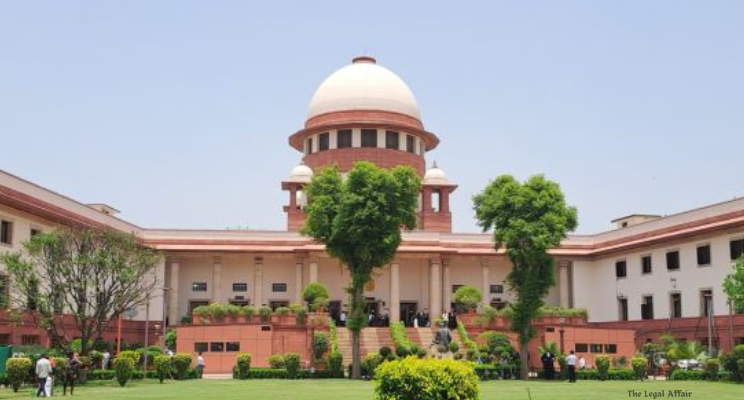
Introduction:
In a landmark judgment that reaffirmed the rights of genuine cultivators and clarified the scope of the Kerala Private Forests (Vesting and Assignment) Act, 1971, the Supreme Court of India in M. Jameela v. State of Kerala and Others, 2025 LiveLaw (SC) 1023, held that 37.5 acres of land in South Wayanad, cultivated with coffee and cardamom since the 1950s, is private plantation land and not a vested forest. The case was heard by a Bench comprising Justice Aravind Kumar and Justice N.V. Anjaria, who overturned the Kerala High Court’s 2012 judgment that had upheld the Forest Tribunal’s rejection of M. Jameela’s ownership claim. The Court held that the land satisfied all statutory conditions for exemption under Sections 3(2) and 3(3) of the 1971 Act and directed the State of Kerala and the Custodian of Vested Forests to restore ownership and correct boundary records within six weeks. The decision not only provided relief to a genuine cultivator but also set a precedent reaffirming that bona fide agricultural land should not be mistaken for forest land merely due to administrative errors or delayed governmental action.
Arguments of the Appellant (M. Jameela):
The appellant, represented by Senior Advocate V. Chitambaresh, argued that the land in question had been a bona fide coffee and cardamom plantation long before the “appointed day” under the Kerala Private Forests (Vesting and Assignment) Act, 1971 — which is May 10, 1971. She contended that the original owner, Parappu Mappilakath Imbichi Ahmed, had cleared the forest and converted the land into plantations as early as 1957 after obtaining due permission from the District Collector under the Madras Preservation of Private Forests Act, 1949. The appellant presented extensive documentary evidence, including the Coffee Board Registration Certificate No. 284/1972 and the Cardamom Registration Certificate No. 81/SW dated June 30, 1971, which proved that the plantations existed prior to the appointed date. It was also emphasized that the plantations were regularly maintained, taxed, and recognized by revenue authorities for decades, thereby confirming their private nature.
The appellant further argued that the Forest Tribunal and the Kerala High Court had adopted an excessively technical and skeptical approach, disregarding the overwhelming evidence of cultivation. It was submitted that minor portions of land appearing as “young plants” in surveys conducted in 2007 could not be construed to mean that the land was barren in 1971, as plantations are dynamic entities where replanting is a regular agricultural practice. The appellant relied upon expert reports by an Advocate Commissioner and a Coffee Board expert who had scientifically assessed the age of the coffee plants, concluding that many were 40–42 years old as of 2007, meaning they were planted in the mid-1960s. This expert evidence, the appellant maintained, clearly refuted the State’s claim that the plantation was a later development.
Moreover, the appellant asserted that the State’s attempt to classify 8.25 acres of the land as “Government land” after several decades of treating it as private property was arbitrary and without legal foundation. She argued that both the revenue and taxation records continuously recorded her land as plantation property, and no evidence was ever produced by the State to contradict those official documents. Thus, it was contended that the land stood exempted under Sections 3(2) and 3(3) of the 1971 Act, as it was held under a valid title and used for bona fide cultivation prior to the appointed day.
Arguments of the Respondent (State of Kerala):
The State of Kerala, represented by Senior Advocate Jayanth Muth Raj, opposed the claim, asserting that parts of the 37.5-acre land were not under cultivation as of the appointed day in 1971 and that only portions were later developed into coffee and cardamom plantations. The State contended that the plantation registration certificates were obtained post facto and did not conclusively establish cultivation before 1971. It was argued that the burden of proving continuous and bona fide cultivation lay with the appellant, which she had failed to discharge convincingly.
The State further contended that even if portions of the land were under cultivation, significant parts remained forested or fallow at the relevant time, making the entire extent subject to vesting under the Act. The government maintained that the Kerala Private Forests (Vesting and Assignment) Act had been enacted to prevent private encroachments and ensure environmental preservation, and therefore, liberal interpretations favoring private ownership would undermine the statute’s objectives. The State emphasized that the Forest Tribunal and High Court had already rendered concurrent findings against the appellant after due examination of evidence, and such concurrent findings of fact should not ordinarily be interfered with by the Supreme Court.
Additionally, the State questioned the credibility of the expert report submitted by the appellant, claiming that the estimation of plant age was speculative and not based on verifiable scientific methodology. The State’s counsel also stressed that even though the land might have been partially cultivated, the Act mandated that exemption should apply only to areas that were under cultivation before the appointed day, not to the entire extent claimed. Thus, according to the State, the appellant could at best claim partial exemption, but not for the full 37.5 acres.
Supreme Court’s Judgment and Analysis:
After a thorough review of the evidence and legal provisions, the Supreme Court delivered a detailed and emphatic judgment in favor of the appellant. The Bench began by observing that “genuine cultivators should not be made to fight a prolonged battle to vindicate rights that are apparent from the public records.” This remark encapsulated the Court’s central concern — that individuals who have lawfully cultivated and maintained plantations for decades should not suffer due to administrative rigidity or delayed governmental interventions.
The Court first examined the legislative framework of the Kerala Private Forests (Vesting and Assignment) Act, 1971, particularly Sections 3(2) and 3(3), which exempt private forests converted into bona fide plantations prior to the appointed day from vesting with the State. The Bench noted that the objective of the Act was not to deprive genuine private cultivators of their lawful holdings but to prevent large-scale forest exploitation and ensure equitable land redistribution. Therefore, the Court emphasized the need to distinguish between bona fide plantations and encroachments masquerading as private estates.
Upon examining the evidence, the Court found that the plantation in question had been validly converted and registered under statutory authorities long before May 10, 1971. The permission granted by the District Collector in 1957 under the Madras Preservation of Private Forests Act, 1949, was held to be a decisive indicator of lawful conversion. The Court observed that the subsequent registrations with the Coffee Board and Cardamom Board further cemented the plantation’s bona fide nature.
The Bench gave considerable weight to the expert evidence provided by the Advocate Commissioner and the Coffee Board expert. The Court noted that the expert had determined the age of many coffee plants as 40–42 years as of 2007, implying that the plantation activity commenced well before 1971. The Court observed that the State had failed to produce any scientific counter-evidence to refute these findings. Hence, the expert report stood unchallenged and was accepted as credible proof of the plantation’s existence before the appointed day.
Rejecting the State’s argument that the presence of younger plants in the 2007 survey indicated later cultivation, the Court made an important observation: “The presence of young plants in a plantation in 2007 does not automatically prove that area was barren in 1971. Plantations are dynamic; old plants die or are felled, and new ones are put in their place.” This statement underscored the Court’s practical understanding of agricultural operations and reflected a sensitivity to the realities of plantation management.
The Court also placed reliance on the revenue and taxation records, which had consistently recognized the land as plantation property over several decades. The Bench highlighted that these official records, which were maintained by government authorities themselves, provided strong corroboration of the appellant’s claim. Furthermore, the Court expressed disapproval of the Forest Department’s inconsistent conduct — having initially excluded the land from vested forest demarcation, only to later attempt to claim about 8.25 acres as Government property without credible justification.
In strong terms, the Court criticized both the Forest Tribunal and the Kerala High Court for adopting a “technical and overly skeptical approach.” It held that their concurrent findings were “manifestly unsustainable,” as they failed to appreciate the overwhelming documentary and expert evidence establishing bona fide cultivation. The Supreme Court reiterated that judicial forums must interpret land laws in a manner that balances environmental protection with fairness to legitimate landholders. It held that where documentary evidence clearly demonstrates lawful cultivation prior to the appointed day, courts should not resort to conjecture or suspicion.
The Bench thus concluded that the entire extent of 37.5 acres satisfied the conditions of exemption under Sections 3(2) and 3(3) of the 1971 Act, as it was (i) held under a valid title deed executed before the appointed day, and (ii) under bona fide cultivation before that date. Consequently, the land did not vest with the State and continued to remain private plantation property.
In its operative directions, the Supreme Court allowed the appeals, set aside the judgments of both the Kerala High Court and the Forest Tribunal, and declared appellant M. Jameela as the lawful owner in possession of the land. The Court directed the State of Kerala and the Custodian of Vested Forests to correct the boundary and ownership records within six weeks. The Bench’s concluding remarks carried significant moral weight: “The entirety of the said lands stands exempted from vesting by virtue of Sections 3(2) and 3(3) of the Act, being lands under bona fide coffee and cardamom plantations existing prior to the appointed day.”
Legal and Social Significance of the Judgment:
This decision is a milestone in clarifying the rights of private landholders in Kerala whose properties have long been entangled in disputes arising from the Kerala Private Forests (Vesting and Assignment) Act, 1971. It recognizes that genuine cultivators who have been in continuous possession and have developed plantations lawfully should not be deprived of their property by an overly rigid application of environmental statutes. The judgment strikes a careful balance between environmental conservation and the protection of individual property rights — emphasizing that the law must operate with fairness, factual accuracy, and practical understanding.
By stressing the reliability of public records, plantation registrations, and expert reports, the Court set a precedent that documentary evidence, when consistent and credible, should not be lightly disregarded by authorities or lower courts. It also sends a message to state agencies to act responsibly and avoid arbitrary reclassification of lands decades after their recognition as private plantations. This case will likely serve as an important reference for similar disputes across Kerala and other southern states, where agricultural and forest lands often overlap due to historical and administrative complexities.
In reaffirming the principles of natural justice and substantive fairness, the Supreme Court’s judgment restores faith in the judicial system’s capacity to protect genuine cultivators from bureaucratic overreach. It reminds the State that environmental laws must not become instruments of injustice for those who have acted within the law and sustained cultivation for generations.