


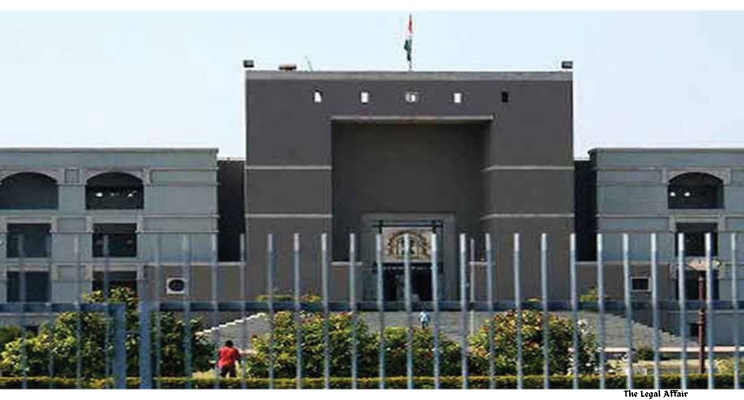
Introduction:
In Siddhant @ Samadhan Kevalrao Jagtap v. State of Gujarat, the Gujarat High Court, presided over by Justice Nikhil S Kariel, dealt with a deeply disturbing case involving the alleged kidnapping and trafficking of a six-month-old child. The case arose from an FIR registered under multiple provisions of the Bharatiya Nyaya Sanhita (BNS), including Sections 137(2) (kidnapping), 143(4) (trafficking of a person), and 61(2) (criminal conspiracy), along with relevant provisions of the Juvenile Justice (Care and Protection of Children) Act. The petitioner approached the High Court seeking regular bail after the filing of the chargesheet. However, the allegations against him revealed a shocking narrative of a coordinated conspiracy to abduct and sell an infant to a childless couple for monetary gain. While the petitioner was not alleged to have directly participated in the initial act of kidnapping, the prosecution claimed that he played a crucial and active role in facilitating the trafficking of the child by arranging a buyer, promising a sale price, and assisting in the logistics of transporting the abducted child. The case thus raised significant legal questions regarding the grant of bail in serious offences, particularly those involving vulnerable victims like infants, and the extent to which an accused’s role in the chain of events influences judicial discretion in bail matters.
Arguments of the Parties:
The petitioner, Siddhant @ Samadhan Kevalrao Jagtap, through his counsel, sought to persuade the Court that his involvement in the alleged offence was limited and did not justify continued incarceration. It was contended that the petitioner was not involved in the initial kidnapping of the child and had no direct role in abducting the infant from the lawful custody of the parents. The defence attempted to draw a distinction between the principal offenders who carried out the kidnapping and the petitioner, who, according to them, was only peripherally connected to the subsequent events. Emphasis was placed on the principle that bail is the rule and jail is the exception, and that pre-trial detention should not be used as a punitive measure. The petitioner also argued that since the investigation had been completed and the chargesheet had been filed, there was no likelihood of tampering with evidence or influencing witnesses. On these grounds, it was urged that the petitioner should be granted bail.
A significant plank of the petitioner’s argument was parity with a co-accused who had already been granted bail by the same Court. The defence submitted that denying bail to the petitioner while granting it to another accused in the same case would amount to unequal treatment and would violate the principle of parity. It was argued that the co-accused’s involvement was similar in nature, and therefore, the petitioner was entitled to the same relief. The petitioner’s counsel also sought to downplay the allegations of active involvement by suggesting that any communication or assistance provided by the petitioner did not amount to participation in trafficking, and at best, indicated a passive or indirect role.
On the other hand, the State vehemently opposed the bail application, highlighting the gravity and seriousness of the offence. The prosecution argued that the case was not a mere instance of kidnapping but involved a well-planned conspiracy to traffic a six-month-old child for monetary consideration. It was submitted that the petitioner played a pivotal role in the execution of this conspiracy, particularly in the post-abduction phase. According to the prosecution, the abductors had contacted the petitioner after kidnapping the child, seeking his assistance in finding a buyer. The petitioner allegedly responded by assuring them that the child could be sold for approximately Rs. 1,50,000 and directed them to bring the child to Aurangabad. Furthermore, it was contended that the petitioner had transferred Rs. 2,000 via UPI to facilitate the travel of the abductors along with the child, thereby actively aiding the commission of the offence.
The State also pointed to the material evidence collected during the investigation, which strongly implicated the petitioner. It was submitted that the petitioner was apprehended from the very location where the child was ultimately rescued, indicating his direct involvement in the transaction. The Investigating Officer had recovered the petitioner’s mobile phone, which contained a photograph of the abducted child, as well as travel tickets for the co-accused to reach Aurangabad. These recoveries, according to the prosecution, provided substantial corroboration of the allegations and demonstrated the petitioner’s active participation in the trafficking operation. The State further argued that the role of the petitioner was significantly different from that of the co-accused who had been granted bail. While the co-accused was merely tasked with observing the reactions of the child’s parents after the kidnapping and acted under the instructions of another conspirator, the petitioner was an independent and active participant who facilitated the sale and transportation of the child. Therefore, the principle of parity could not be invoked in the present case.
Court’s Judgment:
After carefully considering the rival submissions and examining the material on record, the Gujarat High Court refused to grant bail to the petitioner, taking a stringent view of the allegations and the petitioner’s role in the offence. Justice Nikhil S Kariel observed that the nature of the allegations was extremely serious, involving not only the kidnapping of a minor child but also an attempt to traffic the child for financial gain. The Court underscored that offences involving children, particularly infants, demand a heightened level of judicial scrutiny and sensitivity, given the vulnerability of the victims and the grave societal implications of such crimes.
The Court noted that although the petitioner was not directly involved in the initial act of kidnapping, his role in the subsequent stages of the offence was substantial and could not be overlooked. It was observed that the petitioner had been contacted by the abductors after the child was kidnapped and had agreed to assist them in finding a buyer. The petitioner’s assurance that the child could be sold for around Rs. 1,50,000 was seen as a clear indication of his active involvement in the trafficking aspect of the offence. Moreover, his act of calling the abductors to Aurangabad and sending them money for travel expenses demonstrated a conscious and deliberate effort to facilitate the illegal transaction.
The Court placed significant reliance on the evidence collected during the investigation, particularly the recovery of the petitioner’s mobile phone, which contained a photograph of the abducted child, and the travel tickets arranged for the co-accused. These pieces of evidence, according to the Court, lent strong support to the prosecution’s case and established a prima facie link between the petitioner and the offence. The fact that the petitioner was apprehended from the location where the child was rescued further reinforced the conclusion that he was actively involved in the trafficking operation.
Addressing the argument of parity, the Court categorically rejected the petitioner’s contention, holding that the role attributed to him was materially different from that of the co-accused who had been granted bail. The Court observed that the co-accused’s involvement was limited to monitoring the situation and acting under the instructions of another conspirator, without any independent role in the offence. In contrast, the petitioner was found to be an “active player” who played a key role in arranging the sale and facilitating the movement of the abducted child. The Court emphasized that the principle of parity cannot be applied mechanically and must be assessed in light of the specific role and conduct of each accused.
Justice Kariel further observed that the seriousness of the offence and the clear prima facie evidence against the petitioner weighed heavily against the grant of bail. The Court reiterated that while the right to personal liberty is fundamental, it must be balanced against the interests of society and the need to ensure that justice is not thwarted in cases involving grave offences. In the present case, the Court found that the petitioner’s involvement in a conspiracy to traffic a six-month-old child for monetary gain was a matter of grave concern, and granting bail at this stage would not be appropriate.
Consequently, the Court concluded that the petitioner had failed to make out a case for grant of bail and dismissed the application. The judgment reflects a firm judicial stance against crimes involving child trafficking and underscores the principle that active participation in such offences, even at a later stage, can be sufficient to deny the benefit of bail.