


Introduction:
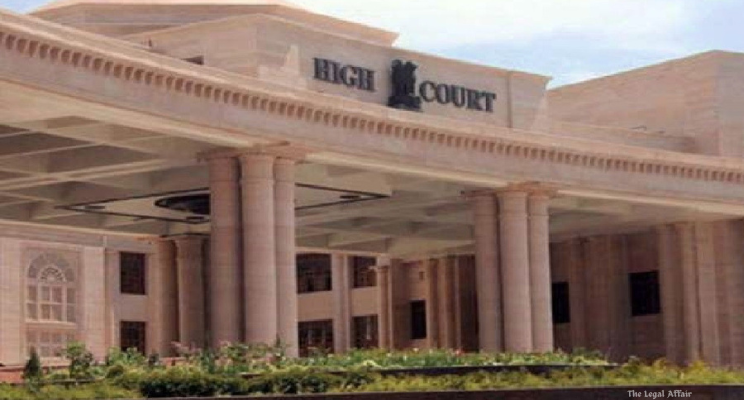
In Desh Raj vs State of U.P. Thru. Additional Chief Secretary, Home Civil Secretariat, Lucknow, the Allahabad High Court, presided over by Justice Ram Manohar Narayan Mishra, was confronted with a delicate balance between the rigours of criminal justice and the humane considerations embedded in societal and cultural obligations. The case arose from an application for short-term bail filed by the appellant, who had been convicted under Section 304 of the Indian Penal Code and sentenced to ten years of rigorous imprisonment by an Additional Sessions Judge in October 2023. The appellant had been in continuous custody since his conviction and had preferred an appeal, which remained pending before the High Court. In March 2026, he approached the Court seeking temporary release on the ground that his daughter’s marriage was scheduled to take place on March 23, 2026, at his native village in Lucknow. The plea was not merely procedural but deeply rooted in the cultural and emotional fabric of Indian society, where a father’s presence at his daughter’s wedding is often regarded as a matter of profound significance. The Court was thus called upon to determine whether, and to what extent, such personal and cultural considerations could justify temporary release, even in the case of a convicted individual serving a substantial sentence.
Arguments of the Parties:
The appellant, Desh Raj, through his counsel, advanced a plea grounded in both humanitarian and cultural considerations. It was submitted that the marriage of his daughter was a once-in-a-lifetime event and that his presence was indispensable for the proper conduct of the ceremony. The counsel emphasized that in the Hindu way of life, the performance of a daughter’s marriage is considered a sacred and pious obligation of the father, carrying not only emotional weight but also social and religious significance. The absence of the father at such a crucial juncture, it was argued, would cause irreparable emotional distress to the family and could potentially disrupt the solemnity of the occasion. The appellant’s counsel further pointed out that the appellant had already been in custody for a considerable period since his conviction and that his conduct during incarceration had not been called into question. It was also submitted that the appellant was not seeking permanent relief but only a limited and time-bound release for the specific purpose of attending the wedding and performing his duties as a father.
The defence also assured the Court that the appellant would comply with any conditions imposed, including furnishing adequate sureties and surrendering back to custody immediately after the expiry of the bail period. It was argued that granting short-term bail in such circumstances would not prejudice the prosecution’s case or affect the administration of justice, as the appeal against conviction was still pending and the temporary release would not interfere with the judicial process. The counsel relied on the broader principle that courts possess the discretion to grant interim or short-term bail in exceptional circumstances, particularly where humanitarian considerations are involved.
On the other hand, the State, represented by the Additional Government Advocate (AGA), approached the matter with caution, mindful of the seriousness of the conviction. The prosecution did not outrightly oppose the application but placed before the Court the factual position regarding the appellant’s conviction and sentence. Importantly, the AGA informed the Court that the claim regarding the scheduled marriage of the appellant’s daughter had been verified by the concerned police station. This verification lent credibility to the appellant’s plea and removed any apprehension of misuse of the judicial process through false or exaggerated claims. While the State maintained that the appellant was a convicted individual serving a sentence for a serious offence, it left the matter to the discretion of the Court, particularly in light of the verified facts and the limited nature of the relief sought.
The State’s stance reflected a balanced approach, recognizing both the gravity of the offence and the genuineness of the appellant’s request. By confirming the factual basis of the application, the prosecution effectively acknowledged that the plea was not frivolous or motivated by ulterior purposes. However, it also implicitly underscored the need for strict conditions to ensure that the appellant’s temporary release did not result in any breach of law or order or evasion of justice.
Court’s Judgment:
After considering the submissions of both parties and examining the material on record, the Allahabad High Court allowed the application for short-term bail, adopting a compassionate yet cautious approach. Justice Ram Manohar Narayan Mishra, in his order, observed that the performance of a daughter’s marriage is indeed one of the pious obligations in the Hindu way of life. This observation reflects the Court’s acknowledgment of the deep cultural and religious significance attached to such events, particularly in the Indian context where familial duties often carry profound moral and social weight.
The Court took note of the fact that the appellant had been in custody since his conviction in October 2023 and that his appeal was still pending adjudication. It also considered the verified information provided by the State regarding the scheduled marriage of the appellant’s daughter. The Court was satisfied that the request for short-term bail was genuine and not a pretext for securing release on untenable grounds. Importantly, the Court recognized that the relief sought was limited in scope and duration, and that granting such relief would not undermine the administration of justice.
Balancing the competing considerations, the Court exercised its discretion to grant temporary bail for a period of seven days, specifically from the morning of March 23, 2026, to March 29, 2026. This period was carefully calibrated to enable the appellant to attend the marriage ceremony and perform the necessary rituals, while also ensuring that the duration of release was not excessive. The Court imposed conditions to safeguard against any potential misuse of the liberty granted. The appellant was directed to furnish a personal bond of Rs. 20,000 along with two sureties of the like amount to the satisfaction of the trial court. These financial conditions served as a deterrent against absconding and ensured accountability.
Furthermore, the Court directed that the appellant must surrender before the trial court in the forenoon of March 30, 2026, thereby making it clear that the temporary release was strictly time-bound and conditional. The Court’s order reflects a judicious blend of empathy and prudence, ensuring that the appellant’s personal circumstances were accommodated without compromising the integrity of the legal process.
The judgment underscores the principle that the criminal justice system, while being firm in its enforcement of law, must also remain sensitive to the human and cultural dimensions of life. The Court did not dilute the seriousness of the appellant’s conviction but recognized that certain life events warrant temporary relaxation of custodial constraints, provided adequate safeguards are in place. By granting short-term bail, the Court reaffirmed its role as a guardian not only of legal rights but also of humane values.