


Introduction:
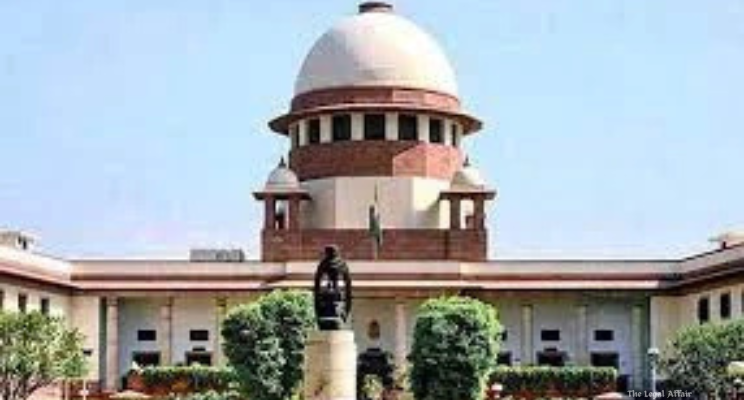
In Hari Ram v. State of Rajasthan & Ors., the Supreme Court of India, through a bench comprising Justice Sanjay Kumar and Justice K. Vinod Chandran, addressed a crucial issue concerning limitation and execution of declaratory decrees. The case arose from a prolonged litigation history dating back to 1975, when a declaratory decree was passed in favour of the plaintiff. Despite the passage of more than three decades, the respondents sought to challenge the decree in 2006, resulting in a delay of approximately 31 years. The central question before the Court was whether the plaintiff’s failure to execute the decree could serve as a valid justification for condoning such an extraordinary delay in filing an appeal. The Supreme Court decisively ruled that mere non-execution of a decree, particularly when the decree-holder is already in possession of the property, does not furnish a legitimate ground to challenge the decree after an inordinate delay. By setting aside the Rajasthan High Court’s order, which had upheld the remand of the delayed appeal, the Supreme Court reinforced the sanctity of limitation laws and the finality of judicial decisions.
Arguments of the Parties:
The petitioner-appellant, who had secured the declaratory decree in 1975, contended that the respondents’ attempt to challenge the decree after a delay of 31 years was wholly untenable in law and barred by limitation. It was argued that the First Appellate Authority had rightly dismissed the appeal filed by the respondents in 2006 on the ground of limitation, recognizing the gross and unexplained delay. The petitioner emphasized that the decree was declaratory in nature and that he had already been in possession of the suit property even prior to the passing of the decree. Consequently, there was no necessity for him to initiate execution proceedings, as the decree merely affirmed his existing rights rather than conferring new rights requiring enforcement. The petitioner further submitted that the Revenue Board had erred in remanding the matter for fresh consideration, and that the High Court compounded this error by affirming such remand, thereby effectively reviving a time-barred claim. According to the petitioner, allowing such belated challenges would undermine the principle of finality in litigation and encourage abuse of process by permitting parties to resurrect stale claims after decades.
On the other hand, the respondents sought to justify the extraordinary delay by contending that the petitioner’s failure to execute the decree indicated that the decree had not been acted upon. They argued that since no execution proceedings were initiated to evict them from the property, it could be inferred that they continued to remain in possession despite the decree. On this basis, the respondents maintained that they retained the right to challenge the decree even after a considerable lapse of time. They further submitted that the absence of execution created ambiguity regarding the actual possession of the property, thereby necessitating reconsideration of the matter on merits. The respondents also relied on the equitable principle that substantial justice should prevail over technicalities such as limitation, especially when questions relating to property rights are involved. They supported the decisions of the Revenue Board and the High Court, asserting that remanding the appeal for fresh adjudication was necessary to ensure that justice was done.
Court’s Judgment:
The Supreme Court, after carefully examining the submissions and the factual matrix, unequivocally rejected the respondents’ contentions. The bench noted that the delay of 31 years in filing the appeal was not only inordinate but also wholly unexplained. The Court emphasized that limitation laws are founded on sound public policy, intended to ensure certainty, finality, and stability in legal relations. Permitting challenges to decrees after such an extended period would defeat these objectives and open the floodgates to endless litigation.
Addressing the core argument advanced by the respondents, the Court held that the mere non-execution of a declaratory decree cannot be construed as a valid ground to justify delayed challenge. The Court observed that a declaratory decree, by its very nature, declares the rights of the parties without necessarily requiring enforcement through execution. Where the decree-holder is already in possession of the property, there is no obligation to initiate execution proceedings. The Court categorically stated that it cannot be presumed that possession remained with the defendants merely because no execution was sought. Such a presumption, in the absence of evidence, is legally untenable.
The bench further underscored that the petitioner had consistently asserted his possession over the suit property, and there was no substantiated material to demonstrate that the respondents continued in possession after the decree. In such circumstances, the respondents’ reliance on the non-execution of the decree was found to be misplaced and devoid of merit. The Court also noted that even if execution had been sought at a later stage, it would itself have been barred by limitation, thereby rendering the respondents’ argument self-defeating.
Critically evaluating the approach of the Revenue Board and the High Court, the Supreme Court held that both had erred in overlooking the fundamental principles governing limitation. By remanding the matter for fresh consideration despite the enormous delay, they had effectively condoned a time-barred appeal without sufficient cause. The Supreme Court reiterated that courts must exercise caution in condoning delays, particularly when the delay is as substantial as in the present case. The requirement of “sufficient cause” under limitation law cannot be diluted to accommodate vague or speculative justifications.
The judgment authored by Justice Chandran eloquently clarified that the rights crystallized by a declaratory decree cannot be unsettled merely on the ground that the decree-holder did not pursue execution. The Court observed that there is no legal presumption that possession shifts or continues with the losing party after the decree. Instead, the burden lies on the party challenging the decree to establish facts that justify reopening the matter. In the absence of such proof, the decree must be treated as final and binding.
Consequently, the Supreme Court allowed the appeal, set aside the orders of the High Court and the Revenue Board, and restored the effect of the 1975 decree passed in favour of the appellant. The decision reaffirmed the importance of adhering to limitation periods and discouraged attempts to revive stale claims through untenable arguments.