


Introduction:
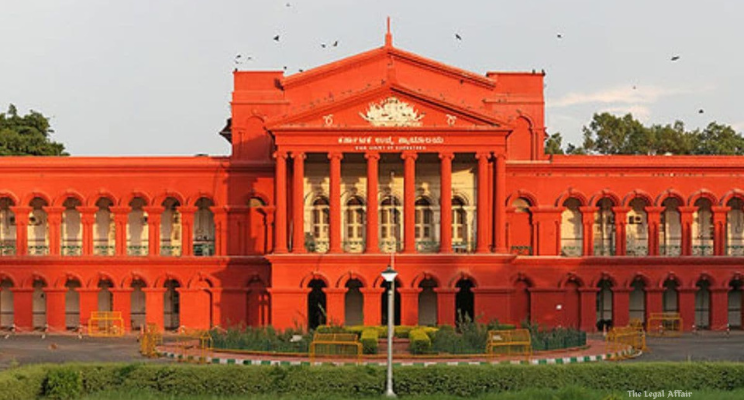
The Karnataka High Court, in Mr. Irfan Nasir @ Irfi v. The National Investigation Agency (Criminal Appeal No.1015 of 2025), examined the crucial question of whether the non-furnishing of written grounds of arrest prior to the Supreme Court’s decision in Pankaj Bansal v. Union of India could render an arrest illegal and entitle an accused to bail. The case arose from serious allegations under the Unlawful Activities (Prevention) Act, 1967 (UAPA) and the Indian Penal Code, involving an alleged criminal conspiracy to wage war against the Government of Syria and affiliation with a banned terrorist organisation, namely the Islamic State Khorasan Province (ISKP). The appellant, who was arrested in October 2020, sought bail on multiple grounds including delay in trial, violation of Article 22(1) of the Constitution due to non-supply of written grounds of arrest, and health concerns. The Division Bench comprising Justice H.P. Sandesh and Justice Venkatesh Naik T rejected the appeal, holding that the mandate laid down in Pankaj Bansal applies prospectively, and that oral communication of grounds of arrest prior to the judgment satisfied constitutional requirements. The decision reinforces the strict bail regime under UAPA and clarifies the temporal operation of constitutional safeguards relating to arrest.
Factual Background:
The case traces its origins to March 2020, when two accused persons were arrested on allegations of association with ISKP, a proscribed terrorist organisation. During investigation, another accused, Abdur Rehman @ Dr. Brave, disclosed that he had travelled to Syria during 2013–14 along with one Afroz Ahmed, allegedly funded by a group known as “Quran Circle.” According to the prosecution, this network was involved in identifying, radicalising, and recruiting vulnerable Muslim youth in Bengaluru, raising funds, and facilitating their illegal travel to Syria via Turkey to join ISIS and participate in armed conflict.
Taking note of these revelations, the Union Ministry of Home Affairs, by order dated 18.09.2020, directed the National Investigation Agency (NIA) to register and investigate a fresh case under Sections 120B and 125 of the IPC and Sections 17, 18 and 18B of the UAPA. Pursuant thereto, the NIA registered a case on 19.09.2020 against four accused persons.
On 07.10.2020, searches were conducted at the residential premises of the appellant Irfan Nasir (Accused No.3) and another accused, during which incriminating digital and physical materials, including a diary, were seized. Based on the materials recovered and subsequent interrogation, Accused Nos.3 and 5 were arrested the same day and remanded to judicial custody. Upon completion of investigation, the NIA filed a charge-sheet against the appellant and others.
The Special Court rejected the appellant’s bail application, holding that there were reasonable grounds to believe that he had committed the offences alleged and that the statutory bar under Section 43D(5) of the UAPA applied. Aggrieved, the appellant approached the Karnataka High Court.
Arguments on Behalf of the Appellant:
The appellant advanced three principal grounds in support of his renewed bail plea.
First, it was contended that there was inordinate delay in the trial, violating the appellant’s right to a speedy trial under Article 21 of the Constitution. It was argued that despite the passage of several years since arrest, the trial had not concluded, and continued incarceration amounted to punitive detention rather than preventive custody pending trial.
Secondly, strong reliance was placed on the Supreme Court’s judgment in Pankaj Bansal v. Union of India, wherein it was held that the grounds of arrest must be furnished to the accused in writing to enable him to exercise his constitutional right under Article 22(1). The appellant submitted that although he was orally informed of the grounds of arrest, the failure to provide them in writing vitiated the arrest and rendered continued detention illegal, entitling him to bail.
Thirdly, the appellant raised the issue of health condition, asserting that prolonged incarceration had adversely affected his physical well-being and that humanitarian considerations warranted his release on bail.
It was further argued that a subsequent bail application is maintainable when there is a change in circumstances, and that the evolution of law post-Pankaj Bansal constituted such a change justifying reconsideration.
Arguments on Behalf of the Prosecution:
The NIA opposed the appeal, contending that the appellant was involved in grave offences affecting the sovereignty and security of the nation. It was submitted that the materials collected during investigation, including digital evidence and statements, clearly indicated the appellant’s involvement in terrorist activities and conspiracy to facilitate armed jihad abroad.
On the issue of written grounds of arrest, the prosecution argued that the Supreme Court in Pankaj Bansal had expressly used the word “henceforth”, making the requirement applicable only from the date of the judgment, i.e., 03.10.2023. Since the appellant was arrested in October 2020, the Investigating Officer could not be faulted for non-compliance with a mandate that did not exist at the time.
Regarding delay in trial, it was pointed out that substantial progress had been made, with 19 out of 60 witnesses already examined, and that any delay was attributable to requests made by the accused themselves, including deferment of framing of charges. The prosecution emphasised that the statutory embargo under Section 43D(5) of UAPA squarely applied, barring the grant of bail where prima facie involvement is disclosed.
As to health grounds, the prosecution submitted that no medical documents had been produced to substantiate the claim, and therefore no relief could be granted on that basis.
Issues for Determination:
The central issue before the High Court was whether Accused No.3 was entitled to bail solely on the ground that the grounds of arrest were not communicated in writing at the time of arrest, thereby allegedly violating Article 22(1) of the Constitution. Ancillary issues included whether delay in trial or health concerns justified bail, and whether the statutory bar under UAPA could be lifted in the facts of the case.
Court’s Analysis and Findings:
The Division Bench undertook a detailed examination of the legal position relating to the furnishing of grounds of arrest. Referring extensively to Pankaj Bansal v. Union of India, the Court noted that the Supreme Court had clearly stated that the Investigating Officer shall be duty-bound to furnish the grounds of arrest “henceforth”, meaning from the date of the judgment. This interpretation was reinforced by the subsequent decision in Ram Kishor Arora v. Directorate of Enforcement, wherein the Apex Court clarified that the requirement applies prospectively.
Applying this principle, the High Court held that since the appellant was arrested on 07.10.2020, much prior to the pronouncement of Pankaj Bansal, the failure to provide written grounds of arrest could not be treated as illegal. The Court further observed that oral communication of the grounds of arrest at the time of apprehension constituted sufficient compliance with Section 19 of the PMLA and Article 22(1) of the Constitution, as per the law prevailing at the relevant time.
On the question of delay in trial, the Bench found that the prosecution had shown substantial progress and that delays were largely attributable to the accused themselves. It reiterated the settled principle that an accused cannot take advantage of his own conduct to claim violation of the right to speedy trial.
With respect to health grounds, the Court noted the absence of any supporting medical documents and held that no relief could be granted on vague assertions. However, acknowledging the length of incarceration, the Court deemed it appropriate to direct the Special Court to expedite the trial.
Crucially, the Court emphasised that in cases involving offences under UAPA, the statutory bar under Section 43D(5) operates with full force once the Court is satisfied that there are reasonable grounds to believe that the accusations are prima facie true. In the present case, the materials on record met this threshold.
Judgment:
The Karnataka High Court upheld the order of the Special Court rejecting the appellant’s bail application. It held that the mandate of furnishing written grounds of arrest as laid down in Pankaj Bansal applies prospectively and cannot be invoked by an accused arrested prior to the judgment. The Court rejected all grounds urged by the appellant, dismissed the appeal, and directed the trial court to expedite the proceedings.