


Introduction:
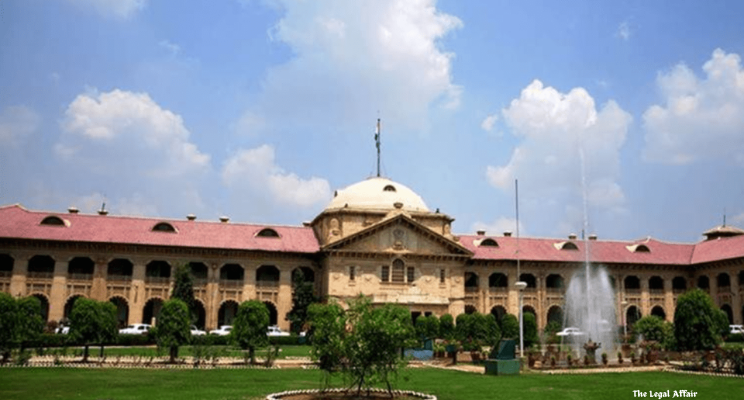
The Allahabad High Court, Lucknow Bench, in a strongly worded decision, quashed criminal proceedings initiated against the President, Secretary and Caretaker of a Resident Welfare Association (RWA) of a Lucknow-based housing society, holding that the criminal law had been set in motion to settle a purely personal parking dispute and that such invocation of the State’s coercive machinery amounted to a gross abuse of the process of law. The matter was adjudicated by Justice Pankaj Bhatia, who allowed the application filed by the RWA office bearers and set aside proceedings under Sections 308(2), 351(2) and 352 of the Bharatiya Nyaya Sanhita (BNS). The case arose at the instance of an informant who explicitly projected himself in the FIR as a member and trustee associated with the Rashtriya Swayamsevak Sangh (RSS), a description which the Court found to be deliberately used to browbeat fellow residents and authorities. The Court went a step further to observe that a “highly disciplined and respected cultural organisation like the RSS” had been maligned by the conduct of its own member, who misused his status to intimidate common citizens and derail legitimate welfare measures taken by an elected RWA. Emphasising that criminal law cannot be weaponised to settle personal scores, the Court also came down heavily on the investigating agency for conducting a hurried and half-baked investigation, directing that adverse remarks be placed in the Annual Confidential Report of the Investigating Officer and that the Director General of Police consider whether such an officer deserves to be entrusted with investigation at all.
Arguments:
The dispute, as placed before the Court, had its genesis in a routine administrative decision taken by the RWA in its board meeting dated November 24, 2024, wherein a resolution was passed to regulate haphazard parking within the residential society. The resolution, according to the applicants, was a welfare-oriented measure aimed at ensuring order, safety, and equitable use of common spaces. It provided that each resident would be allotted one parking slot of their choice, and in cases of non-compliance, a graded mechanism would be followed, beginning with advice at the first instance, locking of vehicles upon repeated violations with release after warning, and imposition of a modest penalty of ₹500/- at the third instance. The applicants contended that the informant persistently violated the parking norms by wrongly parking his vehicle and, when objected to in accordance with the resolution, retaliated by lodging a criminal case against the RWA office bearers. They argued that the FIR was a clear counterblast, motivated by malice and intended to harass and browbeat them into submission. It was specifically highlighted that the informant had, in the FIR itself, introduced himself as a B.Tech, entrepreneur, social worker, and a Trustee of Bhavrao Devras Trust of RSS, and had painted the RWA as a “headless body” acting like a mafia, extracting money and issuing threats. According to the applicants, this description was not incidental but a calculated attempt to misuse the perceived influence and stature associated with the organisation to pressurise them and the police machinery. They further submitted that the allegations in the FIR, even if taken at face value, did not disclose the essential ingredients of the offences alleged, particularly extortion, criminal intimidation, or intentional insult, and that no amount was ever paid, no threat was issued with intent to cause alarm, and no conduct attributable to the applicants could provoke breach of peace.
On the other hand, the counsel appearing for the informant adopted an aggressive stance, portraying the RWA management as a “kleptocracy” thrust upon the informant and alleging that he and his family were subjected to humiliation and made to feel like “small, pipsqueak” individuals by what was described as egregious and bellicose orders of the RWA. It was argued that the act of finding his car locked was the “last straw” on his capacity to endure hardship and tyranny, compelling him to approach the police. The informant sought to justify the FIR by contending that the RWA had no authority to levy penalties or immobilise vehicles and that such actions amounted to criminal intimidation and coercion. He asserted that the FIR was a legitimate grievance redressal mechanism against unlawful exercise of power by the RWA office bearers and that the investigation culminating in a charge sheet reflected the seriousness of the allegations. The State, supporting the charge sheet, submitted that prima facie offences were made out and that the proceedings should not be quashed at the threshold.
Judgment:
After carefully examining the FIR, charge sheet, and the material placed on record, the Allahabad High Court unequivocally held that the continuation of criminal proceedings against the RWA office bearers would amount to a miscarriage of justice. Justice Pankaj Bhatia began by scrutinising the essential ingredients of the offences alleged and noted that even on a plain reading of the FIR and statements recorded, there was no allegation that the applicants had intentionally put the informant in fear of injury or dishonestly induced him to deliver any property or valuable security, which is the sine qua non for an offence of extortion. The Court observed that since no money was actually paid by the informant, the very foundation of the charge of extortion collapsed, and a resolution passed by an elected body to levy a nominal penalty for welfare measures could not, by any stretch of imagination, be branded as extortion. With respect to the offences of criminal intimidation and intentional insult under Sections 351 and 352 BNS, the Court found no material to suggest that the applicants intended to provoke a breach of peace or cause alarm, and mere enforcement of parking discipline pursuant to a resolution could not be criminalised.
The Court was particularly critical of the manner in which the investigation was conducted, noting that the charge sheet was filed in a “hurried manner” without examining the RWA bye-laws, without recording statements of other residents, and without undertaking any objective assessment of the factual background. Terming the investigation as “clearly half-baked,” the Bench expressed the opinion that the probe appeared to have been conducted under the influence of the office and stature projected by the informant. In a rare and stern measure, the Court directed that a copy of its order be placed in the Annual Confidential Report of the Investigating Officer concerned and that the same be forwarded to the Director General of Police to consider whether the role of investigation could even be entrusted to such an officer in future.
In its concluding observations, the Court strongly deprecated the conduct of the informant, remarking that “with great powers come great responsibility,” and held that prima facie, a highly disciplined and respected cultural organisation like the RSS had been maligned by the misuse of its name and membership by the informant for personal ends. The Court clarified that it was not equipped to go further into the internal disciplinary aspects of the organisation, observing that it was for the RSS itself to determine whether it sanctioned such browbeating of common citizens by its members. Holding that the FIR and the consequential proceedings were a classic example of abuse of the process of law, the High Court allowed the petition and quashed the criminal proceedings against the RWA office bearers in entirety.