


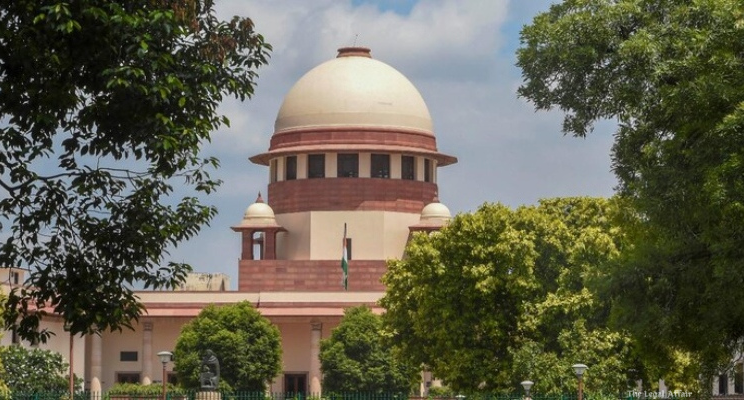
Introduction:
In the landmark decision of Lal Mohd. & Anr. v. State of U.P. & Ors., cited as 2025 LiveLaw (SC) 685, the Supreme Court of India, through a bench comprising Justice Vikram Nath and Justice Sandeep Mehta, has emphatically cautioned against the indiscriminate and arbitrary application of extraordinary legislations like the Uttar Pradesh Gangsters and Anti-Social Activities (Prevention) Act, 1986. The Court quashed an FIR dated 30th April 2023 that was filed under the Act against the appellants in relation to an incident that occurred on 10th October 2022. The FIR had been lodged days after the daughter-in-law of Appellant No. 1 filed her nomination for the Chairperson post of the Nagar Panchayat, Khargupur. The apex court held that the invocation of such stringent laws must not be employed as tools of political vendetta or harassment and reiterated that constitutional guarantees, especially under Article 21, cannot be curtailed through arbitrary or excessive use of penal provisions. The Court further observed that mere involvement in a single incident of communal violence without a demonstrated pattern of habitual criminal behaviour is insufficient to attract the provisions of the Gangsters Act. The case sets an important precedent in ensuring that procedural fairness and substantive justice remain the bedrock of criminal jurisprudence in India.
Arguments by the Appellants:
The appellants, through their legal counsel, contended that the FIR lodged against them under the Gangsters Act was mala fide and politically motivated. They submitted that the incident in question occurred on 10th October 2022, and it was only after Appellant No. 1’s daughter-in-law filed her nomination for the local municipal election on 17th April 2023 that the FIR was curiously registered on 30th April 2023. This unusual gap, they argued, raised substantial doubts about the bona fides of the police and administrative authorities. The appellants highlighted that their alleged involvement stemmed from a solitary communal clash and not from a continued engagement in organised or habitual criminal activity as envisioned under the Act. They further contended that the mandatory guidelines laid down by the Uttar Pradesh Government, particularly in the case of Gorakh Nath Misra v. State of UP, for invoking the Gangsters Act had not been complied with in their case. These guidelines required a rigorous assessment of criminal antecedents, a pattern of organised behaviour, and verification of involvement in gang-related activities. The appellants underscored that the FIR did not contain any material demonstrating their participation in a criminal gang or any coordinated unlawful enterprise. Hence, they argued that their fundamental rights under Article 21 of the Constitution were being infringed upon without due process of law and on the basis of vague, unsubstantiated allegations.
Arguments by the State of Uttar Pradesh:
The State, on the other hand, defended its decision to invoke the UP Gangsters Act, asserting that the Act’s invocation was justified based on the nature of the incident in question. It argued that the incident involved a violent communal clash, indicating potential threats to public peace and safety. The State contended that even if there was a time gap between the occurrence and the filing of the FIR, the seriousness of the offence warranted immediate action under the Act once the identities and roles of the alleged perpetrators had been verified. Furthermore, the prosecution argued that the gravity of the offence and the nature of the incident justified the use of stringent provisions, as the appellants posed a danger to law and order. The State insisted that the administrative authorities had the discretion to determine the applicability of special statutes like the Gangsters Act, and that such discretion, unless shown to be patently arbitrary or malafide, ought not to be interfered with. It also emphasized that public order is a priority and that the State was obligated to prevent individuals who engage in or abet such violent acts from destabilizing civic life.
Supreme Court’s Analysis and Judgment:
The Supreme Court, after a detailed examination of the facts and circumstances, found the invocation of the Gangsters Act in this case to be grossly unjustified and an abuse of the stringent provisions of a law intended for habitual and organised criminals. The bench began by noting the foundational constitutional principle embedded in Article 21 — that no person shall be deprived of their life or personal liberty except according to a procedure established by law. It emphasized that such procedure must be fair, just, and reasonable — not arbitrary, vague, or oppressive. The Court further remarked that in cases where extraordinary legislation that curtails personal liberties is invoked, there must exist a robust and credible evidentiary basis linking the accused to a sustained pattern of criminality.
The Court scrutinized the FIR and accompanying materials and noted the glaring absence of any gang chart or documentary evidence pointing to the appellants’ past involvement in organised criminal behaviour. The FIR referred to only a single episode of communal violence and did not indicate any history of criminal conduct, gang affiliation, or coordinated illegal activity by the appellants. It was clear to the Court that the FIR had been lodged after a significant delay and under circumstances that appeared to coincide suspiciously with the political candidature of a family member of one of the appellants. This, the Court held, raised a reasonable apprehension that the Act was being used not to tackle organised crime but to serve extraneous purposes.
The Court also observed that the guidelines framed by the Uttar Pradesh Government in compliance with its earlier ruling in Gorakh Nath Misra v. State of UP had not been followed. These guidelines required a prior assessment of the nature of the offence, verification of past criminal activities, and the compilation of a gang chart supported by reliable evidence. The authorities had failed to meet these conditions, and there was no material that indicated that the appellants met the statutory criteria for being designated as gangsters.
The Court reiterated that the Gangsters Act is a serious piece of legislation meant to curb the menace of habitual offenders and criminal syndicates. Its provisions must not be casually or routinely applied, especially in cases involving isolated incidents of violence without any indication of structured criminal operations. The bench stressed that applying the Gangsters Act based on vague allegations or theoretical possibilities of criminal intent would not only erode public confidence in the rule of law but also violate the core tenets of due process.
In quashing the FIR, the Court laid down strong judicial reasoning on the dangers of misusing laws that are meant to address organised crime. The judgment underscores that the rule of law must act as a shield against arbitrary power and that the presumption of innocence and procedural fairness cannot be sacrificed at the altar of expediency. The bench concluded that such misuse not only infringes upon individual liberties but also dilutes the credibility and effectiveness of laws specifically enacted to deal with severe forms of crime.