


Introduction:
The Supreme Court has dismissed a batch of appeals challenging the Telangana government’s ownership of more than 550 acres of land in Miyapur village, holding that the properties had vested in the government following the abolition of jagirs in 1949. The Court clarified that the status of a jagirdar did not confer ownership of the land itself and that the rights of erstwhile jagirdars were limited to the entitlements recognised under the applicable abolition and commutation laws.
A bench comprising Justice M.M. Sundresh and Justice Satish Chandra Sharma upheld the 2003 judgment of the Andhra Pradesh High Court, which had declared the State government to be the rightful owner of the disputed lands. The Supreme Court found that the claims advanced by the appellants were unsupported by valid title documents and that certain revenue entries relied upon by them were fabricated through collusion with revenue officials. Describing the litigation as an attempt to usurp valuable public land, the Court characterised the matter as a clear case of fraud.
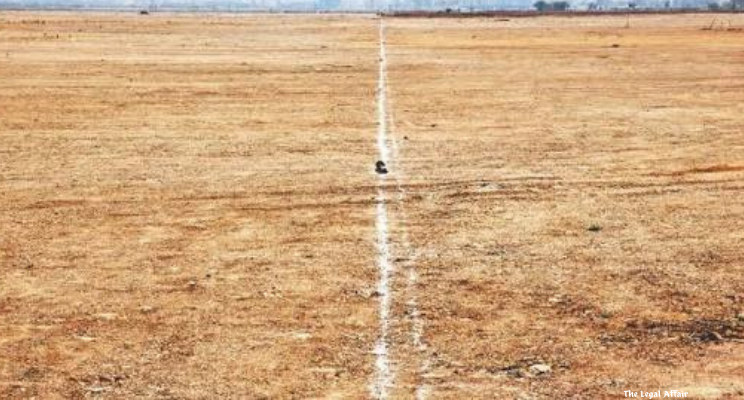
The dispute concerned approximately 550 acres and 39 guntas situated in Miyapur, Telangana. The lands had been classified as Sarkari poramboke, indicating government or public land, following a survey conducted in 1912. Over the years, different groups of claimants asserted ownership through separate historical sources, including grants allegedly made during the Nizam’s administration, entries in revenue records and proceedings concerning the former jagirdars.
One group traced its claim through Nawab Mohammad Khaisaruddin Khan, the son of Rafi-un-nisa Begum. The claim was based, among other things, on a recommendation made by the Reilly Commission in 1927 for restoration of Miyapur and certain other villages. Another group relied on the name of Raheemunnisa Begum, wife of Abdul Salam, which appeared as pattedar in the pahanies for the years 1950-51 to 1952-53. A third claimant asserted rights through Raheemunnisa Begum, wife of Nawab Moinuddowla Bahadur, relying on a Firman issued in 1929.
The legal framework governing the dispute was significantly affected by the Andhra Pradesh (Telangana Area) (Abolition of Jagirs) Regulation, 1358 Fasli, 1949. The Regulation came into force on August 15, 1949, and the administration of jagirs was transferred to the Government of Hyderabad with effect from September 15, 1949. It brought about the statutory abolition of jagirdari rights and provided for the transfer of the relevant administrative powers and interests to the government.
Nawab Khaisaruddin Khan subsequently pursued proceedings under the Hyderabad Atiyat Inquiries Act, 1952. He received provisional and revised commutation awards in 1957 and 1958. A Muntakhib, an official document recognising certain entitlements, was later granted by the Board of Revenue in 1976 in respect of four villages, including Miyapur. However, a subsequent application by his son seeking restoration of the villages was rejected in 1995.
The dispute also resulted in proceedings before the Special Court constituted under the Andhra Pradesh Land Grabbing (Prohibition) Act, 1982. In two cases, the State government had not been impleaded, and the respondents were declared land grabbers. In other proceedings in which the government was a party, the lands were treated as government poramboke and the claimants were declared land grabbers.
The Andhra Pradesh High Court subsequently upheld the findings in the cases involving the State government, set aside the decisions in the proceedings where the government had not been impleaded, and declared the State government to be the rightful owner. The appellants challenged this determination before the Supreme Court.
The central legal questions concerned the nature of rights held by jagirdars before and after the abolition of jagirs, the effect of commutation awards and Muntakhib documents, the scope of exceptions relating to home farms and personal property, and whether disputed revenue entries could establish ownership in the absence of lawful transfer or mutation proceedings. The Court also examined whether the appellants could rely on historical documents, alleged private grants, adverse possession and earlier administrative proceedings to defeat the State’s claim.
Arguments of the Parties:
The appellants advanced their claims through different historical chains of entitlement. Their cases rested on alleged grants, official records and proceedings originating during the Nizam’s administration. Although the precise factual basis differed among the claimants, their common objective was to establish that the disputed lands had remained private property and had not vested in the government following the abolition of jagirs.
One set of appellants traced its claim through Nawab Mohammad Khaisaruddin Khan and relied on the Reilly Commission’s recommendation in 1927 concerning the restoration of Miyapur and other villages. They also relied on subsequent proceedings under the Hyderabad Atiyat Inquiries Act, the commutation awards and the Muntakhib issued in 1976. Their position sought to derive proprietary rights from these historical and administrative records.
Another claim was founded on revenue entries showing Raheemunnisa Begum, wife of Abdul Salam, as pattedar in the pahanies for 1950-51 to 1952-53. These entries were relied upon to support the assertion that the lands belonged to her and that persons claiming through her had acquired valid interests. A separate claim was traced through Raheemunnisa Begum, wife of Nawab Moinuddowla Bahadur, on the strength of a 1929 Firman.
The appellants also raised the contention that the lands were Zat Jagir and therefore were not affected by the abolition of jagirs. This argument sought to distinguish the disputed properties from ordinary jagir lands brought within the operation of the 1949 Regulation. The claimants further relied on the exceptions relating to home farms and personal property under Regulations 17 and 18, contending that the lands should be treated as falling outside the general vesting provisions.
In addition, a plea of adverse possession was raised. The appellants sought to rely on the circumstances surrounding the occupation and possession of the properties to resist the government’s ownership claim.
The litigation also involved reliance on a permission allegedly granted by the Tehsildar under the Hyderabad Tenancy Act for alienation of 140 acres. The appellants referred to acquisition proceedings in which the land had been treated as private property, as well as a Report of the House Committee. These materials were relied upon to support their claims and challenge the government’s assertion of ownership.
A further contention, introduced for the first time before the Supreme Court, was that the property had originally been purchased at an auction by one Basith Khan in 1918 and subsequently bequeathed to the claimant through a Will executed between 1943 and 1944. The appellants produced documents in support of this new version of the title history.
The State government’s position, as reflected in the proceedings and the findings affirmed by the Supreme Court, was that the lands had been classified as government poramboke and had vested in the government upon abolition of the jagirs. The government disputed the appellants’ alleged title and maintained that the historical grants and commutation proceedings did not confer ownership over the underlying land.
The State’s case also rested on the absence of lawful proceedings transferring or mutating the land in favour of the private claimants. It was contended, in substance, that revenue entries could not independently create title, particularly where the statutory abolition framework had already vested the properties in the government. The government further challenged the authenticity of the entries relied upon by one set of claimants, pointing to discrepancies in the revenue records and the absence of corresponding mutation proceedings.
The State also relied on the inspection conducted by the Mandal Revenue Officer in October 1995, which reportedly found the land to be wasteland covered with boulders, without visible agricultural operations or possession attributable to the claimants. The proceedings before the Special Court in which the government had been impleaded had resulted in findings that the lands were poramboke and that the claimants were land grabbers.
The Supreme Court considered these competing positions against the statutory consequences of jagir abolition and the evidentiary record. It did not accept the appellants’ historical documents, revenue entries or administrative permissions as sufficient proof of ownership. Instead, it examined whether any of those materials could legally establish title after the 1949 Regulation had come into force.
Court’s Judgment:
The Supreme Court dismissed the appeals and upheld the Andhra Pradesh High Court’s declaration that the Telangana government was the rightful owner of the disputed lands. The bench held that the abolition of jagirs in 1949 had brought the relevant jagirdari rights to an end and that the appellants could not establish private ownership merely by relying on the former status of a jagirdar, commutation proceedings or disputed revenue entries.
Nature of jagirdari rights and effect of abolition
The Court first examined the legal nature of a jagir and the distinction between a grant of revenue rights and ownership of the land. Referring to the 1949 Abolition of Jagirs Regulation, it explained that a paigah was an estate granted for the maintenance of an army, whereas a jagir represented a grant concerning the right to collect or enjoy land revenue.
The Court emphasised that a grant of jagir could not be treated as a grant of title over the property itself. A jagirdar was not necessarily the owner of the land merely because he enjoyed the position or benefits associated with the jagir. As the bench explained, a jagirdar was not a title holder, even though he enjoyed that position at the pleasure of the Nizam.
The Court also examined Regulation 4, which dealt with the consequences of the death of a jagirdar. It clarified that succession to the status of jagirdar was not automatic. The status itself stood removed from the commencement of the Regulation, and the former position could not continue as an inheritable proprietary right.
Regulation 6 was also significant. Under this provision, jagirs were included in the Diwani, and the powers, rights and liabilities of the jagirdar ceased. The Court treated these provisions as demonstrating the legislative intention to extinguish the former jagirdari arrangement and transfer the administration and relevant rights to the government.
Consequently, the appellants could not claim continuing ownership merely because their predecessors had enjoyed jagirdari privileges before the Regulation came into force. The legal consequences of abolition had to be determined by the statute, rather than by the historical position or status of the persons claiming through the former jagirdars.
Exceptions for home farms and personal property
The Court next considered Regulations 17 and 18, which provided exceptions concerning home farms and personal property. It held that these provisions were exceptions to the general rule of abolition and vesting. Therefore, the burden of establishing that a particular property fell within one of these exceptions rested on the person asserting the benefit.
The bench made it clear that a claimant could not simply describe land as personal property or a home farm and thereby avoid the consequences of the abolition legislation. The person seeking to rely on the exception had to prove that the land actually satisfied the statutory requirements.
This approach was consistent with the general principle that a party invoking an exception to a statutory rule must establish the facts necessary to bring the case within that exception. The appellants had failed to establish that the disputed lands qualified as home farms or personal property protected under Regulations 17 and 18.
Commutation awards did not confer ownership
The Court then considered the relationship between the Abolition of Jagirs Regulation, the Hyderabad Atiyat Inquiries Act, 1952, and the Jagirs Commutation Rules. It held that the entitlement of an erstwhile jagirdar or a Muntakhib holder was confined to the payment of the commutation amount.
The commutation payment was described as a one-time compensation for the abolition of jagirdari rights. Those rights were restrictive and limited in nature, and the payment did not operate as a transfer of ownership of the underlying lands.
The Court therefore rejected the attempt to rely on the commutation awards and the Muntakhib as proof of title over Miyapur. The fact that Nawab Khaisaruddin Khan had pursued proceedings under the Atiyat Inquiries Act and received commutation amounts did not establish that he or his successors retained ownership of the villages.
The bench further held that the Firman relied upon by the claimants itself restricted the nature of the rights granted to the jagirdar. Since the grant did not transfer title, it could not form the foundation of a claim to ownership. In any event, whatever limited interest might have existed under the Firman had been extinguished by the operation of the Abolition of Jagirs Regulation.
The Court also held that the claimants tracing their rights through Khaisaruddin Khan were estopped from asserting title in view of the concluded proceedings initiated by him before the Nazim Atiyat and the subsequent appeal before the Board of Revenue. The determination and receipt of the commutation amount further disentitled him and his successors from claiming ownership or any continuing interest in the lands.
The bench described the unchallenged rejection in 1995 of the application filed by Khaisaruddin Khan’s son seeking restoration of the villages as the “final nail in the coffin” of that claim.
Revenue entries found to be fraudulent
A significant part of the judgment concerned the revenue entries showing Raheemunnisa Begum, wife of Abdul Salam, as pattedar in the pahanies for 1950-51 to 1952-53.
The Court found it suspicious that her name had been entered as pattedar despite the land being recorded as “dongala gutta kancha poramboke” in the khasra pahanies of 1954-55. It also noted that the disputed entries had been made after the lands had already vested in the government under the abolition legislation and without the knowledge of the Jagir Administrator.
The bench examined the evidence of the Mandal Revenue Officer, who had been examined as RW-8 in LGC No. 131/1995 before the Special Court. His evidence indicated that a transfer or mutation required corresponding entries in the faisal patti and pucca book. However, no order of transfer or mutation in favour of Raheemunnisa Begum could be found in the relevant records for Survey Nos. 100 and 101.
The Court observed that the absence of any corresponding mutation record made the entries highly suspicious. It held that the entries had been made without authority or jurisdiction and therefore constituted an act of nullity.
The bench also noted that an inspection conducted by the Mandal Revenue Officer in October 1995 found the disputed land to be wasteland covered with boulders. There were no visible agricultural operations or signs of possession in favour of any private party.
Taking these circumstances together, the Court concluded that the revenue entries were bogus and not genuine. It described them as the product of fraud orchestrated by persons in collusion with revenue officials.
The Court further clarified that there was no power to record an individual’s name as a pattedar through a mere entry, without supporting proceedings. Revenue entries, by themselves, could not create ownership where no valid transfer or mutation had taken place.
Fresh auction and Will plea rejected
The appellants also sought to rely on an alleged auction purchase by Basith Khan in 1918 and a Will said to have been executed between 1943 and 1944. The Supreme Court declined to accept this plea because it had not been raised before the Special Court or the High Court.
The bench observed that the documents had not undergone the necessary process of admissibility, relevancy and proof. Their mere production before the Supreme Court did not establish their genuineness or prove the alleged chain of title.
The Court also found it significant that there was no reference to the alleged auction or Will in any of the earlier proceedings, including the Reilly Commission report. The absence of such a reference in the historical and administrative records further weakened the newly introduced claim.
The Court therefore refused to rely on the documents to establish ownership at the appellate stage.
Other claims and administrative proceedings
The Court also rejected the contention that the lands were Zat Jagir and therefore unaffected by the abolition legislation. It explained that Zat Jagir referred to property personally granted to an individual and was distinct from the concepts of home farms and personal property under Regulations 17 and 18.
The bench noted that the Zat Jagir plea had neither been raised nor supported by evidence before the Special Court. Although the High Court had also considered the issue on merits, it found that what could be granted was only the revenue from the lands. The Supreme Court further observed that the question was factual and had not been proved. Since the claimant herself lacked valid title, no valid title could have passed to those claiming through her.
The Court also held that the Tehsildar’s permission for alienation of 140 acres under the Hyderabad Tenancy Act was invalid and without jurisdiction. The permission made no reference to the Abolition of Jagirs Regulation or the Atiyat proceedings, and neither the Jagir Administrator nor Khaisaruddin Khan had been heard before it was granted. It could not, therefore, confer a valid interest in the property.
The acquisition proceedings relied upon by the appellants were also found insufficient to establish ownership. Although those proceedings had treated the land as private property before being quashed by the High Court, the Supreme Court held that they did not determine or adjudicate the State government’s title. Consequently, they could not operate as an estoppel against the government.
Similarly, the Report of the House Committee could not create a proprietary right or confer any legal benefit upon the claimants.
The Court rejected the plea of adverse possession, holding that it had neither been proved nor was otherwise available to the appellants on the facts of the case.
Fraud, land-grabbing proceedings and final outcome
The Supreme Court considered the earlier proceedings before the Special Court under the Andhra Pradesh Land Grabbing (Prohibition) Act, 1982. It noted that in LGC Nos. 21 and 22 of 1994, the State government had not been impleaded. The High Court had rightly set aside those decisions, and the Supreme Court clarified that they would have no bearing on the government’s title.
In the other land-grabbing proceedings, where the State was a party, the lands had been held to be government poramboke and the claimants were declared land grabbers. The bench found that the Special Court and the High Court had considered the relevant submissions and documents. The omission to implead the State in the first set of cases had been rectified by the High Court.
The Court also took note of the fact that the lands had been transferred to the Hyderabad Urban Development Authoriy (HUDA). It emphasised that the appellants had failed to establi