


Introduction:
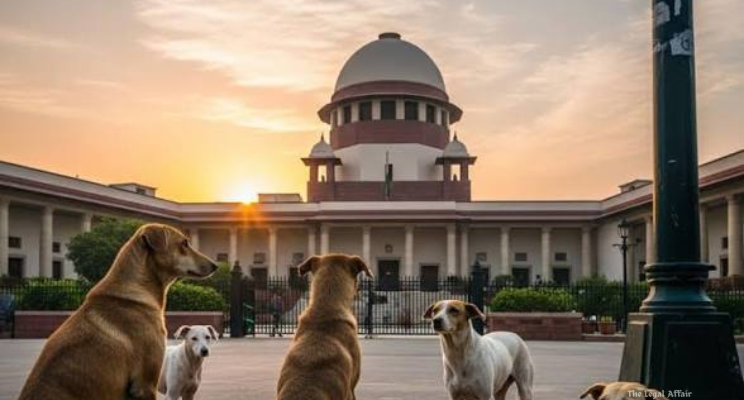
The Supreme Court of India, in In Re: ‘City Hounded By Strays, Kids Pay Price’, SMW(C) No. 5/2025, delivered a significant judgment addressing the growing menace of stray dog attacks across the country. A three-judge Bench comprising Justice Vikram Nath, Justice Sandeep Mehta, and Justice N.V. Anjaria refused to recall or modify its earlier directions mandating that stray dogs picked up from sensitive public places such as hospitals, schools, railway stations, bus stands, airports, and sports complexes should not be released back into the same locations after sterilisation and vaccination. Instead, such dogs are to be housed in shelters in accordance with the statutory framework governing animal birth control and public safety.
The judgment came in the backdrop of several applications filed by animal welfare activists, dog lovers, and organisations seeking modification of the Court’s earlier directions issued in November 2025. These applicants challenged the legality and practicality of the directions, arguing that permanent confinement of stray dogs in shelters violated the spirit of animal welfare laws and the Animal Birth Control Rules framed under the Prevention of Cruelty to Animals Act, 1960. The applicants also questioned the Standard Operating Procedure issued by the Animal Welfare Board of India.
The case originated from a suo motu proceeding initiated by the Supreme Court after alarming media reports highlighted repeated incidents of stray dog attacks on children and elderly persons. The trigger for the proceedings was a newspaper article titled “In City Hounded By Strays, Kids Pay Price”, which reported the death of a child allegedly caused by a stray dog attack. Initially, a two-judge Bench comprising Justice J.B. Pardiwala and Justice R. Mahadevan took cognisance of the issue in July 2025 and passed stringent directions requiring the removal of stray dogs from the National Capital Region. However, after public backlash and concerns raised by animal rights groups, the matter was referred to a larger Bench.
The three-judge Bench subsequently broadened the scope of the proceedings to cover the entire country and attempted to strike a balance between animal welfare and public safety. While earlier directions permitted the release of sterilised and vaccinated dogs back into the areas from which they were picked up, the Court later carved out exceptions for highly sensitive public places where human safety concerns outweighed competing considerations.
The judgment assumes constitutional significance because the Court firmly rooted its reasoning in Article 21 of the Constitution of India, holding that the right to life includes the right of citizens to move freely in public spaces without fear of violent dog attacks. The Court emphasised that the State cannot remain a passive observer while citizens, particularly children and elderly persons, continue to suffer due to administrative inaction and ineffective implementation of statutory obligations.
The Court also examined the chronic failure of State governments and local authorities to effectively implement the Animal Birth Control Rules. It noted that the failure to establish adequate sterilisation infrastructure, vaccination programmes, and shelter facilities had allowed the stray dog crisis to escalate into a serious public safety issue. The judgment therefore seeks to compel systemic institutional reform while simultaneously ensuring humane treatment of animals within the framework of the law.
Arguments of the Parties:
The applicants seeking modification or recall of the earlier directions argued that the Supreme Court’s November 2025 order was inconsistent with the legal framework established under the Prevention of Cruelty to Animals Act and the Animal Birth Control Rules. According to them, the ABC Rules specifically contemplate the sterilisation, vaccination, and subsequent release of stray dogs back into their original territories. They contended that permanent confinement of dogs in shelters would amount to arbitrary detention of animals and would defeat the purpose of territorial stabilisation envisaged under the statutory regime.
Animal rights organisations further argued that dogs are territorial animals and that removing them permanently from their natural surroundings could lead to greater ecological imbalance. They submitted that the absence of community dogs in a particular area would create a vacuum that may eventually be occupied by unvaccinated and unsterilised dogs, thereby aggravating the problem rather than resolving it. According to them, scientific and globally accepted methods of population control primarily rely upon sterilisation and vaccination rather than large-scale confinement.
The applicants also contended that the directions would place an impossible financial and infrastructural burden upon municipal bodies and local authorities. They argued that most local bodies in India lacked sufficient shelter facilities to accommodate the large number of stray dogs present in urban and semi-urban areas. In the absence of adequate funding and infrastructure, the implementation of the Court’s directions would result in overcrowded shelters and inhumane living conditions for animals.
Another major argument advanced by the applicants related to the constitutional and ethical dimensions of animal welfare. It was submitted that animals are entitled to protection under Articles 48A and 51A(g) of the Constitution, which impose duties upon the State and citizens to show compassion towards living creatures. The applicants argued that the Court’s earlier directions disproportionately prioritised human convenience while undermining the welfare and dignity of animals protected under Indian law.
The applicants also challenged the Standard Operating Procedure issued by the Animal Welfare Board of India, alleging that it lacked sufficient statutory backing and failed to adequately balance public safety concerns with animal welfare principles. It was argued that the SOP created uncertainty regarding the handling, transportation, confinement, and treatment of stray dogs.
On the other hand, the State authorities, municipal bodies, and supporting intervenors defended the Court’s earlier directions by highlighting the alarming increase in stray dog attacks across the country. They placed reliance on reports documenting severe attacks on children, elderly persons, and even foreign tourists in public places such as airports, roads, parks, railway stations, and residential colonies. The respondents argued that the State has a constitutional obligation to ensure public safety and cannot permit uncontrolled stray dog populations to endanger human lives.
The respondents contended that the existing implementation of the Animal Birth Control Rules had been grossly inadequate and ineffective. They pointed out that despite the statutory framework being in existence for years, many States had failed to establish adequate sterilisation centres, vaccination programmes, or shelter homes. According to them, the recurring incidents of dog attacks demonstrated a complete breakdown in enforcement mechanisms.
The authorities further argued that the Court’s directions were limited only to highly sensitive public areas where the presence of stray dogs posed an immediate threat to human life and safety. They clarified that the directions did not authorise indiscriminate removal or extermination of dogs, but merely prohibited their release back into critical public spaces such as schools, hospitals, bus stands, and railway stations.
The respondents also defended the legality of euthanasia in exceptional circumstances involving rabid or dangerously aggressive dogs. They argued that humane euthanasia in limited cases was permissible under existing laws and necessary to prevent grave threats to public safety. The authorities maintained that the Court’s directions represented a balanced approach aimed at harmonising animal welfare with the fundamental rights of citizens under Article 21.
Court’s Judgment:
The Supreme Court dismissed all applications seeking recall or modification of its earlier directions and strongly reaffirmed the constitutional duty of the State to protect citizens from preventable threats arising from stray dog attacks. The judgment, authored by Justice Sandeep Mehta, emphasised that the right to life under Article 21 of the Constitution necessarily includes the right of individuals to access and move freely in public spaces without fear of violent attacks by stray animals.
The Court observed that the increasing frequency of dog attacks across the country reflected a deeply troubling reality that could no longer be ignored. Referring to numerous reports concerning attacks on children, elderly persons, and vulnerable citizens, the Bench noted that the issue had assumed “staggering dimensions.” The Court remarked that the continued recurrence of such incidents exposed serious deficiencies in the implementation of the Animal Birth Control framework by State authorities and local bodies.
The Court rejected the contention that its directions violated the Animal Birth Control Rules. It clarified that while the statutory framework ordinarily contemplates release of sterilised and vaccinated dogs into their original territories, exceptional treatment is justified in respect of sensitive public places where human safety considerations assume overriding importance. The Court held that the statutory scheme cannot be interpreted in a manner that compels authorities to expose citizens to foreseeable danger.
In a significant constitutional observation, the Bench held that the Constitution does not envisage a society where citizens are forced to survive at the mercy of circumstance due to administrative failures. The Court stated that the State cannot remain a passive spectator where preventable threats to human life continue to proliferate despite the existence of statutory mechanisms intended to address the problem.
The Court also strongly criticised the inconsistent and inadequate implementation of the Animal Birth Control Rules across the country. It observed that the implementation had been “sporadic, underfunded and uneven.” According to the Court, had States and Union Territories acted diligently from the inception of the ABC framework by establishing sterilisation infrastructure, vaccination drives, and institutional mechanisms, the present crisis could have been avoided.
The Bench further observed that prolonged inaction and absence of institutional commitment had substantially contributed to the aggravation of the stray dog menace. It stressed that merely framing rules without effective enforcement could not satisfy the constitutional obligations of the State towards public safety.
In addition to upholding its earlier directions, the Court issued several fresh directions intended to ensure effective nationwide implementation. The Court directed all States and Union Territories to strictly enforce the Animal Welfare Board of India Rules and establish at least one Animal Birth Control centre in every district. The authorities were also instructed to ensure adequate availability of anti-rabies vaccines and immunoglobulins in medical institutions.
Recognising the resistance often faced by municipal officials while carrying out stray dog control measures, the Court directed that officials implementing the directions should receive legal protection in the performance of their duties. It specifically stated that FIRs or criminal complaints should ordinarily not be registered against such officials for actions taken in good faith pursuant to the Court’s orders.
The Court also permitted authorities to adopt legally permissible measures, including euthanasia of rabid or dangerously aggressive dogs where necessary to protect human life. This direction reflected the Court’s recognition that exceptional circumstances may require stronger interventions to prevent fatal attacks.
Further, the Court directed High Courts across the country to register suo motu proceedings for monitoring compliance with the Supreme Court’s directions. This mechanism was intended to ensure continuous judicial oversight and accountability in implementation.
Interestingly, the Court also extended its concern to the menace of stray cattle on highways and issued directions to the National Highways Authority of India to take preventive measures for securing highways from stray animals.
The judgment ultimately represents a significant development in Indian constitutional and animal welfare jurisprudence. While reaffirming the importance of compassion towards animals, the Supreme Court clearly prioritised the protection of human life and public safety under Article 21. The Court attempted to strike a balance between humane treatment of animals and the pressing need to prevent recurring attacks that threaten citizens in public spaces.
By placing accountability upon State authorities and directing institutional reforms, the Court signalled that public safety concerns arising from stray dog attacks can no longer be addressed through temporary or symbolic measures. The judgment thus marks an important attempt to create a structured and enforceable framework capable of addressing both animal welfare concerns and the constitutional rights of citizens.