


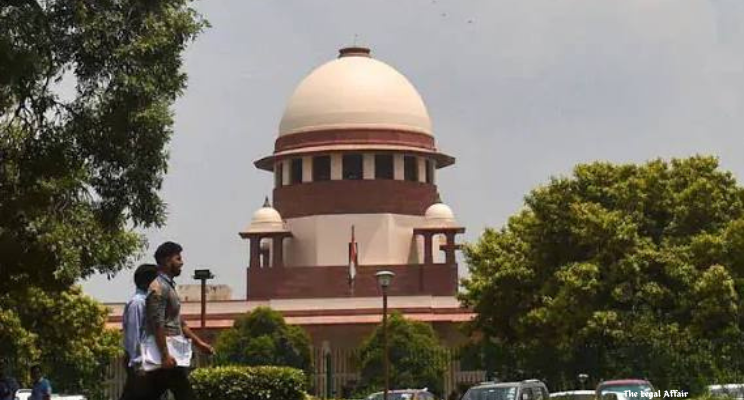
Introduction:
The Supreme Court of India, in State of Odisha & Ors. v. Sreepati Ranjan Dash and connected matters, delivered a significant judgment concerning the rights of government employees to seek promotion under old service rules after the introduction of a new statutory framework. A Bench comprising Justice Dipankar Datta and Justice Augustine George Masih held that government employees do not acquire a vested right to promotion merely because vacancies arose when earlier service rules were in force. The Court reaffirmed the principle that the State possesses the authority to restructure cadres, alter promotional criteria, and change the method of appointment in public service, provided such changes are not arbitrary or unconstitutional.
The dispute arose in the Odisha Transport Department, where the respondents were initially appointed at the junior level and subsequently promoted to senior positions. They sought further promotion to the post of Assistant Regional Transport Officer (ARTO), relying upon executive instructions issued by the Odisha Government in 1981. Under the earlier regime, eligible Senior Assistants who had completed the prescribed years of service could be considered for appointment to the post of ARTO based on merit and suitability. According to the respondents, vacancies to the post had arisen during the subsistence of those executive instructions, thereby entitling them to consideration for promotion under the old framework.
However, before the promotional process could be completed, the Odisha Government undertook a major restructuring exercise in the Transport Department. In 2017, the post of ARTO was upgraded from a Group C post to a Group B post. Simultaneously, the appointing authority was changed from the Transport Commissioner to the State Government. Subsequently, the Odisha Transport Service Rules, 2021 were framed under Article 309 of the Constitution of India. The newly framed Rules transformed the ARTO post into a selection post to be filled through a competitive examination conducted by the Odisha Public Service Commission (OPSC). These statutory Rules superseded the earlier executive instructions governing promotions.
Despite the restructuring and introduction of the 2021 Rules, the Orissa High Court directed the State Government to convene a Departmental Promotion Committee (DPC) and consider the respondents for promotion under the earlier regime. The High Court also restrained the State from filling certain vacancies under the new Rules until the respondents’ claims were considered.
Aggrieved by these directions, the State of Odisha approached the Supreme Court contending that the respondents had no enforceable right to insist upon promotion under repealed executive instructions. The State argued that the post in question was essentially a selection post and that the Government retained complete discretion to alter the recruitment mechanism and service structure in the interest of administrative efficiency.
The case raised important questions concerning public employment jurisprudence, including whether vacancies arising under old rules must necessarily be filled according to those rules, whether employees possess a legitimate expectation to promotion under repealed frameworks, and the extent of governmental power to restructure public service cadres under Article 309 of the Constitution.
The Supreme Court’s judgment is therefore significant not only for government employees across the country but also for administrative law jurisprudence, as it clarifies the legal distinction between a right to be considered for promotion and an enforceable right to promotion itself. The decision further reinforces the principle that policy choices relating to public administration and recruitment ordinarily fall within the domain of the executive unless shown to be arbitrary or discriminatory.
Arguments of the Parties:
The State of Odisha, appearing as the appellant before the Supreme Court, challenged the correctness of the High Court’s directions and argued that the respondents had no vested or accrued right to claim promotion under the earlier executive instructions merely because vacancies had arisen while those instructions were in force. The State submitted that the Government, as the appointing authority, possesses the power to restructure cadres, alter eligibility conditions, and change the method of recruitment or selection in accordance with administrative requirements and evolving governance needs.
The State contended that the post of Assistant Regional Transport Officer was never a purely promotional post. Rather, it was a selection post where appointments were to be made on the basis of merit and suitability. Therefore, according to the Government, the respondents could not claim automatic entitlement to promotion merely because they had completed the prescribed years of service.
The appellants further argued that before any promotional exercise could be initiated, the Government had undertaken a comprehensive restructuring of the Transport Department. As part of this restructuring, the ARTO post was upgraded from Group C to Group B status, thereby substantially altering the nature, responsibilities, and administrative significance of the post. The appointing authority was also changed, reflecting the Government’s intention to bring greater professionalism and merit-based selection into the service.
The State emphasised that the Odisha Transport Service Rules, 2021 were framed under Article 309 of the Constitution, thereby carrying statutory force. These Rules superseded all previous executive instructions and introduced a competitive selection mechanism through the Odisha Public Service Commission. Once the statutory Rules came into force, the earlier executive instructions ceased to operate and could not form the basis for future appointments.
Relying upon precedents of the Supreme Court, including State of Himachal Pradesh v. Raj Kumar and Haryana State Electricity Board v. Gulshan Lal, the appellants argued that there exists no universal principle requiring vacancies to be filled under the rules prevailing on the date of occurrence of vacancies. According to the State, an employee possesses only a limited right to fair consideration in accordance with existing rules, but not an indefeasible right to promotion itself.
The State also argued that compelling the Government to fill vacancies under outdated rules would seriously undermine administrative autonomy and prevent necessary institutional reforms. It was submitted that the Government cannot be forced to continue obsolete recruitment policies when it has consciously chosen to modernise and restructure the service framework in public interest.
On the other hand, the respondent employees contended that they had become eligible for promotion under the 1981 executive instructions and that vacancies to the post of ARTO had arisen while those instructions remained operational. According to the respondents, the Government could not deprive them of promotional opportunities by subsequently introducing new rules after vacancies had already accrued.
The respondents argued that the High Court was justified in directing the State to convene a DPC because the authorities had failed to fill the vacancies in a timely manner despite the existence of eligible candidates. They contended that administrative delay on the part of the Government should not operate to the prejudice of employees who had already fulfilled the eligibility requirements under the earlier regime.
The respondents also invoked the doctrine of legitimate expectation, asserting that employees who become eligible under existing service rules acquire a reasonable expectation that their cases will be considered according to those rules. According to them, the abrupt shift from a promotional framework to a competitive selection process unfairly extinguished their legitimate career prospects after years of service in the department.
It was further argued that the 2021 Rules should operate prospectively and should not affect vacancies that arose prior to their enforcement. The respondents maintained that service jurisprudence generally recognises the principle that vacancies should ordinarily be filled in accordance with the rules existing at the time such vacancies arise unless a contrary legislative intention is expressly indicated.
The employees also contended that the Government’s restructuring exercise effectively altered their promotional avenues after they had already acquired eligibility under the earlier framework. Such action, according to them, violated principles of fairness and equality under Articles 14 and 16 of the Constitution.
Supporting the High Court’s reasoning, the respondents submitted that denying consideration under the old regime would amount to arbitrary deprivation of accrued service benefits. They therefore urged the Supreme Court to uphold the directions requiring the State to consider their candidature for promotion through the Departmental Promotion Committee under the previous system.
Court’s Judgment:
The Supreme Court allowed the appeals filed by the State of Odisha and set aside the directions issued by the High Court. The judgment authored by Justice Dipankar Datta reaffirmed the settled principle that government employees do not possess a vested right to promotion merely because vacancies arose while earlier service rules were in force.
At the outset, the Court clarified the distinction between a right to be considered for promotion and a right to promotion itself. The Bench observed that while an employee may legitimately claim consideration in accordance with applicable rules, no employee can insist upon promotion as an enforceable legal entitlement. The Court reiterated that public employment and service structures remain subject to the policy decisions of the Government, which possesses the constitutional authority to amend recruitment procedures and service conditions in the interest of administrative efficiency.
The Court specifically rejected the respondents’ argument that vacancies must necessarily be filled according to the rules prevailing on the date the vacancies arose. Referring to its earlier decision in State of Himachal Pradesh v. Raj Kumar, the Bench noted that such a proposition had already been negatived in prior judgments. The Court observed that there is no universal or inflexible rule requiring vacancies to be governed by the earlier framework if the Government subsequently chooses to alter the service rules before appointments are actually made.
The Bench held that the Odisha Government’s decision not to fill the posts immediately and instead undertake cadre restructuring was legally permissible. The Court noted that the Government had consciously upgraded the ARTO post from Group C to Group B and had introduced a more competitive and merit-based selection process through the Odisha Public Service Commission. Such policy decisions, according to the Court, fall squarely within the executive domain.
Importantly, the Court recognised the Government’s authority under Article 309 of the Constitution to frame statutory service rules regulating recruitment and conditions of service. Since the Odisha Transport Service Rules, 2021 were framed under constitutional authority, they validly superseded the earlier executive instructions governing promotions.
The Court also rejected the respondents’ plea based on legitimate expectation. Referring to the decision in Haryana State Electricity Board v. Gulshan Lal, the Bench observed that an employee neither possesses a vested right to promotion nor a legitimate expectation to be promoted merely because earlier rules favoured such advancement. The Court emphasised that legitimate expectation cannot override statutory changes introduced through valid exercise of governmental power.
A significant aspect of the judgment is the Court’s recognition that the method and manner of recruitment are essentially matters of governmental policy. The Bench observed that if the Government deems it appropriate to alter the mode of selection from promotion to competitive examination, such decision cannot ordinarily be interfered with unless demonstrated to be arbitrary, discriminatory, or mala fide.
The Court further noted that the post of ARTO was fundamentally a selection post rather than a guaranteed promotional post. Therefore, the respondents could not claim automatic elevation based solely on seniority or length of service. By introducing a competitive examination process through the OPSC, the Government had merely exercised its administrative discretion to ensure higher standards in public service recruitment.
The Supreme Court also criticised the High Court for effectively compelling the Government to continue with an outdated recruitment framework despite statutory changes having already come into force. The Bench held that courts must exercise restraint while reviewing policy decisions relating to cadre restructuring and recruitment methodology unless constitutional violations are clearly established.
The judgment ultimately underscores the principle that administrative reforms cannot be frustrated by claims based on repealed service frameworks. While fairness and non-arbitrariness remain essential constitutional requirements, the Government retains broad discretion to redesign service structures and recruitment policies in response to changing institutional needs.
Accordingly, the Supreme Court concluded that the respondents had no enforceable claim to consideration under the earlier executive instructions once the 2021 Rules came into force. The appeals filed by the State of Odisha were therefore allowed, and the High Court’s directions were set aside.
The ruling serves as an important precedent in service law jurisprudence by reaffirming that government employees cannot insist upon application of superseded rules merely because vacancies existed earlier. The judgment also strengthens the executive’s authority to undertake cadre restructuring and reform recruitment systems without being constrained by outdated administrative arrangements.