


Introduction:
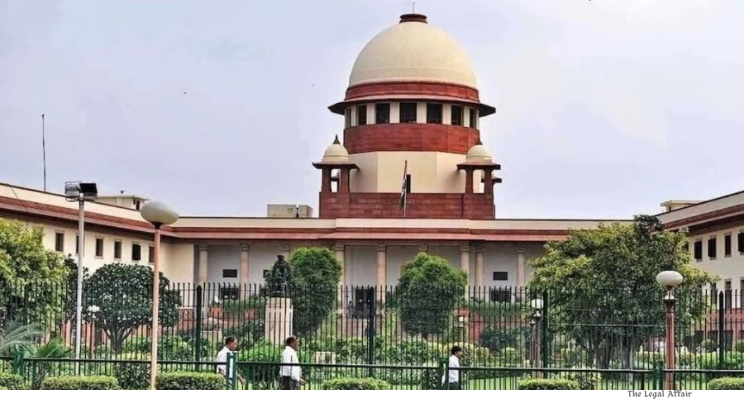
In the matter of Danish Zaheer Siddiqui vs. State of Maharashtra (Diary No. 33024/2025), the Supreme Court of India on June 17, 2025, dismissed a Special Leave Petition challenging the interim order of the Bombay High Court which directed the Thane Municipal Corporation to demolish 17 illegally constructed buildings in Thane, Maharashtra. The petition was filed through Advocate-on-Record (AoR) Vidhi Pankaj Thakur. The buildings in question, as noted in the High Court’s order dated June 12, were reportedly erected by individuals linked to the underworld without obtaining requisite sanctions and on land belonging to a third party. The High Court, acting upon a writ petition filed by a lady who claimed to be the lawful owner of the land, issued a sweeping interim order directing immediate demolition of all 17 buildings, expressing deep concern over the brazen nature of the illegal construction. The Supreme Court, comprising Justice Ujjal Bhuyan and Justice Manmohan, refused to interfere with the High Court’s directive and came down heavily on the petitioner for seeking relief in such a matter, especially when the entire foundation of the construction was unlawful, unregulated, and attributed to criminal syndicates.
Arguments:
The petitioner, Danish Zaheer Siddiqui, claimed to be a bona fide purchaser of a unit in one of the 17 buildings and argued that the High Court’s demolition order would render over 400 families homeless. He submitted that the High Court’s direction amounted to a “carte blanche” demolition order that empowered the Municipal Corporation to act without seeking any further directions from the Court. He contended that his rights as a purchaser were being violated and that he should be protected from the consequences of actions taken by builders and authorities. It was submitted that he had approached multiple authorities, including the Chief Minister and Municipal Commissioner, seeking relief and a stay on the demolition, citing his vulnerable status as a citizen and a buyer unaware of the underlying illegalities. Furthermore, he insisted that a blanket demolition without any investigation or rehabilitation plan for innocent flat buyers amounted to a grave miscarriage of justice and was in violation of Article 21 of the Constitution, which guarantees the right to life and shelter.
Judgement:
However, the Supreme Court was not convinced by these arguments. Justice Manmohan, in particular, made several scathing remarks during the hearing, stating that the petitioner should not be heard as he was attempting to present a noble face to shield the wrongdoing of builders with underworld connections. He remarked, “Kudos to the High Court for taking a right decision. See, you encroached on some third party’s land and built a property without taking any sanctions. There is no rule of law, and please see, these are persons with underworld connections.” He further observed that it was a strategic move to place an innocent buyer at the forefront while concealing the real culprits who orchestrated the construction through illegal means. The judge pointed out that page 2 of the Bombay High Court’s order highlighted a letter written by the petitioner to several government functionaries acknowledging that the builders were linked to the underworld and that the constructions were undertaken in an unauthorized and fraudulent manner. The High Court had already taken into account the plight of innocent flat buyers, especially the writ petitioner who is a senior citizen and a lady, and observed that such massive illegal constructions could not have been undertaken without the connivance or negligence of municipal officers.
Justice Manmohan’s oral observations reflected deep frustration over the prevailing situation in Thane and similar urban areas, where large-scale encroachments take place under the noses of municipal authorities. “It’s shocking some people have the guts to come to this Court! Kudos to the High Court, for once, the High Court has woken up and tried to establish the rule of law. How many buildings have you constructed without taking any sanctions? Please go, unless and until you take any action against these unscrupulous builders, this trend will continue—people will continue to do gorilla fighting using your shoulders, it must stop,” he said. Justice Bhuyan also questioned how the petitioner, without proper documentation, purchased a unit in such buildings and suggested that any grievances against the builder be raised before the High Court instead of seeking relief from the Supreme Court.
The Court underscored that the illegality was not only in the nature of procedural lapses but foundational—buildings were constructed on land that did not belong to the builders and without any permission from the planning authorities. Moreover, the builders allegedly had underworld links, making the matter even more serious from a legal and ethical standpoint. The High Court had noted with dismay that the Thane Municipal Corporation failed to act despite the scale and visibility of the illegal construction, questioning whether the Corporation was even aware of what was happening “under its feet and under the blessings of its officers.” Justice Manmohan expressed his anguish over how cities like Mumbai and its adjoining areas could eventually be overrun by encroachments if such illegality continued unchecked. “Next, your Bombay will get encroached. That’s all that remains to be done. Please feel for your city, otherwise everything will get encroached. For once, the Bombay High Court has taken a very courageous stand,” he said.
After hearing the arguments, the Court recorded that the learned senior counsel for the petitioner sought liberty to withdraw the application, with the liberty to approach the High Court for appropriate remedies. The bench, while allowing the withdrawal, made it abundantly clear that it expressed no opinion on the merits of the case at that stage but strongly indicated that the Bombay High Court’s interim order stood justified in light of the facts on record. The Supreme Court thus refrained from granting any relief and allowed the demolition order to proceed.
The background of the case reveals that the Bombay High Court’s intervention was triggered by a writ petition filed by a woman claiming to be the rightful owner of the land on which the buildings had been illegally constructed. She alleged that the “land mafia,” with tacit support from certain corrupt officials, had raised five-storey structures in blatant violation of planning laws. The High Court took serious note of the representation made by the petitioner and acknowledged that the issue was far more complex than a simple land dispute—it involved systemic failure, possible criminal nexus, and dereliction of duty on the part of government officers. The Court noted that such massive construction could not have been carried out without a network of support, manipulation, and silence from those in power. It observed that the real sufferers were not only the original landowners but also innocent flat buyers who were lured into purchasing flats in unauthorized buildings under the illusion of legality.
While the Supreme Court refrained from making any detailed observations on the merits, its strong oral remarks and refusal to entertain the petition sent a clear message—there can be no sympathy for illegality and no cover for criminally motivated urban expansion. Buyers must conduct due diligence before investing, and authorities must be held accountable for failing to prevent encroachments and illegal construction.
This judgment sets a significant precedent in the context of urban planning, real estate fraud, and the deep-rooted nexus between the land mafia and negligent civic authorities. It illustrates how the judiciary is willing to step in where executive agencies fail and underscores the importance of upholding the rule of law over populist or emotional considerations. The Supreme Court’s refusal to interfere, coupled with its praise for the Bombay High Court’s bold action, may very well serve as a wake-up call for urban local bodies across the country to take proactive measures against unauthorized constructions and criminal land grabs. This case also highlights the need for a robust legal framework to protect innocent purchasers from being caught in the crossfire of demolition drives and regulatory enforcement. However, the Supreme Court’s stand also reinforces the principle that illegality, however longstanding, cannot be regularized merely on the basis of occupancy or investment—especially when the underlying act involves land-grabbing, underworld nexus, and fraud.
The larger implication of this ruling goes beyond Thane and speaks to the erosion of regulatory integrity in urban India. The onus lies not just on the courts but on the entire governance machinery to ensure that such brazen construction activities are checked at the root. Strong judicial pronouncements like this one from the Supreme Court emphasize deterrence, accountability, and the need to restore the faith of citizens in the rule of law and planned development.