


Introduction:
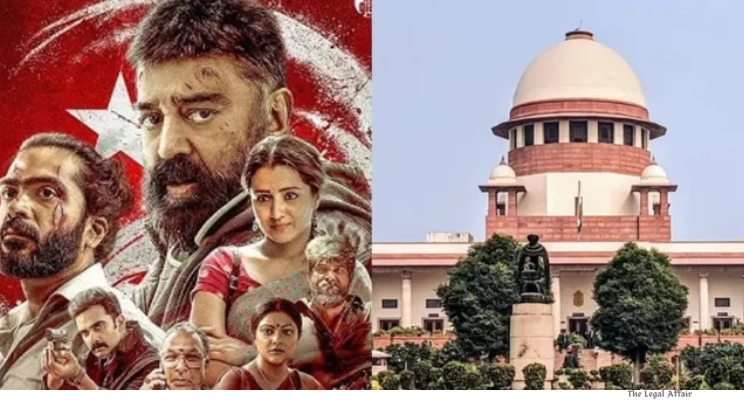
In Sri M Mahesh Reddy v. State of Karnataka & Ors. (W.P.(C) No. 575/2025), the Supreme Court reluctantly interfered in a dispute over the release of the Tamil feature film Thug Life, starring Kamal Haasan and directed by Mani Ratnam. IoR A Velan filed a Public Interest Litigation on behalf of Mahesh Reddy, pressing the State of Karnataka and various other bodies to protect the freedom of cinematic expression by ensuring Thug Life—cleared by the Central Board of Film Certification (CBFC)—is released in Karnataka. The film’s screening had been prevented by an “extra‑judicial ban” enforced by pro‑Kannada groups who threatened violence following Kamal Haasan’s remark that Kannada was “born out of Tamil.” Released nationwide on June 5, 2025, Thug Life remained unreleased in Karnataka due to orchestrated protests, threats to burn cinemas, and inaction on police protection by the State. When the same issue was delayed in the Karnataka High Court—where an apology from Haasan was demanded before relief—the Supreme Court today (June 17, 2025) strongly rebuked this posture, citing the rule of law and fundamental rights, and took over the matter for expedited hearing.
Arguments of the Petitioner:
The petition contended that the “de‑facto ban” imposed by fringe vigilante groups violated Article 19(1)(a) (speech and expression) and Article 19(1)(g) (profession) of the Constitution. Despite CBFC approval, cinema halls were forced to cancel shows due to threats of arson. One widely circulated quote, attributed to Karnataka Rakshana Vedike, warned: “we will set theatres on fire if any Kamal Haasan film is released.” It alleged that the State had capitulated to extremist demands and failed to discharge its duty to maintain public order and uphold the law. As per the petition, cinemas—even Victory Cinema in Bengaluru—publicly promoted screenings, yet were forced to back down on the same day. Though the producer had sought relief from the High Court, that court demanded a public apology from Haasan before allowing release—a remedy outside legal precedent. The petitioner sought (i) an ad-interim ex‑parte order directing the State to provide adequate police cover to theatres showing the film; (ii) immediate injunctions restraining decision-makers from obstructing its release, including the Karnataka Film Chamber of Commerce (KFCC); and (iii) criminal action under law against those inciting violence.
Arguments of Respondents (State & KFCC):
Counsel for the State of Karnataka argued that Kamal Haasan himself chose not to release the film in the State until he resolved the issue with KFCC—and that this voluntary restraint rendered the petition academic. State counsel further asserted that the matter was pending before the High Court, and thus the Supreme Court should avoid interference. Respondents maintained that the High Court’s direction for apology was contextual, given the threat to civic harmony caused by Haasan’s remark. They proposed that the controversy was an outcome of frivolous pronouncements and the backlash was organic, not state-conscripted. The State also suggested that the CBFC approval does not bar limited restrictions under public order concerns. KFCC, represented in the High Court, had followed suit in demanding an apology first before any release.
Supreme Court’s Response:
Almost immediately, the bench—Justice Ujjal Bhuyan and Justice Manmohan—expressed abhorrence at “mob rule” overriding lawful processes. Justice Bhuyan warned: “We can’t allow mobs and vigilante groups to take over the streets. The rule of law must prevail.” He asked why threats to burn theatres should dictate whether a CBFC‑certified film is screened. Justice Manmohan stressed that assured screening of legally certified films is a State’s constitutional duty, regardless of any voluntary delays by producers: “Rule of law is important. State has to ensure that anyone who wants to show a film, that film must be released.” The Court clarified it would not compel citizens to watch the film—only secure its release. Justice Bhuyan derided the Karnataka High Court’s insistence on apology as “none of the business,” adding such extraneous conditions strain the rule of law and fundamental rights.
The bench further observed that the film’s producer was right to approach the High Court, but that this petition raised broader constitutional concerns affecting freedom of expression, democratic dissent, and public order. The Supreme Court directed the High Court petition be transferred to itself for consolidated hearing on June 19, and asked the State to file its counter‑affidavit by June 18. It also referenced the Bombay High Court’s Me Nathuram Godse Boltoy judgment—endorsed by the Supreme Court in Imran Pratapgarhi—which annulled government censorship of a controversial play and reaffirmed that divergent views cannot be suppressed by violence or executive action.
Court’s Judgement (Interim Order):
Although the hearing is ongoing and final orders will be reserved post-June 19, the Supreme Court’s interim stance is clear:
Declaring the Kannada film stakeholders bear no authority to enforce a ban on a CBFC‑certified film.
Ordering the State of Karnataka to file a detailed affidavit by June 18 explaining why Thug Life has not screened in the State and detailing steps taken to maintain public order.
Transferring the High Court proceedings to the Supreme Court for final adjudication—including whether threats from non‑state actors can deny a rightful release.
Restating that citizens’ choices to watch or not watch remain unaffected; the State’s duty is to provide screening freedom.
- Cementing the principle: rule of law and constitutional rights cannot be subordinated to vigilante intimidation.
- The Court took a firm view: the issue is not mere film release but democracy, dissent, and the limits of mob influence. This matter is now set for high-priority hearing on June 19 so that the fate of Thug Life may be decided within days.