


Introduction:
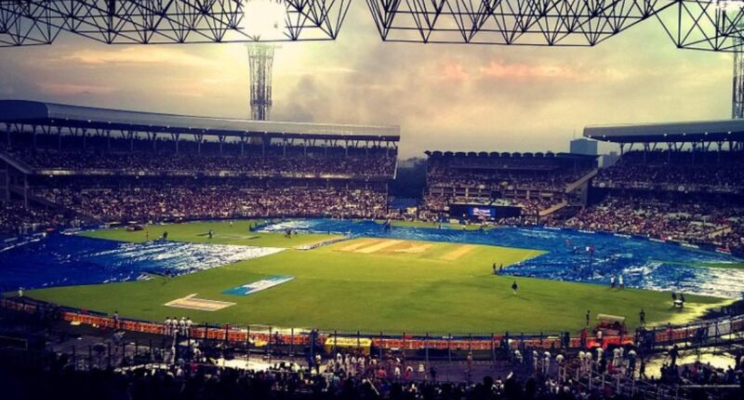
In The Kolkata Municipal Corporation and Another v. The Cricket Association of Bengal and Others, SLP(C) No. 28566/2025, the Supreme Court on dismissing the appeal filed by the Kolkata Municipal Corporation (KMC), affirmed the Calcutta High Court’s finding that the Eden Gardens Stadium does not qualify as a “public place” for the purpose of levying advertisement tax under Section 204 of the Kolkata Municipal Corporation Act, 1980. A Bench of Justices Vikram Nath and Sandeep Mehta heard the matter. Senior Advocate Jaideep Gupta appeared for the petitioners—the Kolkata Municipal Corporation—while Senior Advocate Rajiv Shakdher represented the respondents—the Cricket Association of Bengal (CAB). The dispute arose out of a 1996 demand notice issued by KMC seeking over ₹51 lakh as advertisement tax for in-stadia advertisements displayed during the Wills World Cup inauguration and semifinal match at Eden Gardens. The High Court held that the stadium is not a public place within the meaning of the Act due to its restricted and conditional access. Aggrieved, the municipal body approached the Supreme Court, urging that visibility of advertisements to audiences and through broadcasts rendered the space “public” in nature. The Supreme Court, however, refused to entertain these contentions and, while dismissing the petition, declined to keep the question of law open, thereby bringing closure to a dispute that had lingered for decades.
Arguments of Both Sides:
On behalf of the Kolkata Municipal Corporation, Senior Advocate Jaideep Gupta advanced the argument that Eden Gardens effectively becomes a public place when the stadium is opened to spectators who purchase tickets. He contended that once thousands of individuals are permitted to enter and access the venue for cricket matches or events, the space sheds its purely private character and attains the nature of a “restricted public place.” The heart of his argument was that visibility and viewership—both physical and broadcast—should determine the classification of the stadium as a public place. Gupta submitted that advertisements displayed inside the stadium are visible not only to spectators within but potentially from outside as well, and further amplified through televised broadcasts watched by millions. This expansive reach, he argued, should bring the advertisements squarely within the purview of Section 204 of the KMC Act, empowering the municipal corporation to impose advertisement tax. He also insisted that Eden Gardens is visible from various external points, and with modern technology, such as drones, advertisements can be viewed from outside the boundary, thereby placing them in public view. Thus, according to him, the tax liability was justified and the High Court had erred in concluding otherwise.
In response, Senior Advocate Rajiv Shakdher, appearing for the Cricket Association of Bengal, refuted these assertions by emphasizing the legal distinction between a private venue with restricted access and a public place with unrestricted entry. He argued that Eden Gardens is fundamentally a private property, and access to it is wholly controlled by CAB. Entry is only permitted during specific match days, subject to possession of valid tickets, and even then, spectators are allowed only into designated areas for limited periods. This conditional, controlled, and non-absolute nature of entry, he maintained, disqualifies the stadium from being termed a “public place” under the KMC Act. Shakdher stressed that the statutory definition under Section 2(71) of the KMC Act restricts “public streets” and related concepts to spaces where the general public enjoys free and unrestricted access as of right. Eden Gardens fails this test. Regarding visibility, he countered that the in-stadia advertisements are not visible from outside the stadium; one must enter the stadium premises to see them. The fact that the events are televised, he argued, is irrelevant because broadcasts are commercial products consumed through private access and do not convert the interior of the stadium into a public place. Shakdher maintained that tax legislation must be interpreted strictly, and the corporation cannot broaden definitions to impose fiscal burdens where statutory language does not permit it. Therefore, the High Court had correctly quashed the demand notice.
Court’s Judgement:
The Supreme Court, after hearing the submissions, found no reason to interfere with the Calcutta High Court’s well-reasoned judgment. During the hearing, Justice Sandeep Mehta questioned the petitioner’s broad interpretation of “public view,” remarking that if visibility through sophisticated technology like drones were accepted, then almost anything could be deemed public. The Bench noted that what is observable from outside the stadium is merely its boundary wall, not the interior advertisements for which the tax demand was raised. The Court reiterated that visibility from outside or through televised broadcast does not transform the interior of a controlled-access venue into a “public place” within the meaning of tax legislation. Upholding the High Court’s findings, the Bench agreed that the essential test is whether the public has an unqualified right to enter the premises. Eden Gardens, with its ticketed, conditional, and time-bound access, does not satisfy this requirement. The Court also endorsed the High Court’s view that size, scale, or capacity of the venue does not alter the legal character of the space. Even if tens of thousands occupy the stands, their entry derives not from a public right but from permission granted by CAB upon satisfaction of conditions. This lack of absolute public access means the stadium remains a private space, and therefore, advertisements displayed within its interior cannot attract advertisement tax under Section 204 of the KMC Act. Having found the appeal devoid of merit, the Supreme Court dismissed the petition. When the petitioner requested that the “question of law” be kept open for future interpretation, the Court declined, indicating that the issue stood sufficiently addressed. This categorical refusal further underscored that the judicial determination on this matter should remain settled unless a legislative amendment demands reconsideration.