


Introduction:
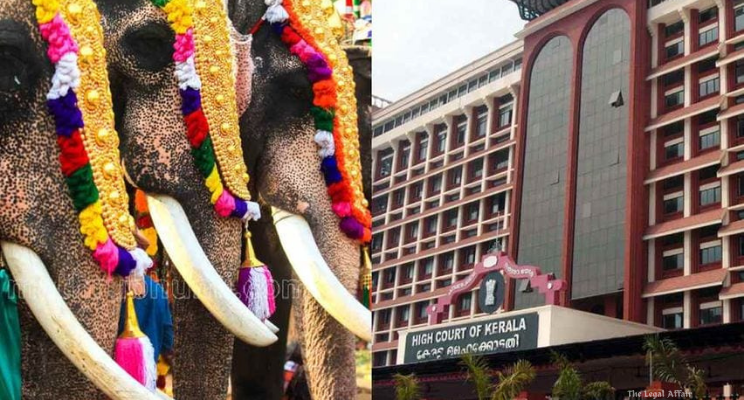
In a significant ruling on December 19, 2024, the Supreme Court upheld the restrictions imposed by the Kerala High Court on the management of elephants during temple festivals. The regulations, which were part of a larger effort to regulate the use of captive elephants in religious processions, had mandated specific measures to ensure the welfare of the elephants. These included a minimum distance of 3 meters between elephants during processions and other safety measures, such as maintaining a distance between elephants and sources of fire, the public, and fireworks. The Supreme Court’s intervention came in response to an SLP (Special Leave Petition) filed by the Thiruvambady and Paramekkavu Devaswom, two prominent temple management committees responsible for organising the iconic Thrissur Pooram festival, challenging the Kerala High Court’s suo-motu directions. The petitioners argued that the High Court had overstepped its authority and that the directions imposed were impractical and against established practices. The Supreme Court observed that the High Court should not have exercised suo-motu powers and issued such directions in a “vacuum,” without considering the long-standing traditions and practices surrounding these religious events.
The case titled Thiruvambady Devaswom and another v. Union of India (SLP (C) No. 30389-30390/2024) was brought before the Supreme Court after the Kerala High Court issued directions under the Kerala Captive Elephants (Management and Maintenance) Rules, 2012. The petitioners contended that the High Court’s additional restrictions were impractical and contrary to the traditional practices followed during temple festivals, which are an integral part of Kerala’s religious and cultural heritage.
Arguments of Both Sides:
The petitioners, represented by Senior Advocate Kapil Sibal, argued that the Kerala High Court’s intervention was unjustified and that the directions were overly restrictive and unrealistic. Sibal emphasised that the Thrissur Pooram festival, which spans over 250 years, is an essential religious practice that forms part of Kerala’s UNESCO-listed heritage. He pointed out that the festival, which involves the participation of elephants, is an important aspect of the region’s cultural identity. The petitioners contended that no evidence was presented to show that the festival organizers or participants had violated existing laws or regulations. According to Sibal, the elephant procession was conducted safely, and the imposition of additional restrictions, such as the requirement for elephants to maintain a minimum distance of 3 meters, was unnecessary and impractical. He further argued that the Kerala High Court’s suo motu actions were unwarranted and exceeded the scope of judicial review, especially since there had been no complaints or violations to justify such measures.
On the other hand, Senior Advocate Siddhartha Dave, representing one of the respondents, an animal rights group, supported the High Court’s directions, stating that the 2012 rules were insufficient and needed to be supplemented to ensure the welfare of the elephants. He argued that the elephant processions posed significant risks to the animals, given the strenuous nature of the events and the adverse conditions they faced. Dave cited concerns about the treatment of captive elephants, including the long hours of standing, the heavy adornments, and the extreme heat and noise. He further mentioned the risk of elephants “going amok” during processions, which could lead to harm not only to the animals but also to the public. He claimed that the Kerala High Court’s directions were necessary to address these issues and ensure the safety of the elephants and the people involved in the festival.
The respondents also highlighted the broader context of animal welfare, noting that the High Court’s decision was part of a series of interventions aimed at addressing cruelty to captive animals, which had begun with a PIL related to the abuse of a dog named Bruno. The respondents argued that the High Court was right in expanding its focus to include the well-being of elephants, which are often subjected to difficult and potentially harmful conditions during religious festivals.
Court’s Judgment:
The Supreme Court, after hearing both sides, issued a stay on the Kerala High Court’s restrictions, remarking that the High Court had acted beyond its powers in issuing suo-motu directions. The bench, consisting of Justices BV Nagarathna and NK Singh, emphasised that the High Court should not have intervened without a clear legal basis or complaints from affected parties. The Supreme Court also noted that if there was a long-standing practice of temple festivals involving elephants, the judiciary should not interfere with such customs, especially in the absence of any law violations. The Court stressed the importance of striking a balance between the protection of animal rights and the preservation of cultural and religious practices, noting that the temple processions should continue to be governed by established rules and traditions, provided they complied with the Kerala Captive Elephants (Management and Maintenance) Rules, 2012.
The Court questioned the practicality of maintaining a minimum distance of 3 meters between elephants, suggesting that such a requirement might not be feasible given the nature of the processions and the elephants’ social behaviour. Justice Nagarathna remarked that the bond between elephants is an important aspect of their behaviour, and imposing such a distance could interfere with their natural tendencies. The bench further observed that, in some cases, elephants might wish to bond with each other, and such restrictions could be detrimental to their well-being.
The Supreme Court also questioned the reasoning behind some of the additional directions, such as maintaining a 5-meter distance from sources of fire and ensuring shade for the elephants. The Court emphasised that these directives were overly prescriptive and failed to consider the practical realities of the festival environment. The bench observed that the elephants’ participation in the procession had not caused any harm or injuries to devotees in the past, and there was no evidence to suggest that the welfare of the elephants had been compromised.
Justice Nagarathna, in particular, remarked that the principle of violent non-fit injuria (a person who consents to an act cannot later claim to be injured by it) applied to the festival, implying that those who attended the festival willingly accepted the risks. She further pointed out that the state should not interfere excessively in managing religious events unless there is clear evidence of harm or violation of existing regulations. The Supreme Court’s decision to stay the Kerala High Court’s directions effectively allowed the organisers of the festival to proceed with the traditional processions, subject to compliance with the existing 2012 rules.