


Introduction:
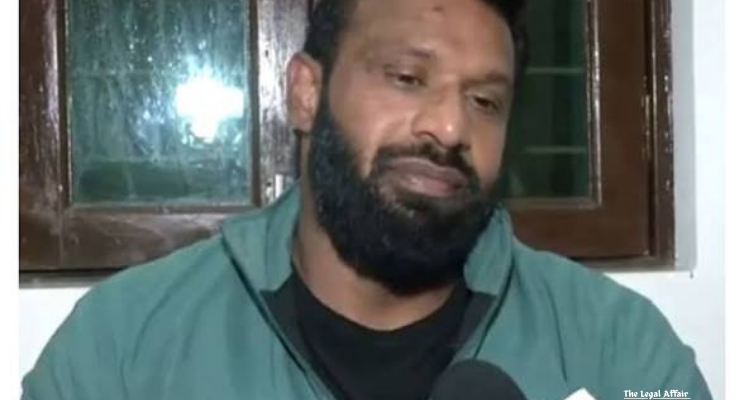
The Supreme Court has granted significant interim relief to Dehradun gym owner Deepak Kumar, also known as Akki, by staying proceedings arising out of an FIR registered against him in connection with a confrontation involving members of the Bajrang Dal and a Muslim shopkeeper. In Deepak Kumar @ Akki v. State of Uttarakhand, Diary No. 49709 of 2026, a Bench comprising Justice Vikram Nath and Justice Sandeep Mehta also stayed the operation of the order passed by the Uttarakhand High Court, including the restriction imposed on Deepak from making social media posts concerning the incident and the criminal case.
The Supreme Court’s intervention came in a petition challenging the High Court’s refusal to quash the FIR. While the Court has not, at this stage, finally determined whether the FIR is liable to be quashed, it has directed that proceedings pursuant to the FIR remain stayed until further orders. The Court issued notice to the respondents and made the notice returnable in four weeks.
The case arises from an incident that occurred on Republic Day and subsequently attracted considerable attention after a video of the confrontation circulated widely on social media. The controversy reportedly began when members of the Bajrang Dal objected to a Muslim shopkeeper using the word “Baba” in the name of his shop. Deepak Kumar became involved in the episode after allegedly going to assist the shopkeeper following the confrontation.
According to the case put forward before the Supreme Court, when members of the group confronted Deepak and questioned him about his identity, he responded by stating, “Mohammed Deepak.” The incident was recorded on video, and the footage later went viral. The circumstances surrounding the confrontation ultimately resulted in criminal proceedings being initiated against Deepak.
The petitioner maintained that his involvement was essentially that of a person who had intervened to assist another individual during a confrontation. He further contended that he had himself approached the authorities by filing complaints concerning the incident, but those complaints did not result in appropriate action. Instead, an FIR came to be registered against him.
The criminal case assumed an additional constitutional dimension when the High Court, while dealing with the matter, imposed restrictions upon Deepak’s use of social media in relation to the incident and the pending proceedings. The High Court’s order effectively restrained him from making posts or circulating messages and videos concerning the controversy. Deepak challenged not only the continuation of the FIR but also this restriction, contending that it amounted to an impermissible blanket restraint on his freedom of expression.
The petitioner also challenged the invocation of Section 191 of the Bharatiya Nyaya Sanhita, 2023, relating to rioting. His case was that the essential ingredients of the offence were absent from the material available against him. Significantly, the rioting allegation was subsequently dropped on the ground that its ingredients were not made out.
Another substantial issue raised before the Supreme Court concerned the manner in which the criminal law had been set in motion. Senior Advocate Abhishek Manu Singhvi, appearing for Deepak, argued that the offences invoked against his client carried sentences of less than seven years and that the safeguards and principles laid down by the Supreme Court in Arnesh Kumar v. State of Bihar were therefore relevant. The Arnesh Kumar judgment is widely regarded as an important authority against unnecessary arrests and mechanical use of coercive criminal procedure in offences carrying relatively limited sentences.
The proceedings therefore brought together several important legal questions. They concerned the permissible scope of criminal prosecution, the ingredients required to sustain a rioting allegation, the safeguards governing arrest in offences punishable with imprisonment of less than seven years, and the constitutional limits on judicial restrictions upon a person’s speech concerning a pending criminal case.
At the interim stage, however, the Supreme Court’s task was not to finally adjudicate these questions. The immediate question was whether the petitioner had made out sufficient grounds for protection while his challenge to the High Court’s order and the FIR remained pending. After hearing the submissions, the Bench considered it appropriate to issue notice and stay the proceedings arising from the FIR.
The Court also stayed the operation and effect of the High Court’s order, including the direction restricting Deepak’s social media activity. This aspect of the interim order is particularly noteworthy because it prevents the restriction on his public expression from operating while the Supreme Court examines his challenge.
The case thus illustrates the delicate balance courts are required to maintain between protecting public order and ensuring that criminal law is not invoked without the necessary statutory foundation. It also raises the increasingly important question of how far courts can go in restricting an accused person’s speech about an incident that is already in the public domain.
Arguments of the Parties:
Appearing for Deepak Kumar, Senior Advocate Abhishek Manu Singhvi strongly challenged the continuation of the criminal proceedings. His central submission was that the petitioner had been unnecessarily implicated despite his alleged role as a person attempting to assist the Muslim shopkeeper during the confrontation.
Singhvi sought to present the factual circumstances from the petitioner’s perspective. According to him, the initial confrontation involved Bajrang Dal members objecting to the use of the word “Baba” in the name of a shop owned by a Muslim individual. Deepak subsequently went to assist the shopkeeper. When the group confronted Deepak and asked him his name, he stated, “Mohammed Deepak.” The episode was captured on video, and the recording subsequently became viral on social media.
The senior counsel argued that the available videographic material did not support the prosecution’s case against Deepak. Rather, he contended that the footage demonstrated the circumstances in which Deepak became involved and undermined the allegations made against him. The reliance upon the video evidence was therefore intended to demonstrate that the allegations contained in the FIR could not reasonably be sustained when tested against the actual events captured on camera.
Singhvi also emphasised what he described as an apparent imbalance in the manner in which the complaints arising from the incident were dealt with. According to the petitioner, Deepak himself had lodged complaints regarding the confrontation, but no meaningful action was taken upon them. Instead, criminal proceedings came to be initiated against him.
It was against this background that Singhvi posed the rhetorical question, “How can a good samaritan be subjected to this kind of a complaint?” His submission was that a person who had intervened to help another individual during a confrontation should not be transformed into an accused without the existence of sufficient material establishing the commission of the alleged offences.
The petitioner also questioned the invocation of the rioting provision under Section 191 of the Bharatiya Nyaya Sanhita. Singhvi argued that the statutory ingredients necessary to constitute the offence were absent. The submission assumed particular importance because the rioting charge was ultimately dropped after it was found that its essential ingredients were not made out.
According to the petitioner, the fact that such a serious allegation had initially been included and was subsequently removed demonstrated the need for greater scrutiny of the remaining accusations. The petitioner therefore urged the Supreme Court to examine whether the other offences could legitimately continue in light of the factual and videographic material.
Singhvi further relied upon the principles laid down in Arnesh Kumar v. State of Bihar. The Supreme Court in Arnesh Kumar had cautioned police authorities and Magistrates against routine arrests in cases where the alleged offence carries imprisonment of up to seven years. The judgment emphasised that arrest should not be treated as an automatic consequence of registration of an FIR and that statutory safeguards must be meaningfully applied.
The petitioner submitted that the offences invoked against him fell within the category of offences carrying punishment of less than seven years. Consequently, according to Singhvi, the safeguards flowing from Arnesh Kumar had direct relevance to the manner in which the authorities were dealing with the case.
A separate and constitutionally significant argument concerned the High Court’s restriction on Deepak’s social media activity. Singhvi described the direction as a “blanket gag order”. His grievance was that the High Court, rather than merely addressing the criminal proceedings, had restrained the petitioner from making messages, posts or videos concerning the incident and the case.
The petitioner’s argument in this regard was not limited to the immediate factual controversy. It invoked the broader principle of freedom of speech and expression guaranteed under Article 19(1)(a) of the Constitution. While that freedom is subject to reasonable restrictions under Article 19(2), any judicial order restricting speech must have a lawful and constitutionally sustainable basis.
Singhvi contended that merely because criminal proceedings were pending against an individual, the person could not automatically be prevented from discussing the incident in the public domain. Such an order, according to the petitioner, went substantially beyond what was necessary to protect the integrity of the investigation or judicial proceedings.
The petitioner therefore sought relief on two interconnected fronts. First, he challenged the continuation of the FIR on the ground that the allegations and available evidence did not establish the offences invoked against him. Second, he challenged the social media restriction as an excessive restraint upon his right to express himself regarding the incident.
The State, on the other hand, opposed the petitioner’s challenge. Although the detailed submissions of the State at the interim hearing were not elaborated in the available case summary, its position was necessarily directed towards sustaining the criminal proceedings and the orders passed by the High Court.
The State’s case, in substance, was that the criminal allegations should not be prematurely terminated at the threshold and that the investigation and prosecution should be permitted to proceed in accordance with law. In matters arising from a public confrontation involving allegations capable of affecting communal harmony and public order, the authorities may contend that the allegations require investigation before the Court reaches a final conclusion concerning the petitioner’s culpability.
The State could also defend the High Court’s restrictions as a measure intended to prevent further escalation of the controversy, particularly given that the incident had already attracted significant attention on social media. However, the precise justification for the social media restraint would ultimately have to be tested against the constitutional requirement that restrictions on speech must remain legally justified and proportionate.
The Supreme Court, at this stage, did not finally accept or reject either side’s substantive case. Instead, after considering the submissions and the circumstances placed before it, the Bench considered it appropriate to issue notice and protect the petitioner from continuation of the impugned proceedings until the matter could be examined further.
Court’s Judgment:
The Supreme Court’s interim order represents a significant procedural development in the case. A Bench of Justice Vikram Nath and Justice Sandeep Mehta issued notice to the respondents on Deepak Kumar’s challenge to the High Court order and directed that the notice be returnable in four weeks.
More importantly, the Court ordered that proceedings pursuant to the impugned FIR remain stayed in the meantime. Thus, the criminal case against the petitioner cannot proceed on the basis of the impugned FIR during the period covered by the interim protection granted by the Supreme Court.
The Court simultaneously stayed the operation and effect of the High Court’s order. This included the restriction placed upon Deepak from making social media posts, messages or videos concerning the incident and the criminal case.
The interim order is important because the Supreme Court has effectively suspended two consequences flowing from the High Court proceedings: the continuation of the criminal proceedings arising from the FIR and the restraint on the petitioner’s social media expression. Nevertheless, the Court has not finally ruled that the FIR is legally unsustainable or that the petitioner is innocent of all allegations.
The distinction between an interim stay and a final quashing order is fundamental. At this stage, the Supreme Court has merely directed that the proceedings remain in abeyance while it examines the petition. The ultimate question whether the FIR should be quashed, whether the remaining allegations disclose cognisable offences, and whether the High Court’s original order was legally justified will arise for consideration after the respondents have been heard.
The Court’s decision to issue notice indicates that the petition raises issues requiring further consideration. The Bench has not treated the petition as one that can be rejected at the threshold without hearing the respondents. By granting interim protection, it has also ensured that the petitioner does not suffer continuing consequences from proceedings which are presently under challenge before the Supreme Court.
The petitioner’s reliance on Arnesh Kumar v. State of Bihar is particularly relevant to the broader criminal-procedure questions raised by the case. In Arnesh Kumar, the Supreme Court stressed that arrest is not to be made mechanically merely because an FIR has been registered or an allegation has been made. The police must consider the statutory conditions governing arrest and must satisfy themselves that arrest is necessary in the circumstances of the case.
The judgment arose from concerns regarding the unnecessary arrest of accused persons in offences carrying imprisonment of up to seven years. It directed police officers to comply with the requirements of the Code of Criminal Procedure and required Magistrates to exercise independent scrutiny rather than authorising detention mechanically.
Although the present Supreme Court order does not finally apply Arnesh Kumar to the facts of Deepak’s case, the petitioner’s reliance upon that precedent raises a legitimate procedural issue. Where the alleged offences fall within the punishment threshold contemplated by Arnesh Kumar, the authorities must remain conscious that arrest is not an automatic or routine consequence of the registration of an FIR.
The dispute over Section 191 of the Bharatiya Nyaya Sanhita is also significant. A rioting allegation requires the prosecution to establish the statutory ingredients of the offence. The mere presence of an individual at or around a public confrontation cannot, without more, automatically establish criminal liability for rioting. The petitioner specifically argued that the necessary ingredients were absent and pointed out that the charge was eventually dropped on that very basis.
This development strengthens the petitioner’s argument that the allegations must be tested against the statutory ingredients of each offence rather than merely against the general circumstances of the confrontation. Criminal liability is offence-specific, and every ingredient required by the relevant penal provision must be supported by the material relied upon by the prosecution.
The social media aspect of the order is perhaps the most constitutionally significant. The High Court had restrained Deepak from making posts concerning the incident and the case. The Supreme Court has now stayed that restriction.
Freedom of speech and expression under Article 19(1)(a) occupies a central position in India’s constitutional framework. At the same time, it is not an absolute right. Article 19(2) permits reasonable restrictions on specified grounds, including public order, defamation, contempt of court and incitement to an offence.
However, a restriction upon speech must have a clear legal foundation and cannot be broader than what is reasonably required to achieve the legitimate objective for which it is imposed. A blanket prohibition on discussing an incident may therefore raise concerns of overbreadth, particularly where it does not distinguish between lawful commentary and speech that could genuinely interfere with an investigation or judicial proceeding.
The Supreme Court’s decision to stay the High Court’s social media direction does not finally establish that such restrictions are always unconstitutional. Rather, it means that the particular restriction imposed in this case will not operate while the Supreme Court examines the petition.
The distinction is important because courts frequently confront the challenge of protecting the administration of justice in an age where criminal allegations can rapidly become subjects of public discussion. Social media can influence public perception, generate competing narratives and, in certain circumstances, affect witnesses or investigations. Courts therefore possess legitimate concerns regarding the administration of justice.
At the same time, those concerns must be reconciled with the constitutional freedom of an accused person to speak. The mere pendency of a criminal case does not automatically extinguish an individual’s right to participate in public discourse. Any restriction must therefore be carefully tailored and justified by the circumstances.
The present order indicates that the Supreme Court considered it appropriate, at least prima facie, not to allow the High Court’s restriction to continue while the matter remains pending. This is particularly notable because the petitioner characterised the order as a blanket gag order rather than a narrowly tailored restriction addressing specific forms of prejudicial communication.
The Court’s intervention also underscores the principle that interim judicial orders can have substantial consequences and therefore must themselves remain subject to constitutional and legal scrutiny. A restriction imposed during the pendency of criminal proceedings can affect not only the accused’s speech but also his ability to respond publicly to allegations that may already have become widely known.
The case also demonstrates the importance of videographic evidence in contemporary criminal litigation. The incident at the heart of the proceedings was recorded and circulated online. The petitioner relied upon the footage to challenge the prosecution’s narrative and to demonstrate the context in which he became involved.
Such evidence can be particularly valuable where allegations arise from rapidly developing public confrontations. At the same time, courts must examine video evidence carefully, considering its completeness, authenticity, sequence and context rather than relying merely upon isolated portions circulated through social media.
Ultimately, the Supreme Court has not yet decided the petition on its merits. The respondents have been granted an opportunity to respond, and the matter will return for further consideration after the notice period.
For now, the legal position is that proeedings pursuant to the impugned FIR against Deepak Kum