


Introduction:
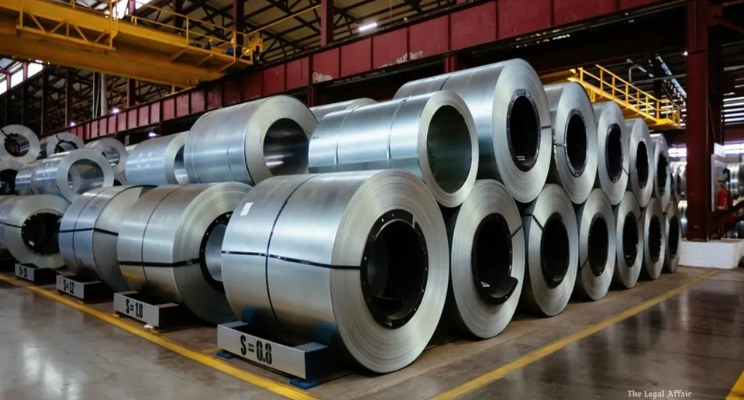
In Commissioner of Customs (Import) v. M/s Welkin Foods, the Supreme Court of India, by a Bench comprising Justice J.B. Pardiwala and Justice R. Mahadevan, resolved a long-pending and industry-relevant dispute concerning the correct customs classification of aluminium shelving systems imported for use in mushroom cultivation, a question that had significant revenue implications and broader doctrinal consequences for tariff interpretation under the Customs Tariff Act, 1975; the respondent-importer, M/s Welkin Foods, had imported aluminium shelves intended to be installed inside mushroom farms as racks on which trays, compost, and irrigation systems would be placed, and claimed classification under Customs Tariff Item (CTI) 84369900, which covers “parts of agricultural machinery” and attracts nil basic customs duty, whereas the Revenue authorities classified the same goods under CTI 76109010 as “aluminium structures,” attracting 10% basic customs duty along with applicable levies; while the original adjudicating authority and the appellate commissioner upheld the Revenue’s view, the Customs, Excise and Service Tax Appellate Tribunal (CESTAT) reversed those findings and accepted the importer’s claim that the shelves formed integral parts of agricultural machinery used in mushroom farming, thereby entitling them to duty-free import, prompting the Revenue to approach the Supreme Court; beyond the immediate fiscal question, the case acquired greater significance because the Court undertook a detailed reconsideration of how tariff entries must be interpreted, particularly questioning the routine and sometimes mechanical reliance on the “common parlance” or “trade parlance” test, and instead emphasizing the primacy of statutory text, tariff structure, section notes, chapter notes, and HSN Explanatory Notes, thus potentially reshaping future classification disputes across sectors; the Court framed the core issue as whether aluminium shelving systems, even if specially designed for mushroom farms, could be treated as “parts” of agricultural machinery under Chapter 84, or whether they more appropriately fell within Chapter 76 as aluminium structures, and in resolving this, it analyzed not only the physical characteristics of the goods but also the conceptual boundaries between what constitutes a “structure” and what qualifies as a “mechanical part” in tariff law, ultimately concluding that the shelves were passive supporting frameworks and not functional components of machinery, and that their classification as aluminium structures was both textually and technically correct under the tariff.
Arguments:
On behalf of the Revenue, the Additional Solicitor General contended that Heading 7610 is an eo nomine entry that expressly covers aluminium structures and parts of structures, including frameworks, trusses, columns, and assembled components designed to remain in position once installed, and that the imported shelving systems, being assembled aluminium frameworks fixed within mushroom sheds to hold trays and equipment, squarely fell within this description as per the HSN Explanatory Notes; it was argued that merely because such structures are installed in an agricultural setting or used in farming operations does not automatically convert them into “parts of agricultural machinery,” particularly when they do not perform any mechanical, electrical, or operational function, but merely provide physical support; the Revenue further submitted that Chapter 84 generally covers machines and mechanical appliances, and parts thereof, which participate in or enable mechanical processes, whereas the shelves in question neither move, nor transmit force, nor contribute to any mechanical activity, and therefore cannot be elevated to the status of machinery parts; the Revenue criticized the CESTAT for prematurely invoking the common parlance test by asking how mushroom farmers perceive such shelves, instead of first examining the statutory scheme, tariff notes, and technical definitions, which, according to settled principles, must be the primary tools of interpretation; reliance was placed on the doctrine that when an eo nomine heading clearly covers the goods, there is no scope for reclassification based on end-use or trade perception, and that end-use can be relevant only when the tariff heading itself makes use determinative or when ambiguity persists after textual analysis; the Revenue also highlighted the risk of revenue leakage and interpretive chaos if structural components used in specialized environments are rebranded as machinery parts merely because they are customized for a particular industry, as that would allow a wide range of civil and structural installations—such as racks in cold storage, frames in warehouses, or supports in industrial plants—to be misclassified under concessional machinery headings, undermining the tariff structure.
On the other hand, the respondent-importer argued that the aluminium shelving systems were not generic racks but were specially designed, dimensioned, and engineered for mushroom cultivation, forming an integral and indispensable component of the mushroom production process, without which large-scale commercial cultivation would not be feasible; it was contended that in the trade and among mushroom farmers, these shelves are not viewed as mere building structures but as functional parts of the cultivation system, and therefore, applying the common parlance test, they ought to be classified as parts of agricultural machinery; the importer stressed that the expression “parts of agricultural machinery” in CTI 84369900 should be interpreted broadly to include all components that are essential to the operation of agricultural systems, not merely moving or mechanical parts, and that modern agriculture often involves static installations that nonetheless play a critical role in production; reliance was placed on the functional integration of the shelves with irrigation systems, compost trays, and climate-control mechanisms, suggesting that the shelves are not independent structures but are designed to work in coordination with other equipment, thereby acquiring the character of machinery parts; the importer also argued that the principle of beneficial interpretation in fiscal statutes, particularly in classification matters involving exemptions or nil duty, should operate in favor of the assessee where two reasonable interpretations are possible, and that the CESTAT had correctly appreciated the practical realities of mushroom farming rather than adopting a purely theoretical or technical approach divorced from ground-level usage; it was further contended that the tariff should not be interpreted in a manner that penalizes agricultural modernization by treating essential cultivation infrastructure as mere building materials, thereby increasing costs for farmers and agri-based enterprises.
Judgment:
Delivering the judgment of the Court, Justice J.B. Pardiwala undertook an extensive doctrinal analysis of tariff interpretation and decisively rejected the approach adopted by the CESTAT, holding that the Tribunal had erred in straightaway resorting to the common or trade parlance test without first exhausting the statutory and technical interpretive tools embedded in the tariff framework; the Court reaffirmed that under the HSN-based classification regime adopted in India, the primary guides for classification are the wording of the tariff headings, read with the relevant section notes, chapter notes, and HSN Explanatory Notes, and that these materials often provide either explicit or implicit statutory guidance that must be given primacy over how goods are described or perceived in the market; applying this methodology, the Court noted that Heading 7610 is an eo nomine heading covering aluminium structures, and that the HSN Explanatory Notes define “structures” to include assembled aluminium components that are designed to remain in position once installed, such as frameworks and supporting constructions, which precisely matched the nature of the imported shelving systems; the Court emphasized that the shelves were static frameworks fixed within sheds, serving as platforms on which trays and equipment are placed, and that they did not themselves perform any mechanical or operational function; in a telling analogy, the Court observed that while a car requires a road to operate, no one would ever suggest that the road is a “part” of the car, explaining that a surface may support the operation of a device but does not thereby become part of that device; similarly, the shelves may support irrigation pipes or compost trays, but they do not become parts of the machinery that performs cultivation-related functions; the Court rejected the argument that indispensability or functional necessity alone can convert a structure into a machinery part, clarifying that tariff law distinguishes between supporting infrastructure and operative components, and that only the latter fall within machinery chapters unless the tariff expressly provides otherwise; in a significant doctrinal move, the Court articulated a detailed seven-point framework governing when and how the common or trade parlance test may be applied, making it clear that such a test is not a default or first-resort method of interpretation but a subsidiary tool to be used only in cases of genuine statutory silence or ambiguity; the Court held that the common parlance test can be invoked only when the statute, tariff headings, section notes, chapter notes, and HSN Explanatory Notes do not provide explicit or implicit guidance, when the terms used are not technical or scientific, and when resort to trade meaning would not contradict the overall statutory scheme; it further cautioned that trade terminology cannot be used to override clear statutory classification, and that marketing labels or industry-specific usage cannot disguise the essential character and nature of the product; applying these principles, the Court found that there was no statutory silence in the present case, as Heading 7610 clearly covered aluminium structures and the HSN Notes reinforced this coverage, leaving no scope for reclassification under machinery parts merely because the shelves were used in agriculture; the Court also clarified that Chapter 84 is primarily concerned with machines and mechanical appliances and their parts, and that expanding the scope of “parts” to include static structures would distort the conceptual integrity of the tariff chapters; accordingly, the Court set aside the CESTAT’s order, restored the classification adopted by the original and appellate customs authorities under CTI 76109010, and allowed the Revenue’s appeal, thereby subjecting the imported goods to applicable customs duty; beyond the immediate outcome, the judgment stands as a strong reaffirmation of textual and structural fidelity in tariff interpretation and signals to adjudicating authorities that reliance on common parlance must be carefully justified and cannot substitute for rigorous statutory analysis.