


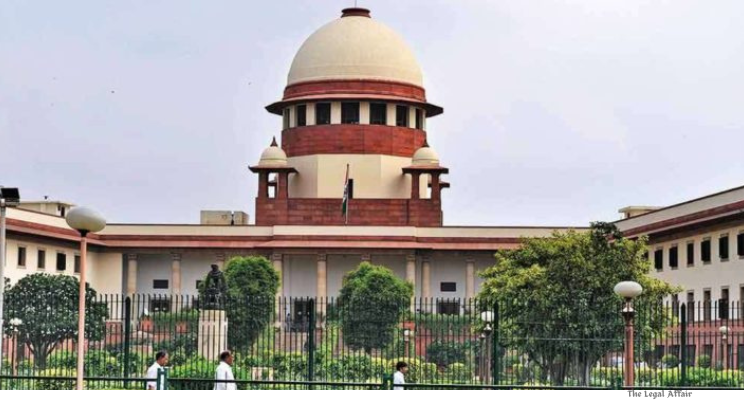
Introduction:
In a landmark judgment, the Supreme Court of India addressed a protracted delay concerning the regularization of daily wage workers in the Union Territory of Jammu and Kashmir. The case, titled Union Territory of Jammu and Kashmir & Ors. vs. Abdul Rehman Khanday & Ors., highlighted the plight of daily wage workers awaiting regularization for over 16 years, despite favorable directives from the High Court.
Background of the Case:
The respondents, including Abdul Rehman Khanday, were employed as daily wage workers by the Jammu and Kashmir government. In 2006, they sought regularization of their services, aligning their plea with Government Order SRO 64 of 1994, under which similarly placed daily wage workers had been granted regularization benefits. In 2007, the Jammu and Kashmir High Court directed the government to consider their case on par with other workers who had already been regularized under the said order. However, the government failed to comply with this directive, leading the respondents to file a contempt petition in 2010. Despite the passage of several years, no concrete action was taken, compelling the respondents to seek further judicial intervention.
The matter remained pending for 14 years until the High Court passed an order in 2024, rejecting the government’s objections and reaffirming the rights of the daily wage workers. However, instead of implementing the High Court’s decision, the government filed a Letter Patent Appeal (LPA), challenging the order. The Division Bench of the High Court dismissed the appeal and imposed a cost of ₹25,000 on the government, specifying that it could be recovered from the official responsible for advising the LPA. Undeterred, the government escalated the matter to the Supreme Court, seeking relief from its obligations.
Arguments of the Petitioners (Government of J&K & Ors.):
The petitioners, represented by Advocate Rushab Aggarwal and AOR Pashupathi Nath Razdan, contended that the High Court had erred in directing the government to consider the case of the respondents for regularization. They argued that the respondents did not meet the eligibility criteria under SRO 64 of 1994 and that their claims were legally untenable.
The petitioners also asserted that the government had exercised its discretion in granting benefits to some workers under the SRO, but this did not create an enforceable right for the respondents. Furthermore, they claimed that the High Court’s decision did not adequately consider the financial and administrative constraints faced by the government. They maintained that the LPA was filed in good faith and that penalizing the officers responsible for it was unwarranted.
The petitioners urged the Supreme Court to set aside the High Court’s orders, arguing that regularization could not be granted merely based on the respondents’ long tenure as daily wage workers. They emphasized that policy decisions regarding employment and regularization fell within the exclusive domain of the executive and that judicial interference was inappropriate.
Arguments of the Respondents (Daily Wage Workers):
The respondents, represented by AOR Soayib Qureshi and Advocate Chetna Alagh, countered the government’s claims by pointing out that they had been working continuously for several years and were entitled to the benefits of SRO 64 of 1994. They argued that the government had already regularized workers in identical positions under the same order, and there was no justification for denying them the same treatment.
The respondents highlighted that the High Court had conclusively determined their eligibility in 2007, and the government’s persistent non-compliance amounted to willful disobedience. They contended that the government’s objections were merely a pretext to delay justice, depriving them of their rightful employment benefits.
Furthermore, they argued that the prolonged delay had subjected them to immense financial and emotional hardship. They criticized the government’s attempt to evade responsibility through prolonged litigation and urged the Supreme Court to uphold the High Court’s orders. They also sought strict action against the officials responsible for non-compliance, emphasizing the need for accountability in government actions.
Supreme Court’s Judgment:
After carefully examining the submissions, the Supreme Court delivered a scathing rebuke to the government for its inordinate delay and failure to comply with judicial directives. The bench, comprising Justice Surya Kant and Justice N. Kotiswar Singh, expressed strong disapproval of the government’s conduct, observing that the case exemplified blatant disregard for judicial authority and administrative accountability.
The Court noted that what was particularly concerning was not just the delay of over 16 years but also the repeated harassment faced by the respondents. It criticized the government for passing “cryptic orders” that ignored the true spirit of the High Court’s ruling. The bench underscored that the respondents, being daily wage workers, had suffered unnecessary hardships due to the government’s failure to implement a straightforward order.
The Supreme Court further observed that the case warranted the imposition of exemplary costs and recommended strong disciplinary action against the delinquent officers. However, it refrained from passing such directions, considering that contempt proceedings were still pending before the Single Judge of the Jammu and Kashmir High Court. Instead, the Court requested the Single Judge to take up the contempt petition on a weekly basis and ensure strict compliance with the High Court’s order.
Additionally, the Supreme Court upheld the High Court’s imposition of costs and directed that the ₹25,000 penalty be recovered from the official responsible for filing the LPA. The Court emphasized that government officers must exercise caution before engaging in frivolous litigation that obstructs the dispensation of justice.
In its concluding remarks, the Court reaffirmed that judicial orders must be respected and implemented in a timely manner. It expressed hope that the UT of Jammu and Kashmir would act responsibly and ensure that similar injustices do not recur in the future.