


Introduction:
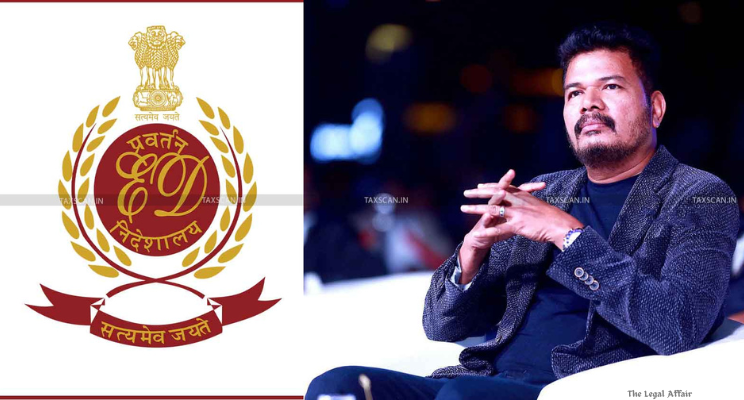
The Madras High Court, on March 12, 2025, stayed the Enforcement Directorate’s (ED) provisional attachment of property worth ₹10 crore belonging to Tamil filmmaker S Shankar in a copyright infringement case related to the 2010 movie Enthiran. The division bench comprising Justice MS Ramesh and Justice N Senthilkumar issued the stay while hearing Shankar’s plea against the ED’s action. The case arose from a complaint filed by writer Arur Tamilnadan, who alleged that Shankar had infringed upon his copyright by using the story of his work Jugiba as the basis for Enthiran. Since copyright violations are considered scheduled offences under the Prevention of Money Laundering Act (PMLA), the ED initiated proceedings and attached Shankar’s property on February 17, 2025. However, Shankar challenged this action, contending that the ED had no authority to seize his property when a single judge of the Madras High Court had already dismissed Tamilnadan’s copyright claim in June 2023. The High Court, after hearing both sides, stayed the attachment order and sought a counter from the ED, scheduling the next hearing for April 21.
Arguments of Both Sides:
Senior Advocate PS Raman, appearing for S Shankar, argued that the ED’s action was arbitrary and legally unsustainable, especially since the Madras High Court had already ruled in 2023 that copyright protection could not extend to an idea or concept. He pointed out that the single judge had categorically stated that Enthiran was not a literal imitation of Jugiba, making the ED’s proceedings baseless. Raman also contended that the ED’s claim of Shankar receiving ₹11.5 crore from the film was factually incorrect, as the director’s earnings came from multiple projects, and no proceeds from an alleged copyright violation were involved. He questioned how the ED could invoke PMLA provisions when there was no predicate offence to justify money laundering charges. Furthermore, he emphasized that the ED’s action violated principles of natural justice by attaching property without any prior adjudication of guilt. The court also raised concerns about whether the ED had the authority to initiate proceedings based solely on an individual’s complaint, without waiting for a formal finding of copyright infringement. On the other hand, ED’s counsel, Vishnu, defended the agency’s actions, citing the Supreme Court’s ruling in Vijay Madhanlal Choudhary v. Union of India, which upheld the ED’s powers to act on complaints from individuals. He argued that the attachment was merely provisional and had not caused any harm to Shankar. Therefore, the ED urged the court not to interfere with the proceedings at this stage.
Court’s Judgment:
After hearing the arguments, the Madras High Court expressed reservations about the ED’s approach and observed that the agency should have waited for a conclusive determination of copyright infringement before taking action. The bench noted that the single judge’s findings in 2023 cast doubt on the legitimacy of the complaint, and questioned why the ED proceeded with the attachment despite the lack of concrete evidence. The court also highlighted the need for the ED to justify the invocation of PMLA provisions in this case, given that copyright disputes are generally civil matters and not inherently linked to money laundering. Acknowledging the serious implications of the attachment, the bench granted a stay on the ED’s order and directed the agency to file a counter affidavit explaining the legal basis for its actions. The matter was adjourned to April 21, 2025, for further proceedings.