


Introduction:
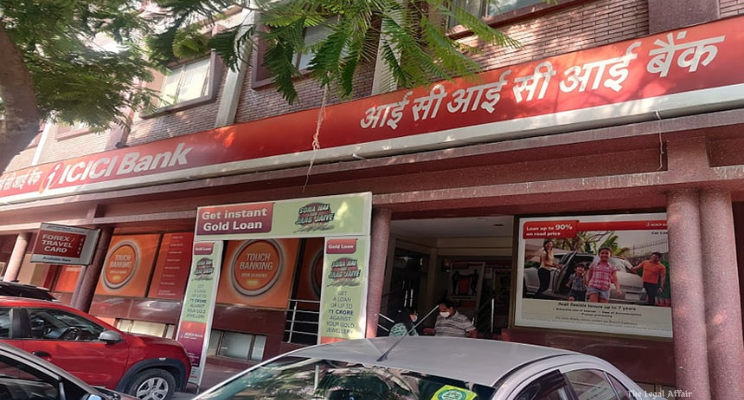
The Supreme Court of India, on November 18, 2024, expressed its displeasure over ICICI Bank’s non-compliance with its August 9, 2024, order, which directed the de-freezing of a news portal’s bank accounts. The Court passed this order in response to a Special Leave Petition (SLP) challenging the Delhi High Court’s decision to reject the portal’s plea for a stay on an income tax demand. The case underscored the conflict between judicial directions and administrative communications, with the Supreme Court making it clear that its authority supersedes any communication from tax authorities.
A division bench comprising Justice BV Nagarathna and Justice Nongmeikapam Kotiswar Singh strongly criticized ICICI Bank for relying on a December 2023 letter from the Deputy Commissioner of Income Tax instead of adhering to the Supreme Court’s order. Senior Advocate Devadatt Kamat and Advocate Rohit Sharma represented the petitioner, while Advocate Chinmayee Chandra appeared for the Union of India. The proceedings highlighted the importance of respecting judicial orders in financial and administrative matters.
Petitioners’ Arguments:
The petitioners raised several key points regarding the non-compliance with the Supreme Court’s order and the broader issues surrounding the income tax demand:
- Non-Compliance with August 9 Order: The petitioners informed the Court that ICICI Bank had failed to de-freeze their accounts as directed in the Supreme Court’s August 9 order. Instead, the bank relied on a December 15, 2023, communication from the Deputy Commissioner of Income Tax.
- Arbitrary Rejections by Tax Authorities: They contended that their initial application for a stay on the tax demand, pending appeal, was arbitrarily rejected by the respondent tax authorities. This rejection forced them to deposit 20% of the demand before applying afresh for a stay, which further strained their financial resources.
- Financial Stringency and Balance Sheet Issues: The petitioners argued that their financial position was precarious, as evidenced by their balance sheet. They contended that the tax authorities’ allegations of improper account maintenance were unfounded.
- Need for Clarity: Senior Advocate Devadatt Kamat urged the Court to clarify that the December 15 communication had been effectively stayed, to prevent further recovery actions from other bank accounts.
Respondents’ and Bank’s Arguments:
- The respondents, represented by Advocate Chinmayee Chandra and Standing Counsel Sameer Parekh for ICICI Bank, presented the following points:
- Bank’s Position: ICICI Bank clarified that it was not a party to the miscellaneous application. The bank’s counsel, Sameer Parekh, stated that he was unaware of the matter but assured the Court that the issue would be resolved once the petitioners notified them.
- Reliance on Administrative Communication: The respondents argued that the December 15, 2023, communication from the Deputy Commissioner of Income Tax formed the basis for the bank’s actions.
- Financial Accountability: The tax authorities defended their decision to reject the petitioner’s initial application for a stay, citing concerns over improper account maintenance and lack of confidence in the portal’s financial integrity.
Court’s Observations and Judgment:
- Rebuke for ICICI Bank:
The Supreme Court strongly criticized ICICI Bank for prioritizing the December 15 communication over its judicial order dated August 9, 2024. Justice Nagarathna remarked:
“The bank does not act on the Supreme Court’s order but on the Union’s letter?”
She also observed that the Court’s order is binding after the communication, emphasizing that judicial directions must take precedence.
- Non-Recovery Directive:
The Court ordered ICICI Bank to immediately comply with its August 9 directive to de-freeze the petitioner’s bank accounts. It further stated that no recovery actions should be initiated in connection with the December 15 communication. Justice Nagarathna noted, “If they can’t understand our simple English, we cannot help them.”
- Protection for Petitioners:
The Court acknowledged the petitioner’s concerns about potential recovery from other bank accounts. It clarified that no recovery shall be made, ensuring protection against further financial distress.
- Compliance and Accountability:
The Court instructed ICICI Bank to act in both letter and spirit of the August 9 order. It deprecated the omission on the bank’s part and called for adherence to judicial authority over administrative instructions.
Background Context:
The Supreme Court’s intervention followed a protracted legal battle involving multiple forums:
- Income Tax Demand: The news portal faced an income tax demand based on an assessment order dated December 30, 2022. The assessing officer alleged irregularities in account maintenance, which the petitioner contested.
- Appeal Process: After unsuccessful attempts to secure a stay from the Commissioner of Income Tax (Appeals) and the Income Tax Appellate Tribunal, the portal approached the Delhi High Court, which also dismissed their plea.
- Special Leave Petition: The petitioners then filed an SLP before the Supreme Court, which granted interim relief by staying further recovery and ordering the de-freezing of accounts.
Implications of the Judgment:
This judgment underscores the supremacy of judicial orders over administrative communications. It highlights:
- Respect for Judicial Authority: Banks and administrative entities must prioritize compliance with court orders to avoid contempt and ensure the rule of law.
- Clarity in Financial Matters: The judgment brings clarity for petitioners dealing with overlapping directives from courts and tax authorities.
- Accountability in Tax Administration: The Court’s observations reflect the need for fairness and accountability in tax administration, particularly concerning financial constraints faced by petitioners.