


Introduction:
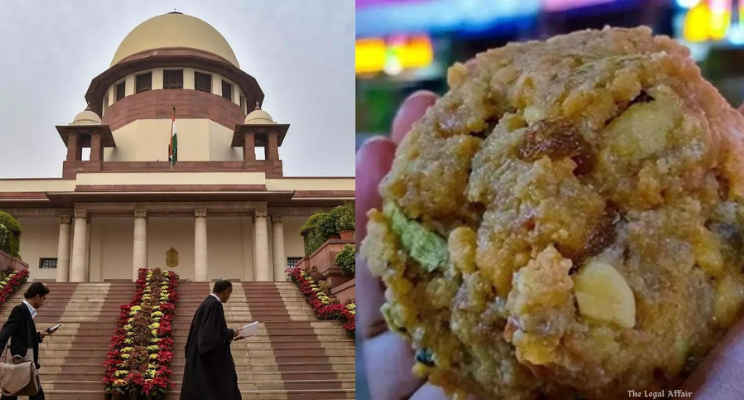
In the wake of the Tirupati Laddu controversy, YV Subba Reddy, Rajya Sabha MP and former Chairman of the Tirumala Tirupati Devasthanams (TTD), has approached the Supreme Court, requesting an independent investigation into allegations of adulteration in the sacred Tirupati laddus. Reddy has filed a Public Interest Litigation (PIL) seeking a Court-monitored probe by a committee or a retired Supreme Court judge with the assistance of domain experts to examine claims that animal fats and other impurities were mixed in the ghee used to prepare the laddus. These allegations have sparked significant unrest among the millions of devotees of Lord Venkateswara, who view the laddus as a sacred offering.
The controversy escalated when Chandrababu Naidu, the Chief Minister of Andhra Pradesh, claimed during a political meeting that animal fats had been detected in the laddus, a statement that Reddy’s assets had deeply hurt the religious sentiments of the Hindu community. The case raises critical questions regarding the integrity of the food used in temple offerings, and whether the state’s claims about contamination are accurate or politically motivated.
Arguments by YV Subba Reddy:
In his petition, Reddy questions the validity of the allegations, drawing attention to the operational protocols at the Tirumala temple, where stringent quality checks are conducted before any ghee is used in the preparation of prasadams, including the laddus. He explains that as per the standard operating procedure, ghee from suppliers is meticulously tested upon arrival. Samples are taken immediately after the vehicle carrying the ghee enters the temple premises. If the samples meet the specifications outlined in the tender document, only then is the ghee used in the preparation of prasadams. If the samples do not pass the tests, the vehicle is rejected and returned.
Reddy further supports his argument by citing an interview given by the Executive Officer of TTD to The Print, in which the officer reportedly stated that “the ghee was never used, 100 percent.” According to Reddy, the TTD has consistently maintained a rigorous protocol to ensure that only pure, unadulterated cow ghee is used in the preparation of prasadams, and any claims to the contrary are baseless.
Additionally, Reddy highlights several improvements made to the TTD’s operational procedures under the previous government led by the YSR Congress Party (YSRCP). These reforms include hiring a retired scientist, Mr. Srinivasa Swamy, from the Central Food Technological Research Institute (CFTRI), to oversee the TTD laboratory. Prior to this, the laboratory was managed by a health officer who lacked the necessary expertise to perform the required tests. Furthermore, the strength of the laboratory technicians was increased to 12, and they were trained at reputed institutions to enhance their skills in testing all items procured by the TTD.
To bolster quality control, Reddy notes that the process for collecting and testing samples from suppliers was overhauled to prevent any vested interests or collusion between suppliers and officials. The TTD laboratory was also upgraded with new civil works, air conditioning, and advanced equipment. Meetings were held with the Chairman of the Food Safety and Standards Authority of India (FSSAI) and the Director of the National Dairy Development Board (NDDB) to enhance the lab’s testing facilities, particularly for detecting adulteration in ghee. The NDDB also assisted in establishing a “Center of Excellence” to improve the quality of cows used to produce the ghee required for preparing the prasadams.
Reddy emphasizes that these reforms have been critical in maintaining the sanctity of the prasadams, particularly the laddu, and that any claims of adulteration should be viewed with skepticism. He further points out that 550 of the best desi cows were procured on a donation basis to produce ghee at the TTD’s Gaushala, where ghee production is meticulously supervised.
Claims Against the Andhra Pradesh Government and Chief Minister:
In his PIL, Reddy levels sharp criticism against Andhra Pradesh Chief Minister Chandrababu Naidu, alleging that his remarks about animal fat being mixed in the laddus have caused immense distress among the Hindu community. The petition states that Naidu’s statements were made during a political meeting, and suggests that these allegations were politically motivated. According to Reddy, Naidu’s comments have “disturbed the sentiments of a large number of devotees of Lord Venkateswara,” causing irreparable damage to the faith and reputation of the Tirumala temple.
The petition also highlights a discrepancy in the statements made by the TTD and the Andhra Pradesh government. According to Reddy, the TTD’s Executive Officer announced in July 2024 that vegetable fats, like vanaspati, had been detected in the ghee supplied to the temple. However, two months later, the Chief Minister escalated the controversy by claiming that animal fat was found in the prasadam, thereby causing panic among the devotees. Reddy argues that this discrepancy raises serious concerns about the credibility of the government’s claims, and questions why the state remained silent for two months after allegedly receiving the lab reports in July.
Reddy’s petition further demands that the court direct the concerned authorities to prepare a detailed forensic report, outlining the source of the ghee and the sampling process. He asserts that this investigation should include all procurement details and address the lab results, to provide complete transparency.
Prosecution’s Stand and Allegations:
On the other side, the allegations against the TTD and the handling of the prasadams were initiated by Chief Minister Chandrababu Naidu, who stated that animal fats were detected in the ghee used in the laddu preparation. This claim has triggered a significant uproar among the Hindu community, leading to a demand for an independent inquiry to clarify the facts.
While the state government has not officially responded to the PIL yet, it is likely that their argument will center around the integrity of the laboratory tests that allegedly found impurities in the ghee used at the temple. Naidu’s statement has already caused widespread concern, with many devotees questioning whether the temple administration failed to adequately oversee the quality of the ingredients used in sacred offerings.
The Chief Minister’s remarks, given the religious and cultural importance of the Tirupati laddus, have been seen by many as an attack on the temple’s sanctity. His claims have amplified the political aspect of the controversy, with some suggesting that the timing of these statements, just months before the state elections, was designed to create unrest among the Hindu voters.
Court’s Response and Interim Orders:
After hearing the arguments presented by Reddy’s counsel, the Supreme Court has admitted the petition and issued notices to the respondents, including the Andhra Pradesh government and the TTD. The Court has sought responses regarding the procedures followed for testing the ghee used in the prasadams and has expressed its intent to examine whether the testing process was properly followed.
The Court has also directed the state government to submit all lab reports related to the alleged contamination and provide a detailed explanation of the procurement and sampling process for the ghee. Additionally, the Court indicated that it would look into whether the lab results, allegedly obtained in July 2024, were shared with the TTD and whether there was any attempt to suppress the findings for two months.
Reddy’s request for a Court-monitored committee to investigate the matter is under consideration, with the Supreme Court stating that it will make a decision once the respondents have filed their affidavits. The Court has underscored the importance of preserving the sanctity of the temple and ensuring that any claims of adulteration are thoroughly investigated.
Conclusion:
The controversy surrounding the Tirupati Temple laddu has brought into focus the intersection of religion, politics, and the sanctity of temple offerings. With YV Subba Reddy’s PIL now before the Supreme Court, the allegations of adulteration in the laddus are set to be closely scrutinized. The outcome of this case will have significant implications for the millions of devotees who revere the Tirupati laddus as a sacred prasadam, as well as for the reputation of the temple administration.
As the legal proceedings move forward, the Supreme Court’s decision will likely set a precedent for how allegations involving religious sentiments and temple practices are addressed. Whether the claims of adulteration are ultimately proven true or false, this case highlights the need for greater transparency and accountability in the preparation of offerings at one of India’s most revered temples.