


Introduction
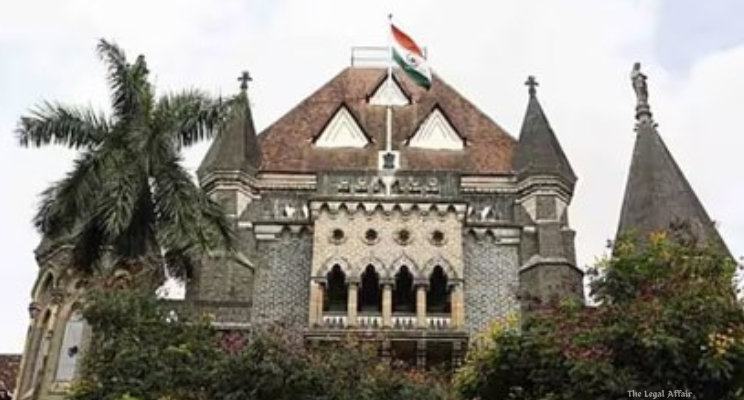
In a significant legal matter, the Bombay High Court expressed its distress over the trend of accused individuals in serious crimes being released solely on technical grounds. The case under scrutiny involves Mihir Shah, the son of Rajesh Shah, a close aide of Maharashtra Chief Minister Eknath Shinde. Mihir Shah was arrested in connection with a hit-and-run incident that occurred on July 7, 2023, in the Worli area of Mumbai, where a woman was dragged by his BMW while he was allegedly driving under the influence of alcohol. Shah’s arrest on July 9, 2023, has been challenged on the basis that the investigating officer (IO) failed to provide him with the ‘grounds of arrest’ in writing, which his legal team argues violated his constitutional rights under Articles 21 and 22 of the Indian Constitution. This case has triggered a larger debate on balancing technicalities with the gravity of the offense, as observed by the court.
Arguments Presented by Shah’s Counsel:
Appearing for Shah and his driver, advocates Rishi Bhuta and Niranjan Mundargi presented a strong case, primarily focusing on the procedural violation they claim occurred during the arrest. According to them, the IO failed to provide their clients with the grounds of arrest in writing, a mandatory requirement under Article 22 of the Indian Constitution, which ensures that no person can be detained without being informed of the reasons for their arrest. They asserted that their clients’ fundamental rights had been violated due to this omission and sought relief on these grounds.
They argued that while Shah was allegedly involved in a serious crime, the failure to adhere to due process in his arrest rendered the entire procedure illegal. According to Bhuta and Mundargi, the Supreme Court’s ruling in the *Prabir Purkayastha* case mandates that the police must provide written grounds of arrest, even in cases involving grave offenses. They further contended that the alleged act of communicating the grounds of arrest orally was insufficient in law, and the procedural lapse entitled Shah and his driver to relief.
The defense further emphasized the fundamental right to liberty and personal security, protected under Article 21, which they argued had been compromised. They submitted that the accused should be released from custody because the arrest did not follow legal protocol. In doing so, they raised an important issue about the technicalities of the arrest process, seeking the dismissal of charges based on these procedural grounds.
Prosecution’s Counter-Arguments:
Countering these claims, Chief Public Prosecutor Hiten Venegavkar argued that the nature of the offense must be considered before granting any relief based on technicalities. He pointed out that Shah’s involvement in the case was beyond doubt, citing evidence including CCTV footage and witness testimonies. The footage allegedly showed Shah in the driver’s seat of the BMW, with his driver, Rajrishi Bidawat, sitting next to him. Both men fled the scene after the accident, an act that the prosecution argued indicated guilt.
Venegavkar further contended that the investigating officer did orally inform Shah of the grounds of arrest and explained his legal rights, satisfying the requirement of Article 22. He also emphasized that this was not a case of economic or white-collar crime, where procedural formalities are critical, but a case involving a serious and violent offense. Venegavkar urged the court to weigh the gravity of the crime committed by Shah over the technicalities of the arrest procedure.
He highlighted that the accused was aware of his involvement in a heinous act, evidenced by his attempt to alter his appearance post the incident, which was indicative of his consciousness of guilt. The prosecutor contended that this was not a case where procedural lapses should overshadow the severity of the offense, and releasing the accused on such grounds would not only undermine the investigation but also set a dangerous precedent.
Court’s Observations and Interim Judgment:
During the proceedings, the bench, comprising Justices Bharati Dangre and Manjusha Deshpande, expressed serious concern over the release of accused individuals in grave cases on technical grounds. Justice Dangre remarked that in several instances, accused individuals had managed to evade custody merely because the investigating officer had not provided written grounds for arrest. The court acknowledged that while procedural safeguards are crucial, there must be a balance when dealing with serious offenses. The judges appeared visibly perturbed by the fact that technicalities could potentially hinder justice in such grave matters.
Justice Dangre, reflecting on the nature of the offense, remarked that the woman was dragged by the car and that the accused had fled the scene. She questioned the appropriateness of relying solely on technicalities in such cases, suggesting that the seriousness of the offense must take precedence. “What kind of citizen are you?” the judge asked, directing her question toward Shah’s counsel. She further inquired about the victim’s rights, pointing out that while the accused invoked his fundamental rights, the victim’s rights were equally paramount.
The court acknowledged the need for ‘balancing’ technicalities with the seriousness of the offense. Justice Dangre observed that while the Constitution protects the rights of the accused, it also guarantees the fundamental rights of victims, which cannot be ignored. The court made it clear that in this case, the gravity of the offense needed to be weighed against the alleged procedural lapses.
After hearing both sides, the bench directed the investigating officer to file an affidavit stating whether the grounds of arrest had been communicated to Shah and his driver, and if so, whether any panchas (witnesses) were present during the arrest. The court noted that the affidavit would help clarify whether the procedural requirements were fulfilled, and if not, what corrective measures might be necessary.
The matter was adjourned to October 9, 2023, for further hearing, with the court stating that this case could set a precedent in determining how technicalities are handled in serious criminal cases. “Let this be a test case,” Justice Dangre remarked, indicating that the court would examine whether the seriousness of the offense should be factored into decisions about procedural lapses.
Conclusion
The Bombay High Court’s handling of this case underscores the ongoing debate in Indian jurisprudence about the balance between procedural safeguards for the accused and the need to ensure justice for victims, especially in serious criminal cases. While fundamental rights, such as those enshrined in Articles 21 and 22, are non-negotiable, the court has indicated that these rights cannot be interpreted in a vacuum, especially when serious crimes have been committed. As this case progresses, it will likely serve as a crucial precedent in future legal arguments about the interplay between technicalities and the gravity of an offense.
The case reflects the judiciary’s attempt to strike a balance between safeguarding constitutional rights and ensuring that justice is served in instances of grave offenses. By examining this “test case,” the Bombay High Court may set the stage for a more nuanced approach to procedural lapses in criminal cases. This ruling could offer guidance to lower courts on how to weigh technicalities against the gravity of crimes, ensuring that procedural lapses do not become a shield for the guilty, particularly in heinous cases.