


Introduction:
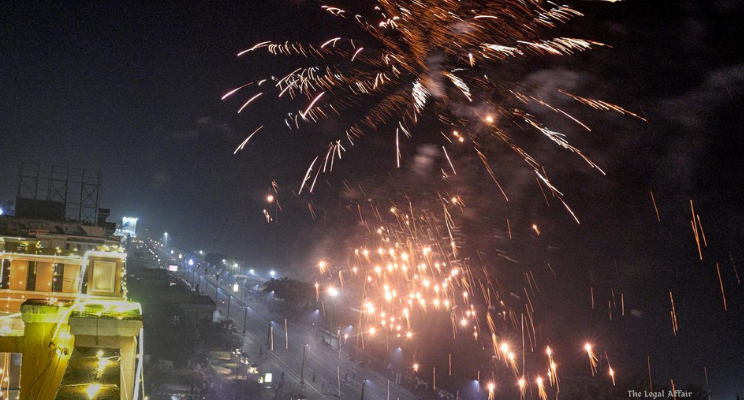
The case of MC Mehta v. Union of India (WP (C) 13029/1985) has been pivotal in addressing environmental concerns, particularly air pollution in Delhi and its adjoining National Capital Region (NCR). On December 19, 2024, a Supreme Court bench comprising Justice Abhay S. Oka and Justice Augustine George Masih took a significant step by directing the states of Uttar Pradesh and Haryana to implement a complete ban on firecrackers akin to the one enforced by the Delhi government. Highlighting the urgent need for collaborative measures to tackle pollution, the Court emphasized that isolated bans in individual jurisdictions would be ineffective unless neighbouring states adopted similar restrictions. This order follows consistent judicial scrutiny of measures to combat pollution in the NCR as part of the long-standing MC Mehta litigation.
Arguments of Both Sides:
During the hearing, Senior Advocate Shadan Farasat, representing the Delhi government, presented a detailed account of the comprehensive ban imposed in Delhi under Section 5 of the Environment Protection Act, 1993. The ban covered the manufacture, storage, sale, distribution, and use of all firecrackers, including their sale through online platforms. Farasat argued that despite Delhi’s robust measures, the effectiveness of the ban was undermined by the influx of firecrackers from neighbouring NCR states. To mitigate this, he urged the Court to mandate similar restrictions in Uttar Pradesh and Haryana, stressing that a cohesive approach across the NCR was crucial for combating air and noise pollution. Farasat also pointed out that Rajasthan had already implemented a complete ban in the NCR areas of the state, which provided a model for other states to follow. On behalf of the Haryana government, it was argued that a blanket ban was not feasible due to the allowance of green crackers, which were less polluting. However, the Court expressed scepticism about the enforceability of such selective measures, given the logistical challenges in differentiating between conventional and green crackers. Meanwhile, Uttar Pradesh submitted that it would require additional time to review the feasibility of implementing a year-round ban similar to Delhi’s, given the socio-economic implications and public sentiment associated with firecrackers.
Court’s Judgment:
In its judgment, the Supreme Court unequivocally mandated Uttar Pradesh and Haryana to impose a firecracker ban identical to Delhi’s, emphasizing the urgency of uniform regulations across the NCR. The bench lauded the Delhi model, remarking that it was a step in the right direction and should be emulated by other states to ensure the effectiveness of pollution control measures. Justice Abhay S. Oka observed that pollution in Delhi-NCR was a shared problem that required coordinated efforts, adding that fragmented bans would dilute the impact of such initiatives. The Court also directed the states to exercise their powers under Section 5 of the Environment Protection Act, 1993, to enforce the ban comprehensively. Additionally, the bench noted the proactive stance of the Rajasthan government in imposing a total ban in NCR areas and urged Haryana and Uttar Pradesh to align their policies accordingly. The Court reiterated its earlier stance that no religious or cultural practice could justify activities that jeopardize public health or the environment, invoking the fundamental right to a clean and healthy environment under Article 21 of the Constitution. The matter has been scheduled for further hearing on January 15, 2025, to evaluate the progress of compliance and consider additional directions for implementing firecracker bans in the NCR.