


Introduction:
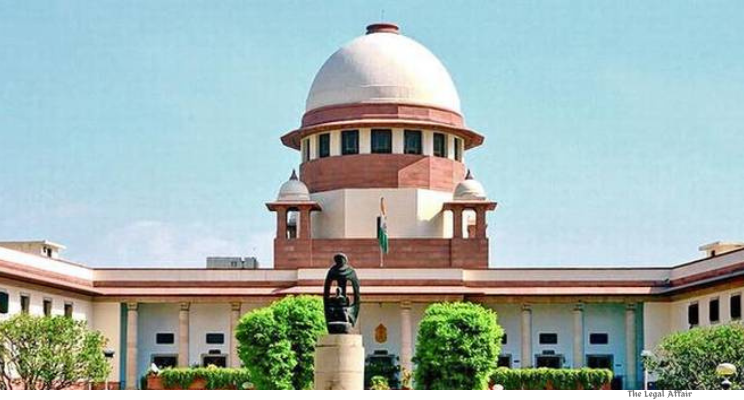
In a significant ruling, the Supreme Court of India observed that if a government department fails to comply with the orders of the National Green Tribunal (NGT), the head of the department will be held accountable under Section 28 of the National Green Tribunal Act, 2010. This observation arose in a case involving non-compliance with an NGT order concerning illegal activities, such as salt harvesting and fishing, in Gujarat’s Wild Ass Sanctuary, located in the Rann of Kutch.
The appellants, in the case Katiya Haidarali Ahmadbhai & Ors. v. Sanjeev Kumar IAS & Ors. (Civil Appeal No. 229 of 2024), sought action against 15 government officers, alleging their failure to comply with the NGT’s 2020 directions to curb unauthorized activities within the sanctuary. The NGT had previously directed authorities to prevent encroachments and illegal activities within the sanctuary and ensure compliance with environmental regulations. However, after the appellants filed an execution application in 2023, the NGT ordered the removal of these officers from the application, prompting the appellants to approach the Supreme Court.
A bench comprising Justice Abhay Oka, Justice Ahsanuddin Amanullah, and Justice Augustine George Masih reviewed the NGT’s decision and held that the tribunal could not interfere at the stage of issuing notice. The Court emphasized that the officers should be given the opportunity to present their defenses before the NGT, which would ultimately decide whether they were responsible for the non-compliance.
Appellants’ Arguments:
- The appellants argued that the authorities had failed to implement the NGT’s 2020 order, which addressed illegal encroachments and unauthorized activities in the Wild Ass Sanctuary.
- They alleged that 15 government officers were responsible for this failure and should be held liable under Section 28 of the NGT Act, which stipulates that if a government department fails to comply with NGT orders, the head of the department is deemed liable.
- The appellants sought action against these officers for their non-compliance, asserting that the head of the department is legally responsible.
- They expressed discontent with the NGT’s direction to delete the names of the officers from the application, arguing that this move undermined accountability.
Respondents’ Arguments:
- The government authorities argued that the officers in question were not personally responsible for the non-compliance with the NGT’s 2020 order.
- They contended that the NGT had correctly ordered the deletion of the officers’ names from the execution application, as they were not named as personal respondents in the original application.
- The respondents also maintained that, procedurally, only the original respondents listed in the NGT’s 2020 order should be held accountable, and that the officers’ names were mistakenly added to the execution application.
- They further argued that the NGT Act allows for due process, and the officers should not be presumed guilty before being allowed to present their defenses.
Court’s Judgement:
The Supreme Court carefully considered the arguments presented by both parties and ultimately ruled in favor of the appellants’ contention that the NGT had prematurely interfered in the execution process by ordering the deletion of the officers’ names.
Accountability Under Section 28 of the NGT Act:
- The Supreme Court highlighted the provisions of Section 28 of the NGT Act, which deals with offenses by government departments. According to this section, if a department fails to comply with an NGT order, the head of the department is deemed liable for the offense.
- The Court underscored that this legal provision ensures strict compliance with environmental regulations and NGT orders.
Issuance of Notice and Opportunity for Defense:
- The bench ruled that the NGT should not have interfered by directing the deletion of the officers’ names at the notice stage. The Court remarked that the officers should have been given the opportunity to present their defenses after receiving notice.
- The Court clarified that these officers could raise all permissible defenses, including the argument that they were not responsible for complying with the NGT’s 2020 order. The NGT’s premature action denied them this right.
- The Court concluded that the tribunal could not pre-emptively assume the officers were not responsible without first allowing them to respond to the allegations.
Remand to the NGT for Further Proceedings:
- The Supreme Court set aside the NGT’s order deleting the names of the 15 government officers and directed the tribunal to issue notices to the officers and proceed according to the law.
- The Court emphasized that it was not determining whether the officers were responsible for the non-compliance but left this decision for the NGT to resolve after giving the officers the chance to present their defenses.
Impact of the Judgement:
- The Supreme Court’s ruling reinforces the principle of accountability under the NGT Act, particularly for government departments. The judgment underscores the necessity for strict adherence to environmental laws.
- The decision also highlights the importance of due process, ensuring that government officers are given a fair chance to defend themselves in proceedings under the NGT Act.
- This ruling will likely have significant implications for future cases involving government non-compliance with NGT orders, especially in sensitive ecological areas like the Wild Ass Sanctuary.
Conclusion:
In Katiya Haidarali Ahmadbhai & Ors. v. Sanjeev Kumar IAS & Ors., the Supreme Court underscored the importance of holding government departments accountable for complying with NGT orders. By reaffirming the legal framework under Section 28 of the NGT Act, the Court has ensured that the head of a department can be deemed liable for any failure to act. The ruling also emphasizes the importance of due process, providing government officers a fair opportunity to present their defenses before facing any penalties. This decision will likely strengthen the implementation of NGT orders in future cases, particularly concerning environmental conservation and the protection of wildlife sanctuaries.