


Introduction:
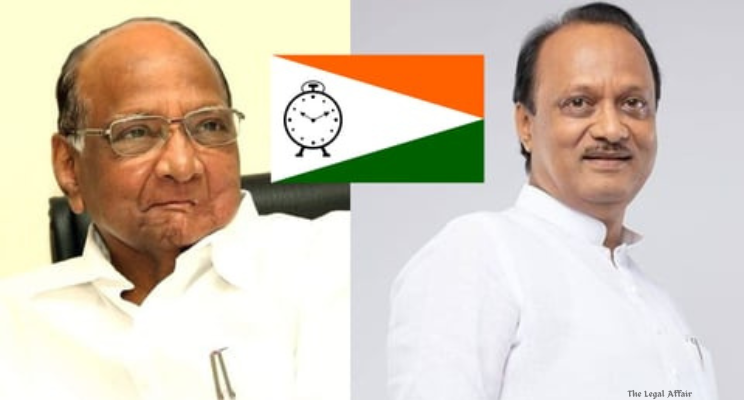
In a high-stakes political conflict, the Supreme Court has intervened in a dispute between two factions of the Nationalist Congress Party (NCP) over the use of the party’s iconic “clock” symbol. The conflict stems from a division between veteran leader Sharad Pawar and his nephew, Ajit Pawar, who leads a splinter faction within the party. With elections approaching, the issue has gained momentum as the Sharad Pawar-led group challenges the right of Ajit Pawar’s faction to use the clock symbol, arguing that it is inextricably linked to Sharad Pawar’s political legacy. The Election Commission of India (ECI) previously ruled in favour of Ajit Pawar’s group, granting it recognition as the official NCP due to its majority among party legislators. However, the Sharad Pawar faction has sought judicial intervention, asserting that the clock symbol’s use by Ajit Pawar’s group may mislead voters into associating his faction with Sharad Pawar’s ideology and legacy. The matter now awaits final adjudication, but the Court has imposed interim conditions on using the symbol to ensure transparency and fairness during the electoral process.
Ajit Pawar’s Argument:
Represented by Senior Advocate Balbir Singh, Ajit Pawar’s faction argued that they had been compliant with the Court’s orders regarding the clock symbol’s use and were actively pursuing efforts to publish disclaimers in newspapers, including Marathi dailies, within the next 36 hours. Singh assured the Court that the faction had abided by prior conditions, which mandated a public disclaimer that the clock symbol’s use remains subject to judicial review. He clarified that all campaign material and media would include this disclaimer, in line with the Court’s directions. Furthermore, Ajit Pawar’s group argued that their association with the clock symbol was legitimate, as the ECI had legally recognized them as the official NCP based on legislative strength.
Singh also opposed any suggestion that his client should apply for a new symbol, as doing so would imply that they had no legitimate claim to the clock symbol. According to the defence, the Court’s earlier orders did not amount to an absolute restriction on their use of the clock symbol but rather stipulated certain clarifications. Ajit Pawar’s group also dismissed allegations from the Sharad Pawar faction regarding tampering with evidence, asserting that all campaign material was compliant with legal requirements.
Sharad Pawar’s Argument:
The Sharad Pawar faction, represented by Senior Advocates Dr Abhishek Manu Singhvi and Pranjal Agarwal, contended that Ajit Pawar’s faction had repeatedly disregarded the Court’s orders by publishing campaign material without necessary disclaimers. Singhvi argued that while Ajit Pawar’s faction claimed compliance, evidence indicated otherwise, with videos and posters purportedly lacking the mandated disclaimers. They alleged that this omission was deliberate, aimed at misleading voters into associating Ajit Pawar’s faction with Sharad Pawar’s legacy, which the clock symbol has represented for over 36 years.
Moreover, Singhvi emphasized that Sharad Pawar had been the face of the NCP since its inception and that the clock symbol was an enduring part of his political identity. He argued that by continuing to use the clock symbol, Ajit Pawar’s faction was taking advantage of Sharad Pawar’s established image. The Sharad Pawar faction also pushed for the Court to compel Ajit Pawar’s group to apply for a new symbol, arguing that this would prevent confusion among voters and respect Sharad Pawar’s legacy. They further expressed frustration that they had to repeatedly approach the Court to ensure compliance, indicating a perceived lack of sincerity in Ajit Pawar’s adherence to prior orders.
Court’s Response:
After listening to both sides, the bench of Justices Surya Kant, Dipankar Datta, and Ujjal Bhuyan directed Ajit Pawar’s faction to publish disclaimers in prominent Marathi newspapers within 36 hours. The Court emphasized that it would not tolerate delays and made it clear that failure to comply could lead to contempt proceedings. Justice Kant’s questioning underscored the bench’s impatience with Ajit Pawar’s request for additional time, as he repeatedly emphasized the urgency of the matter and the importance of informing voters about the ongoing legal dispute over the symbol.
Justice Datta acknowledged the Sharad Pawar faction’s concerns but raised the practical challenge of barring Ajit Pawar’s faction from using the clock symbol altogether, given that the election was imminent. The Court recognized that disallowing Ajit Pawar’s faction from using the symbol outright might effectively grant the Sharad Pawar group’s final request prematurely, which would be inappropriate at the interim stage. Thus, while the Court stopped short of prohibiting the symbol’s use entirely, it reaffirmed the requirement for disclaimers to mitigate potential voter confusion.
The Court also addressed concerns about compliance with its previous orders, instructing Ajit Pawar’s faction to maintain transparency in all campaign materials. They underscored that any violation of these conditions would be met with severe repercussions, reiterating the potential for suo motu contempt action. This ruling reflects the Court’s effort to maintain a balanced approach, ensuring voters are fully informed without unduly restricting Ajit Pawar’s faction’s right to campaign.
Background of the Dispute:
This dispute originated from a split within the NCP between Sharad Pawar and Ajit Pawar. The rift was formalized when Ajit Pawar’s faction sought and received ECI recognition as the official NCP based on legislative support, securing the right to use the clock symbol—a symbol historically associated with the unified NCP under Sharad Pawar. Sharad Pawar’s group challenged this decision in the Supreme Court, arguing that it diluted his legacy and risked misleading voters who closely associate him with the symbol.
In March, the Court provisionally allowed Ajit Pawar’s faction to use the clock symbol but mandated that they include a disclaimer in campaign materials, indicating that the symbol’s use was subject to legal dispute. Subsequently, during the Lok Sabha elections, the Sharad Pawar faction alleged that Ajit Pawar’s faction did not consistently include the required disclaimers in campaign materials, prompting further litigation. The Court reiterated the disclaimer requirement for the Maharashtra State Assembly elections and warned that it would take contempt action in the event of non-compliance.
On October 24, the Court reinforced its prior orders, instructing Ajit Pawar’s faction to submit an undertaking confirming their compliance. The Court’s instructions have grown increasingly explicit, culminating in the recent demand for a 36-hour turnaround on the publication of disclaimers in major newspapers. This heightened urgency reflects the Court’s recognition of the immediate electoral implications.