


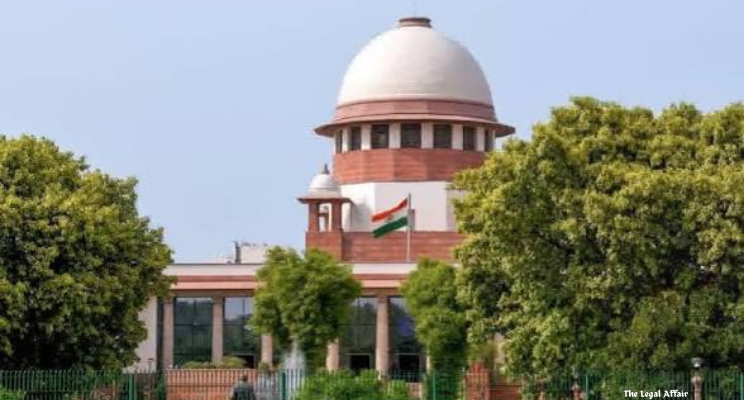
Introduction:
The Supreme Court of India, in Shaurya Sunil Kumar Singh v. Central Bureau of Investigation, has reaffirmed the settled legal position that the statutory right to default bail is triggered only when the investigating agency fails to file its final report within the period prescribed by law, and not merely because a copy of the charge sheet has not been supplied to the accused. The judgment, delivered by a Bench comprising Justice Sanjay Karol and Justice Nongmeikapam Kotiswar Singh, provides important clarity on the interpretation of Section 187(3) of the Bharatiya Nagarik Suraksha Sanhita, 2023 (BNSS), particularly in relation to the scope of the right to default bail after the enactment of the new criminal procedure code.
The appeal arose from an order of the Bombay High Court, which had rejected the appellant’s plea for default bail. The appellant contended that although the Central Bureau of Investigation (CBI) had filed the charge sheet within the statutory period, he had not been furnished with a copy of the charge sheet. According to him, the absence of service of the charge sheet upon the accused rendered the filing incomplete for the purposes of Section 187(3) of the BNSS, thereby entitling him to statutory or default bail.
The criminal proceedings originated from a CBI investigation into an alleged large-scale cyber fraud involving approximately ₹3.81 crores. The prosecution alleged that the accused and others were involved in offences punishable under Sections 61(2) read with 318, 336 and 340 of the Bharatiya Nyaya Sanhita, 2023, Section 7 of the Prevention of Corruption Act, 1988, and Sections 66 and 66D of the Information Technology Act, 2000. Following his arrest, the appellant remained in judicial custody while the investigation proceeded.
The statutory concept of default bail occupies a significant position within Indian criminal jurisprudence. It acts as a safeguard against prolonged incarceration without completion of investigation by conferring upon an accused an indefeasible right to be released on bail if the investigating agency fails to submit the police report within the prescribed period. However, the present case required the Supreme Court to determine whether the expression “filing of the charge sheet” under Section 187(3) could be interpreted to include the subsequent procedural requirement of supplying a copy of the charge sheet to the accused.
The controversy therefore centered not on whether the charge sheet had been filed within time—it was undisputed that it had—but on whether failure to provide its copy to the accused could invalidate the filing for the limited purpose of claiming default bail. The decision thus assumes significance because it delineates the distinction between completion of investigation through filing of the final report and subsequent procedural obligations concerning disclosure of documents to the accused.
Arguments of the Parties:
The appellant challenged the order of the Bombay High Court by asserting that the statutory guarantee embodied in Section 187(3) of the BNSS should receive a purposive and rights-oriented interpretation. According to the appellant, the filing of a charge sheet cannot be regarded as complete merely upon its presentation before the jurisdictional court. It was argued that unless the accused is supplied with a copy of the charge sheet, the object of ensuring procedural fairness remains unfulfilled. Consequently, the appellant submitted that non-supply of the charge sheet effectively deprived him of meaningful knowledge of the allegations and evidence against him, thereby frustrating the legislative intent underlying the criminal procedure.
The appellant further argued that procedural safeguards under the BNSS must be interpreted in a manner that advances the constitutional guarantee of personal liberty under Article 21 of the Constitution. Since the right to default bail has consistently been recognized by the Supreme Court as an indefeasible statutory right accruing upon the prosecution’s failure to satisfy statutory requirements, it was contended that timely filing of the charge sheet should necessarily include compliance with all essential procedural obligations attached to such filing, including furnishing a copy to the accused. Failure to do so, according to the appellant, should not enable the prosecution to defeat the valuable right created by Section 187(3).
The appellant also relied upon the principle that criminal statutes dealing with personal liberty ought to be interpreted strictly in favour of the accused. He submitted that a narrow interpretation restricting default bail only to the physical filing of the charge sheet would dilute procedural safeguards and encourage investigating agencies to avoid timely disclosure of investigative materials while technically complying with filing requirements.
On behalf of the Central Bureau of Investigation, the respondent opposed the appeal by contending that the statutory framework clearly distinguishes between filing of the police report and the subsequent obligation to furnish copies of documents to the accused. The CBI argued that Section 187(3) of the BNSS is attracted exclusively where the investigating agency fails to file the final report within the prescribed period of investigation. Once the charge sheet is filed before the competent court within the statutory timeline, the right to default bail automatically comes to an end.
The respondent emphasized that supply of copies of the charge sheet and accompanying documents constitutes an independent procedural requirement governed by separate provisions of criminal procedure. Any delay or irregularity in supplying those documents may entitle the accused to seek appropriate directions from the trial court but cannot invalidate an otherwise valid filing of the charge sheet. Accepting the appellant’s interpretation, according to the prosecution, would amount to reading into Section 187(3) words that the legislature had consciously omitted.
The CBI also pointed out that the Bombay High Court had correctly interpreted the legislative scheme by holding that default bail is linked exclusively to the completion of investigation through filing of the final report and not to every procedural step that follows. The respondent maintained that extending the scope of default bail to include non-supply of the charge sheet would unnecessarily disrupt criminal investigations and permit accused persons to claim statutory bail despite the investigation having been completed within the prescribed period.
The respondent therefore urged the Supreme Court to uphold the High Court’s interpretation, arguing that procedural lapses relating to supply of documents should be addressed through appropriate judicial directions rather than by conferring an unintended right to statutory bail.
Court’s Judgment:
The Supreme Court dismissed the appeal and affirmed the reasoning adopted by the Bombay High Court. Delivering the judgment for the Bench, Justice Sanjay Karol held that the courts below had correctly interpreted Section 187(3) of the Bharatiya Nagarik Suraksha Sanhita. The Court categorically rejected the contention that failure to supply a copy of the charge sheet to the accused could be treated as equivalent to non-filing of the charge sheet for the purpose of claiming default bail.
The Court observed that the statutory right to default bail arises only upon the investigating agency’s failure to complete the investigation and submit its final report within the period prescribed by law. Once the charge sheet is filed before the competent court within the statutory timeline, the legal requirement contemplated under Section 187(3) stands satisfied. The provision does not make the continuation or extinction of the right dependent upon whether copies of the charge sheet have subsequently been furnished to the accused.
The Bench agreed with the interpretation adopted by the High Court that the expression “filing of the charge sheet” must receive its ordinary procedural meaning. The filing is complete when the investigating agency submits the final report before the jurisdictional court. The subsequent obligation to supply copies to the accused constitutes an important procedural safeguard intended to ensure a fair trial, but it is legally distinct from the act of filing the police report itself.
Justice Karol observed that the appellant’s interpretation would impermissibly enlarge the scope of Section 187(3). The legislature consciously created default bail as a consequence of delay in completing investigation rather than as a remedy for every procedural lapse occurring after the investigation has concluded. Reading additional conditions into the provision would amount to judicial legislation rather than statutory interpretation.
The Court further recognized that supply of the charge sheet and other relied-upon documents undoubtedly forms an integral component of a fair criminal trial. The accused must receive these materials to effectively prepare a defence and exercise the rights guaranteed under criminal procedure. Nevertheless, failure or delay in supplying such documents gives rise to separate procedural remedies. Courts may issue directions for immediate supply of documents or adopt appropriate measures to prevent prejudice to the accused during trial. However, those procedural deficiencies cannot retrospectively invalidate a charge sheet that has already been validly filed within the statutory period.
The Bench emphasized the distinction between substantive statutory rights and procedural irregularities. The right to default bail is a statutory right arising from legislative mandate and becomes enforceable only upon fulfilment of specified statutory conditions. Courts cannot create additional grounds for default bail beyond those expressly contemplated by the legislature. Consequently, while procedural fairness remains fundamental to criminal justice, every procedural lapse cannot automatically confer an entitlement to statutory bail.
The Supreme Court therefore concluded that the High Court’s reasoning was legally sound and warranted no interference. The Court expressly held:
“In our view, the courts below have rightly held that a non-filing of a copy of the charge sheet cannot become a ground for default bail, and the submission of the appellant cannot be accepted.”
By dismissing the appeal, the Supreme Court reaffirmed that the decisive consideration under Section 187(3) of the BNSS is whether the investigating agency filed the charge sheet within the prescribed limitation period. If that requirement has been fulfilled, the statutory right to default bail ceases irrespective of any subsequent delay in supplying copies of the charge sheet to the accused.
The judgment is likely to serve as an important precedent under the newly enacted BNSS by clarifying that procedural obligations following the filing of the charge sheet cannot be conflated with the statutory requirement of timely filing itself. It preserves the legislative balance between safeguarding the liberty of accused persons through default bail where investigations remain incomplete and ensuring that completed investigations are not rendered ineffective by procedural lapses capable of being independently remedied. The decision also reinforces the principle that while fair trial rights remain inviolable, remedies for violations of procedural safeguards must correspond to the nature of the violation and should not be expanded beyond the legislative framework governing statutory bail.