


Introduction:
The Supreme Court of India has reiterated an important principle governing reassessment proceedings under Section 147 of the Income Tax Act, 1961: the Revenue cannot be prevented from reopening an assessment on the ground of a mere ‘change of opinion’ when the Assessing Officer did not examine the relevant issue or form any opinion on it during the original assessment. The Court clarified that the doctrine of change of opinion presupposes that an opinion was consciously formed in the first place. Where the original assessment contains no such examination, subsequent discovery of tangible material indicating that income may have escaped assessment can provide a legitimate basis for reopening the case, subject to the statutory requirements.
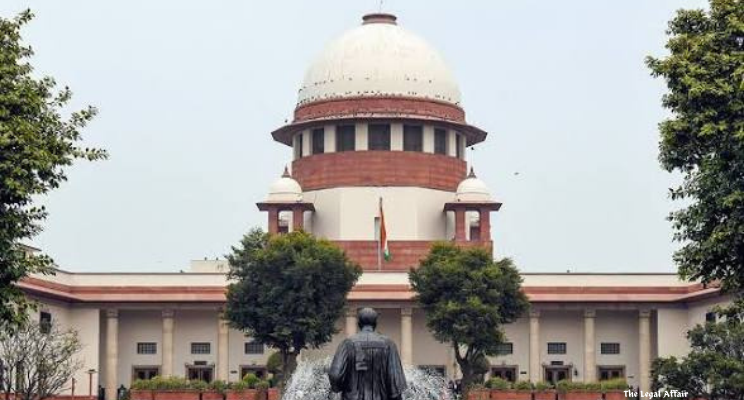
A Bench comprising Justice J.B. Pardiwala and Justice K. Vinod Chandran delivered the judgment while dismissing an appeal challenging the Delhi High Court’s decision upholding the reopening of income tax assessments for the assessment years 2008–09 and 2009–10. The dispute concerned the alleged overvaluation of shares in two companies and the subsequent investment of part of the sale proceeds in residential property, for which the assessees claimed the benefit of Section 54F of the Income Tax Act.
The case raised a significant question concerning the limits of the Assessing Officer’s power to reopen completed assessments. While taxpayers are protected against arbitrary reassessment based merely on a different interpretation of facts already examined, that protection does not automatically extend to issues that were never investigated during the original proceedings. The Supreme Court was therefore required to examine whether the reassessment notices represented an impermissible review of an earlier decision or a lawful response to new information that had emerged after the original assessment.
The controversy arose from share-sale transactions involving the assessee, his brother and other shareholders. The shares were sold for substantial consideration, and part of the proceeds was invested in a residential property. The assessees claimed an exemption under Section 54F, which provides relief from long-term capital gains tax in qualifying cases involving investment in residential property, subject to the statutory conditions.
During the original assessment proceedings, the Assessing Officer accepted the income declared in the returns. However, a subsequent investigation by the Investigation Unit, Noida, raised concerns about the valuation of shares in the two companies. The investigation indicated, prima facie, that the shares appeared to have been sold at values substantially higher than what could be justified by the companies’ underlying land and buildings.
The investigation report became the foundation for the Revenue’s decision to reopen the assessments. According to the authorities, the information suggested that the transactions required further examination and that income chargeable to tax might have escaped assessment. Notices were consequently issued under the reassessment provisions of the Income Tax Act.
The assessees challenged the reopening, arguing that the share transactions had already been considered during scrutiny assessment and that the Revenue was attempting to revisit an issue on which the Assessing Officer had effectively reached a conclusion. They maintained that reassessment on the same subject would amount to a prohibited change of opinion.
The Delhi High Court rejected the challenge and upheld the reassessment proceedings. It found that the investigation report constituted tangible material that had emerged after the original assessment and that there was a rational connection between the material and the Assessing Officer’s belief that income had escaped assessment. The assessees then approached the Supreme Court, seeking to overturn the High Court’s decision.
The Supreme Court’s ruling addresses the balance between the finality of completed assessments and the Revenue’s responsibility to investigate credible information indicating possible tax evasion or underassessment. It explains why the mere fact that an assessment has been completed does not prevent further proceedings in every circumstance, while also reaffirming that the reassessment power cannot be exercised as an unrestricted power of review.
Arguments of the Parties:
The appellant-assessees primarily contended that the reassessment notices were legally unsustainable because the underlying share transactions had already formed part of the original scrutiny assessment. According to them, the Assessing Officer had accepted their returned income after examining the relevant transactions. The Revenue could not subsequently reopen the assessments merely because another authority or investigation unit developed doubts about the valuation of the shares.
Their argument rested on the settled distinction between reassessment and review. Section 147 authorises the Assessing Officer to assess or reassess income that has escaped assessment when the statutory conditions are satisfied. It does not confer an unrestricted power to reconsider a completed assessment simply because the officer later believes that a different conclusion would have been preferable. The appellants maintained that permitting such reconsideration would undermine the certainty and finality expected from completed tax proceedings.
The appellants further relied on the doctrine of change of opinion, which serves as a safeguard against repeated scrutiny of the same matter. They argued that once an Assessing Officer has examined a transaction and accepted the taxpayer’s explanation, the Revenue cannot reopen the matter merely by taking a different view of the same facts. In their submission, the subsequent investigation did not provide a legally sufficient justification for revisiting the transactions because the relevant subject had already been dealt with during the original assessment.
Another objection concerned the reasons and grounds relied upon by the Revenue in defending the reassessment notices. The appellants argued that additional grounds introduced subsequently, particularly while dealing with their objections to reopening, could not retrospectively validate notices that were otherwise defective. They sought to ensure that the legality of reassessment would be determined by reference to the reasons and material lawfully available to the Assessing Officer, rather than by explanations developed after the notices had been issued.
The appellants’ position was, therefore, that the investigation report could not be used as a device to reopen an assessment that had already examined the relevant transactions. They maintained that the Revenue was effectively attempting to review an earlier decision under the guise of reassessment and that the High Court had failed to give adequate effect to the protection against a change of opinion.
The Revenue, on the other hand, defended the reassessment notices on the ground that the original assessment had not involved any specific examination of the alleged overvaluation of the shares. It argued that the appellants could not invoke the doctrine of change of opinion without first establishing that the Assessing Officer had actually applied his mind to the particular issue on which the reopening was based.
According to the Revenue, the acceptance of a return during the original assessment did not necessarily establish that every transaction, valuation method or claim disclosed in the return had been independently scrutinised. An assessment order accepting the returned income cannot automatically be treated as an affirmative decision on every aspect of the taxpayer’s affairs, particularly where the record does not indicate any inquiry into the precise issue subsequently questioned.
The Revenue also emphasised the significance of the Investigation Unit, Noida, report. The report had been prepared after the original assessment and contained information raising a prima facie concern that the shares of the two companies had been overvalued. Since the valuation of the shares was relevant to the transactions under examination, the report provided a factual foundation for the Assessing Officer to form a belief that taxable income might have escaped assessment.
The Revenue maintained that the reassessment proceedings did not involve an attempt to substitute one opinion for another on an issue previously decided. Instead, the proceedings were initiated because fresh material had emerged concerning an aspect that had not been examined during the original assessment. The statutory threshold at the stage of reopening, it argued, was the existence of relevant material supporting a reasonable belief that income had escaped assessment, not a final judicial determination that the alleged underassessment had conclusively occurred.
The respondents further relied on the distinction between forming a belief and proving the ultimate tax liability. At the stage of issuing a reassessment notice, the Assessing Officer is not required to establish the entire case through conclusive evidence as though conducting a final adjudication. The material must nevertheless be tangible and must bear a rational connection to the belief formed. In the present case, the Revenue submitted that the investigation report satisfied that requirement and justified further proceedings.
The competing submissions thus presented two different understandings of the original assessment. The appellants treated the acceptance of their returned income and the scrutiny proceedings as sufficient to attract the protection against a change of opinion. The Revenue argued that such protection could apply only if the specific issue of share overvaluation had actually been considered, expressly or by necessary implication. The Supreme Court’s decision turned on this distinction between an issue previously examined and one that came to the Assessing Officer’s attention through subsequent information.
Court’s Judgment:
The Supreme Court dismissed the appeal and upheld the Delhi High Court’s decision sustaining the reassessment proceedings. In the judgment authored by Justice J.B. Pardiwala, the Court accepted that the Revenue had relied on tangible material that emerged after the original assessment and that the alleged overvaluation of the shares had not been examined during the earlier proceedings.
The Court began by reaffirming that a mere change of opinion cannot, by itself, justify reopening an assessment under Section 147 of the Income Tax Act. The Assessing Officer possesses the power to reassess income that has escaped assessment, subject to the governing statutory conditions, but does not possess a general power to review a completed assessment merely because a different conclusion is subsequently preferred.
The prohibition against a change of opinion is an important safeguard against arbitrary use of reassessment powers. Without this restriction, a taxpayer could remain exposed to repeated reconsideration of the same transactions, even after the Assessing Officer had examined the relevant material and reached a conscious conclusion. The doctrine therefore protects the integrity of the assessment process and prevents the Revenue from using reassessment as a substitute for an appeal against its own earlier decision.
However, the Court explained that the expression ‘change of opinion’ has a specific legal meaning. It necessarily assumes that an opinion was formed during the original assessment and that the Assessing Officer subsequently departed from that opinion. Unless the original assessment involved a conscious application of mind to the relevant issue, there can be no legally identifiable earlier opinion capable of being changed.
The Court accordingly rejected the proposition that every completed assessment automatically prevents the Revenue from investigating a matter later brought to its attention. The crucial question is whether the issue forming the basis of the alleged escapement of income was actually examined during the original assessment proceedings. The answer must be determined from the assessment order and the surrounding record, rather than from the mere fact that the returned income was accepted.
The judgment emphasised that an opinion need not always be recorded in express terms. It may also be inferred by necessary implication from the manner in which the assessment was conducted. Nevertheless, the court examining the validity of reopening must verify whether the Assessing Officer had considered the particular issue, either expressly or implicitly. The existence of an earlier assessment, without more, does not establish that every individual question was consciously decided.
This distinction was especially important in the present case. The original assessment had accepted the returned income, but the specific allegation that the shares of the two companies had been overvalued had not been examined. The subsequent investigation brought that issue into focus by comparing the share values with the companies’ underlying land and buildings. In the Court’s view, the absence of an earlier opinion on that specific aspect meant that the reassessment could not be rejected merely on the ground that the Assessing Officer had changed his mind.
The Court also addressed the legal significance of assessment orders that are non-speaking, cryptic or perfunctory. Where an assessment order contains no meaningful discussion of a particular issue, it may be difficult to attribute a conscious opinion to the Assessing Officer on that issue. The mere absence of a detailed explanation in the order does not invariably establish that no inquiry occurred, because an opinion can sometimes be inferred from the assessment record. However, where there is a perceptible lack of inquiry into the specific aspect subsequently relied upon for reopening, the taxpayer cannot successfully invoke the doctrine of change of opinion on the assumption that the matter must already have been decided.
The Court’s reasoning does not mean that every short assessment order permits reopening or that the Revenue may treat silence in an order as an automatic licence for reassessment. The inquiry remains fact-specific. Courts must examine the original proceedings and determine whether the relevant issue was genuinely considered. What the judgment rejects is the presumption that an opinion necessarily existed merely because the assessment had been completed.
The Supreme Court then considered whether the investigation report provided an adequate basis for reopening. It reiterated that the Assessing Officer must possess tangible material indicating that income may have escaped assessment and that the reasons recorded must have a rational connection, or a live link, with the belief formed. The existence of information alone is not sufficient if it bears no meaningful relationship to the alleged escapement of income.
In the present case, the report of the Investigation Unit, Noida, was considered tangible material because it had identified a prima facie concern that the shares of the two companies were overvalued. The report had been prepared after the original assessment and raised a question directly connected with the transactions under consideration. The Court found that this material supplied a rational basis for the Assessing Officer to form the requisite belief and initiate reassessment proceedings.
The Court clarified that the statutory expression ‘reason to believe’ does not require the Assessing Officer to establish the ultimate fact of income escapement conclusively before issuing a notice. At the reopening stage, the officer is not expected to prove the entire tax case through final findings or conclusive legal evidence. The officer must, however, possess relevant material from which a reasonable belief can be formed. A vague suspicion, unsupported by tangible information, would not meet the legal standard.
The distinction between a reasonable belief and final proof is fundamental to reassessment law. Reopening initiates a process in which the relevant facts may be examined further and the taxpayer must have an opportunity to contest the allegations in accordance with law. The notice does not itself establish that income has escaped assessment, nor does it conclusively determine the tax liability. It signifies that the statutory conditions for further examination are considered satisfied.
The Court found that the Investigation Unit’s report was not merely a general expression of doubt or an unsupported suggestion that further investigation might be desirable. It contained specific information concerning the valuation of the shares, which was capable of being connected with the alleged escapement of income. The material therefore had the necessary rational nexus with the Assessing Officer’s belief.
The judgment also made clear that the relevant distinction is between new information exposing an issue that was not previously examined and a subsequent disagreement with a conclusion already reached. If the Assessing Officer had carefully considered the valuation of the shares during the original assessment and had consciously accepted the taxpayer’s explanation, reopening the same issue on the same material merely because the officer later preferred a different view could amount to an impermissible change of opinion. Conversely, where no opinion was formed on the specific issue and fresh material subsequently indicates possible escapement of income, the Revenue is not automatically barred from reopening the assessment.
In reaching this conclusion, the Court relied on established reassessment principles, particularly the rule that tangible material must support the belief that income has escaped assessment and that a live link must exist between that material and the belief. These principles are consistent with the Supreme Court’s earlier decision in Commissioner of Income Tax v. Kelvinator of India Ltd., which recognised that the Assessing Officer cannot exercise a general power of review under Section 147 and that the change-of-opinion doctrine operates as a safeguard against arbitrary reassessment. The present judgment applies that principle by clarifying that the doctrine cannot be invoked without establishing the existence of an earlier opinion on the issue in question.
The Court’s analysis can be understood through the relationship between the two requirements. First, the Revenue must have a legally sustainable basis to reopen the assessment, supported by relevant material and a rational connection to the belief that income has escaped assessment. Second, the reopening must not amount to an impermissible review of an issue already considered and decided on the same material. Neither requirement can be ignored. Fresh information does not automatically justify reopening in every case, and the completion of an earlier assessment does not automatically prevent reopening where the relevant issue was never examined.
Applying these principles, the Court held that the reassessment notices could not be invalidated on the ground of a change of opinion. The alleged overvaluation of the shares had surfaced through a post-assessment investigation, and the record did not establish that the Assessing Officer had formed an opinion on that specific matter during the original assessment. The Investigation Unit’s report supplied tangible material with a rational connection to the belief that income might have escaped assessment.
The Court therefore affirmed the High Court’s decision and dismissed the appellants’ appeal. The ruling preserves the protection available to taxpayers against arbitrary reassessment while recognising tht such protection cannot be extended to an