


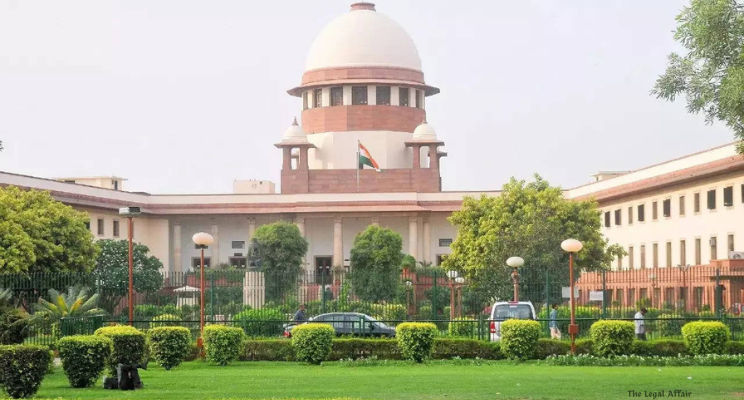
Introduction:
The Supreme Court, in Criminal Appeal No. 577 of 2024, reversed the High Court’s decision and held that non-performance of a marriage at the booked venue doesn’t constitute cheating under Section 417 IPC. The case involved a failed marriage proposal where the complainant alleged that the accused, after receiving an advance for the marriage hall, married someone else. The High Court refused to quash the charge under Section 417 IPC, but the Supreme Court emphasized the need to prove fraudulent intent from the beginning for a cheating offence.
Arguments of Both Sides:
The complainant accused the respondent of cheating, relying on the failed marriage proposal and an advance payment for the marriage hall. The accused moved the Supreme Court seeking the quashing of criminal proceedings, arguing that there was no fraudulent intent or deception from the outset. The Court considered the requirement for evidence to establish a cheating offence and noted the absence of such evidence in the prosecution’s case.
Court’s Judgment:
Justices Sudhanshu Dhulia and P.B. Varale observed that to establish a cheating offence under Section 417 IPC, the intention to deceive must be present from the beginning. They highlighted the lack of evidence supporting fraudulent intent in the complaint. The Court stated, “There can be multiple reasons for initiating a marriage proposal, and then the proposal not reaching the desired end.” Consequently, the Supreme Court quashed the criminal proceedings under Section 417 IPC.