


Introduction:
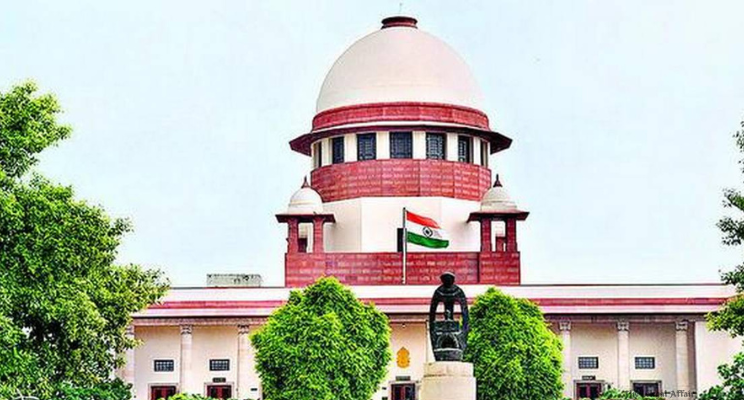
In Deepa Joshi v. Gaurav Joshi (2026 LiveLaw (SC) 387), the Supreme Court of India, through a Bench comprising Justice Sanjay Karol and Justice Augustine George Masih, delivered a significant ruling reinforcing the primacy of spousal maintenance over personal financial commitments. The case arose from a marital dispute where the appellant-wife sought maintenance under Section 144 of the Bharatiya Nagarik Suraksha Sanhita, 2023 after she began residing separately within a year of marriage and had no independent source of income. Initially, the Family Court granted ₹8,000 per month as maintenance, which was later enhanced to ₹15,000 per month by the Uttarakhand High Court. However, dissatisfied with the quantum, the wife approached the Supreme Court seeking a more realistic and dignified amount of maintenance, contending that the lower courts had failed to properly assess the husband’s actual earning capacity.
Arguments on Behalf of the Appellant (Wife):
The appellant-wife strongly contended that the maintenance awarded by the courts below was inadequate and failed to reflect the true financial capacity of the husband. She argued that the husband, being employed as a bank manager with a substantial monthly income, had the means to provide higher maintenance. However, the courts had incorrectly relied on deductions shown in his salary, particularly loan repayments and other financial obligations, to reduce the quantum of maintenance.
It was submitted that such deductions were not essential expenditures but rather voluntary financial commitments undertaken by the husband, often resulting in the creation of assets. The appellant emphasized that these financial decisions should not be allowed to diminish the statutory obligation of maintenance. She further argued that the purpose of maintenance is to ensure that a spouse, particularly one without independent income, can live with dignity and maintain a standard of living reasonably comparable to that enjoyed during the subsistence of marriage.
The appellant also highlighted her vulnerable position, pointing out that she had no independent source of income and had been living separately shortly after marriage. Therefore, she required adequate financial support to sustain herself. She argued that the amount awarded by the High Court was insufficient to meet even her basic needs, let alone ensure a dignified existence.
Arguments on Behalf of the Respondent (Husband):
On the other hand, the respondent-husband defended the quantum of maintenance fixed by the High Court, arguing that it was fair and reasonable given his financial circumstances. He contended that his disposable income was significantly reduced due to various financial liabilities, including loan repayments and other commitments.
The respondent argued that these deductions were legitimate and reflected his actual financial position. He maintained that the courts below had rightly taken into account his net income rather than gross income while determining maintenance. According to him, ignoring these deductions would place an excessive financial burden on him and disrupt his financial stability.
He further submitted that maintenance should be determined in a balanced manner, considering both the needs of the wife and the financial capacity of the husband. He cautioned against fixing an amount that would be oppressive or unreasonable, emphasizing that he too had financial responsibilities and commitments that needed to be honored.
Judgment:
The Supreme Court, after carefully considering the submissions of both parties, undertook a detailed analysis of the principles governing maintenance. The Court reiterated that the primary objective of maintenance is to prevent destitution and to ensure that a spouse without independent means can live with dignity. It emphasized that maintenance is not merely a legal obligation but a reflection of social justice embedded within the framework of matrimonial law.
A key issue before the Court was whether deductions arising from loan repayments and other financial commitments could be treated as necessary expenditures for the purpose of determining maintenance. The Court answered this in the negative, holding that such deductions, particularly when they contribute to the creation of assets, cannot be equated with essential or unavoidable expenses.
The Bench observed that loan repayments often result in the acquisition of valuable assets and therefore partake the character of capital investment. As such, they cannot be used as a basis to substantially reduce the liability of maintenance. The Court made it clear that voluntary financial commitments undertaken by an individual cannot take precedence over the statutory duty to maintain a spouse.
The Court further noted that the husband in the present case was employed as a bank manager with a gross monthly income of ₹1,15,670. While acknowledging that certain deductions may legitimately reduce disposable income, the Court held that not all deductions can be treated equally. In particular, those leading to asset creation must be distinguished from necessary living expenses.
Emphasizing the importance of balancing competing considerations, the Court observed that the determination of maintenance must be fair, reasonable, and commensurate with the circumstances of both parties. It must ensure that the wife is able to sustain herself with dignity while also ensuring that the husband is not subjected to an excessive or disproportionate burden.
The Court also took into account the fact that the wife had no independent source of income and had been residing separately soon after marriage. This, in the Court’s view, strengthened her claim for adequate maintenance. It reiterated that the standard of living enjoyed during the marriage is a relevant factor in determining maintenance and must be taken into consideration.
In its final analysis, the Court concluded that the amount of ₹15,000 per month awarded by the High Court was insufficient and did not adequately reflect the financial capacity of the husband or the needs of the wife. It held that a sum of ₹25,000 per month would be more appropriate and would strike a just balance between the competing considerations.
Accordingly, the Supreme Court modified the judgment of the High Court and enhanced the maintenance payable to the wife to ₹25,000 per month. It also directed that the arrears be cleared within a period of three months and that future payments be made on or before the 7th day of each calendar month.
The judgment stands as a crucial precedent, reinforcing that maintenance obligations cannot be diluted by citing financial commitments that are voluntary in nature or result in asset creation. It underscores the principle that the duty to maintain a spouse is a primary obligation that must be fulfilled before attending to other financial arrangements.