


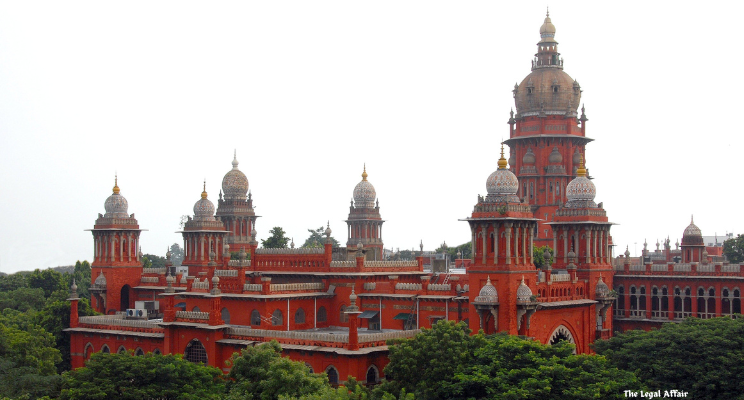
Introduction:
The case of V. Marisamy vs The Superintendent of Police, Tirunelveli and Others came before the Madras High Court, where a deeply disturbing incident involving the unnatural death of a 5-year-old UKG student within her school campus in March raised serious concerns about the integrity of the investigation and the systemic challenges faced by victims seeking justice. The matter was heard by a bench led by Justice B. Pugalendhi, who was confronted with a plea filed by the grieving father, V. Marisamy, seeking transfer of the investigation from the local police to an independent agency like CB-CID, citing apprehensions of bias, suppression of evidence, and deliberate inaction.
Arguments:
The petitioner’s case was rooted in the fundamental guarantee under Article 21 of the Constitution of India, which encompasses not only the right to life but also the right to a fair and impartial investigation. The tragic circumstances surrounding the child’s death painted a grim picture: the petitioner alleged that he was not even informed about the incident by the school authorities and came to know only upon seeing his daughter’s lifeless body at the hospital, an omission that he argued was both shocking and indicative of a larger attempt to conceal the truth. He further contended that the explanation offered by the school management—that the child was hit by a car driven rashly inside the campus by two outsiders—was implausible and raised several unanswered questions. The petitioner questioned how a vehicle could gain access to a school campus, especially where young children are present, and how such an incident could occur without proper security protocols being breached. He also emphasized that the CCTV footage, which could have served as crucial evidence to verify the sequence of events, was not shared with him despite repeated requests, thereby strengthening his suspicion that the death was not accidental but possibly a premeditated act. The petitioner’s arguments extended to the conduct of the local police, whom he accused of failing to act promptly and fairly. He pointed out that the FIR was registered belatedly, lacked critical details such as the identity of the accused, and that neither the accused nor the vehicle involved was immediately secured, thereby compromising the investigation at its very inception.
On the other hand, the State, represented by the Government Advocate, sought to defend the actions of the police and the narrative presented by the school management. It was submitted that the CCTV footage had indeed been recovered by the authorities and that the accused persons had been identified. The State further explained that the incident occurred when two individuals forcibly entered the school premises in a car despite objections from the watchman, and in the course of their reckless driving, struck the child, leading to her death. According to the State, the investigation was proceeding in accordance with law, and there was no deliberate attempt to shield the accused or suppress evidence.
Judgement:
However, the Court was not entirely convinced by these submissions and undertook a careful examination of the facts and circumstances presented before it. At the outset, the Court made strong observations about the changing nature of educational institutions in the country, lamenting the shift from a noble pursuit of knowledge to a profit-driven enterprise. Justice Pugalendhi remarked that education, once symbolized by Goddess Saraswati and considered sacred, had increasingly become commercialized, often at the cost of accountability and ethical responsibility. This observation was particularly relevant in the present case, where the school management, which also operated a multispeciality hospital opposite the campus, allegedly failed in its basic duty to inform the child’s parents about the incident in a timely manner. The Court found this conduct deeply troubling and indicative of a lack of transparency. It further noted that the school management appeared to have suppressed crucial information, including details about the vehicle involved, which could have enabled the police to act swiftly and possibly apprehend the accused on the same day. The Court observed that such delays could have serious consequences, including the loss of opportunity to determine whether the accused was under the influence of alcohol or otherwise impaired at the time of the incident. Turning its attention to the role of the police, the Court expressed dissatisfaction with the manner in which the investigation was conducted. It highlighted several lapses, including the delayed registration of the FIR, the absence of key details in the complaint, and the failure to immediately seize the vehicle or secure the accused. These shortcomings led the Court to question whether the investigation was being carried out with the diligence and impartiality expected of law enforcement agencies. In a candid and critical observation, the Court remarked that in the existing system, poor victims often struggle to obtain justice, a statement that underscored the broader systemic issues at play. The Court recognized that a fair investigation is not merely a procedural requirement but a fundamental right intrinsic to the right to life under Article 21. It emphasized that the credibility of the criminal justice system depends on the confidence of victims and their families in the fairness of the investigative process. In light of these considerations, the Court concluded that the present case warranted intervention to ensure that justice is not only done but is seen to be done. However, instead of immediately transferring the investigation to the CB-CID, the Court adopted a measured approach. It directed the Superintendent of Police, Tenkasi, to withdraw the case from the existing investigating officer and assign it to a sincere and competent senior officer, either at the rank of Deputy Superintendent of Police or Inspector of Police. This direction was aimed at restoring confidence in the investigation while allowing the process to continue without unnecessary disruption. Additionally, the Court issued specific directions to enhance transparency and accountability in the investigation. It ordered that a copy of the CCTV footage recovered from the school premises be provided to the petitioner, thereby enabling him to independently assess the evidence and reducing the scope for suspicion. The Court also directed the new investigating officer to determine the exact time and sequence of the incident by examining not only the school staff but also students and the watchman, ensuring a comprehensive and unbiased inquiry. Furthermore, the Court mandated that the progress of the investigation, along with the postmortem report, be shared with the petitioner, thereby fostering a sense of trust and participation in the process. Importantly, the Court left the door open for further judicial intervention by granting liberty to the petitioner to approach the High Court again if the investigation continues to be unsatisfactory. This safeguard reflects the Court’s commitment to ensuring that the pursuit of justice remains dynamic and responsive to the needs of the victim’s family. Ultimately, the judgment stands as a powerful reminder of the judiciary’s role in safeguarding fundamental rights and addressing systemic failures. By acknowledging the challenges faced by marginalized victims and taking concrete steps to ensure a fair investigation, the Court reinforced the principle that justice must be accessible, transparent, and impartial, regardless of the social or economic status of the parties involved.