


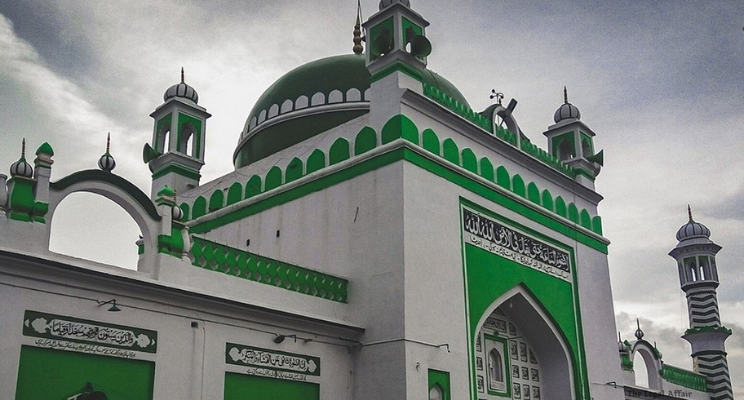
Introduction:
The Supreme Court of India, on November 29, 2024, deliberated on a sensitive dispute surrounding the Sambhal Shahi Jama Masjid, hearing a petition challenging a trial court’s order for a survey of the mosque. The case has its roots in claims that the Shahi Jama Masjid in Chandausi, Sambhal, was built by Mughal Emperor Babar in 1526 after demolishing a temple. This claim resulted in the trial court’s direction for a survey, triggering violence that left four people dead. The Shahi Jama Masjid Committee sought the Supreme Court’s intervention, contending the trial court’s ex-parte order was improper. The Court emphasized the importance of peace and communal harmony, suggesting mediation under Section 43 of the Mediation Act, 2023, and directed the petitioners to approach the High Court for relief.
Petitioners’ Arguments (Shahi Jama Masjid Committee):
The Shahi Jama Masjid Committee challenged the November 19 ex-parte order by the Sambhal trial court that directed the court commissioner to survey the mosque. The petitioners argued that the order was arbitrary and detrimental to communal harmony. They contended that no opportunity was given to the mosque committee to present its case before the survey order was passed. They expressed concerns about the potential misuse of the survey to incite tensions and violence in the region. The Committee called for the Supreme Court to quash the trial court’s directive and ensure that the report of the survey is sealed to prevent further unrest.
Respondents’ Arguments (Plaintiffs in the Original Suit):
The respondents in the original suit, represented by individuals who claim the mosque was constructed over a demolished temple, argued that their assertions warranted investigation. They maintained that historical records and local narratives supported their claims. The plaintiffs further contended that the survey was necessary to substantiate their case and that the trial court’s order was within its jurisdiction.
State Government’s Arguments:
The Additional Solicitor General (ASG), appearing for the State of Uttar Pradesh, underscored the government’s intent to maintain law and order. The ASG assured the Court that the state had no intention of allowing communal tensions to escalate. The government expressed openness to mediation under Section 43 of the Mediation Act, agreeing with the Court’s suggestion to form a peace committee involving community stakeholders.
Court’s Observations and Judgment:
The Supreme Court, led by Chief Justice of India Sanjiv Khanna and Justice Sanjay Kumar, approached the matter with a focus on fostering peace and communal harmony. The Court orally emphasized the importance of avoiding actions that could escalate tensions or result in violence. Referring to Section 43 of the Mediation Act, 2023, the Court highlighted the provision for community mediation in disputes likely to disrupt peace. The bench suggested that the Uttar Pradesh Government establish a peace committee composed of neutral and respected community members to mediate and promote dialogue.
In its interim directions, the Supreme Court advised the Masjid Committee to approach the High Court for challenging the trial court’s survey order. It restrained the trial court from proceeding with any further actions until the High Court listed the matter. Additionally, the Court directed that the survey report be kept sealed to ensure it does not become a flashpoint for further tensions. The bench underlined the need for absolute neutrality in handling the case to ensure fairness and avoid any semblance of bias.