


Introduction:
On November 28, 2024, the Kerala High Court delivered a significant ruling regarding the issue of photography and videography at the Sabarimala temple, particularly around the sanctum, Pathinettam Padi (eighteen holy steps), and Thirumuttam. In a suo motu case (SSCR 79 of 2024), the Division Bench consisting of Justice Anil K. Narendran and Justice Muralee Krishna decided that photography, including both photos and videos, will not be allowed in these specific areas, except for official ceremonies and festivals. This order was passed in response to the ongoing issue of pilgrims and vloggers disregarding the existing ban on photography in the sacred areas of the temple, despite multiple notices and warnings being issued. The Court had previously expressed concern over the security and sanctity of the temple, highlighting the sensitive nature of the area, which is designated as a Special Security Zone. The Travancore Devaswom Board (TDB), which manages the Sabarimala temple, had submitted evidence that pilgrims were continuing to use mobile phones for photography and videography in restricted areas, undermining the existing bans. The Devaswom Board had sought the Court’s intervention, presenting their case that such acts were disrupting the spiritual atmosphere of the temple and potentially violating the sanctity of the sacred space.
Arguments of the Parties:
The Travancore Devaswom Board, in its submission before the Court, highlighted several issues arising due to unauthorized photography in the temple, particularly the taking of photos and videos in the Thirumuttam and Pathinettam Padi areas. Despite clear instructions and the installation of boards warning against such activities, pilgrims continued to defy the rules, creating a problematic situation. The Devaswom Board specifically pointed out that vlogs, selfies, and videos taken by devotees, especially near the Thirumuttam and Pathinettam Padi, were undermining the spiritual ambiance of the sacred temple space. The Board also mentioned that these acts were disruptive, both in terms of the overall pilgrimage experience and in terms of the temple’s administration, as it had to spend considerable resources enforcing these rules without seeing effective compliance.
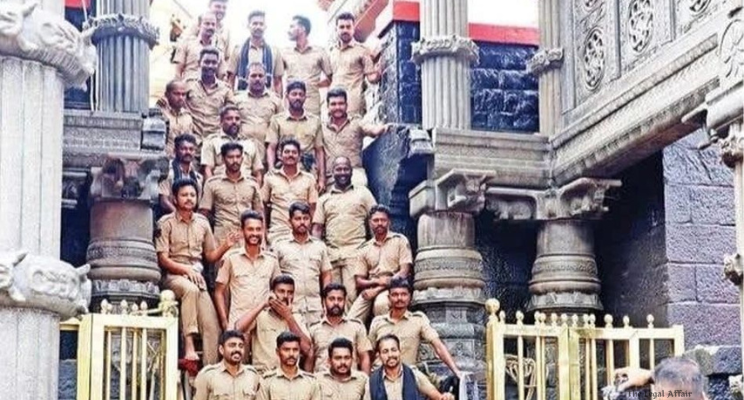
The Kerala police, who are tasked with ensuring the security of the temple premises, also submitted their concerns. During one of the earlier hearings, the Chief Police Coordinator for Sabarimala had disclosed that some police officers had themselves violated the rules by taking photographs while standing on the Pathinettam Padi. The Court took note of this issue and urged the police to take appropriate action against the errant officers. This raised an important point regarding the role of authorities in upholding the sanctity of the temple and ensuring that pilgrims adhere to the rules, especially when law enforcement officers themselves are violating these directives.
Additionally, the Devaswom Board also raised other concerns about the behavior of pilgrims, such as instances of devotees throwing clothes onto the roof of the Malikapuram temple and engaging in rituals like pouring turmeric on the temple walls or rolling coconuts around the temple. These practices were not part of any formal ritual and were viewed as disruptive actions that affected the temple’s sanctity and the experience of other pilgrims. The Court acknowledged that similar incidents had occurred during the previous Madalam-Makaravilakku season and that such practices should be addressed promptly.
In response to these concerns, the Court agreed with the Devaswom Board’s request to issue further instructions to manage such disruptions. The Devaswom Board was directed to use public address systems at key points such as Nilakkal, Pamba, Sannidhanam, and the trekking path to make announcements, urging pilgrims to refrain from such non-ritualistic and disruptive actions at the Malikapuram temple. The Court noted that while some of these activities might be seen as part of individual devotion, they were ultimately causing inconvenience to other pilgrims and were not in alignment with the rituals sanctioned by the temple authorities.
Court’s Judgment:
In light of the submissions from both the Travancore Devaswom Board and the Kerala police, the Kerala High Court issued a clear and firm order regarding the issue of photography and videography at the Sabarimala temple. The Court ruled that photography would not be allowed in the sanctum of the temple, as well as in the areas of Pathinettam Padi and Thirumuttam, except during official ceremonies and religious festivals. This restriction, the Court emphasized, was essential to preserve the sanctity of the temple and maintain the spiritual atmosphere of the pilgrimage experience. The Court noted that these specific areas of the temple held immense religious and cultural significance, and the taking of photos or videos could be seen as a violation of the sacredness of the space, leading to distractions during one of the holiest pilgrimages in India.
Furthermore, the Court cautioned against the growing trend of vloggers and pilgrims using the temple as a backdrop for personal content creation. The Division Bench remarked that such acts of photography and videography, particularly during the pilgrimage when devotees are moving towards the Pathinettam Padi or heading for darshan, were inappropriate and could lead to disruptions. The Court directed that enforcement mechanisms be strengthened to ensure compliance with the ban, including the taking of appropriate action against anyone violating the rule, regardless of their status.
The Court also specifically addressed the issue of police officers violating the photography ban. In a pointed observation, it was noted that police officers had been seen taking photos while standing on the Pathinettam Padi, which was not in line with the high standards expected of law enforcement officers. The Court instructed the Chief Police Coordinator to take action against those officers who had flouted the rules and to ensure that such instances did not recur in the future.
Regarding the other disruptive practices, the Court acknowledged the concerns raised by the Devaswom Board about pilgrims throwing clothes onto the roof of the Malikapuram temple, pouring turmeric over the temple’s walls, and rolling coconuts around the temple. The Court noted that these practices were not part of the prescribed rituals and were causing unnecessary disturbance to both the temple and other devotees. To address this, the Court directed the Devaswom Board to issue public announcements via the public address system at strategic points along the pilgrimage route, informing pilgrims of the inappropriate nature of these actions and urging them to refrain from such behavior. The Court emphasized that such activities were both a distraction and an inconvenience to other devotees and could negatively affect the sanctity of the pilgrimage.
In a broader sense, the judgment sought to balance the need for preserving the temple’s religious sanctity with the rights of individuals to express their devotion in a manner that did not disrupt the collective experience of other pilgrims. The Court underscored the importance of protecting public order while ensuring that devotees could continue their pilgrimage in a manner that was respectful of the temple’s sacred traditions and practices.
Conclusion:
The Kerala High Court’s ruling on November 28, 2024, on the issue of photography and videography in the Sabarimala temple represents a significant step towards preserving the sacredness of one of the most revered pilgrimage sites in India. The Court’s decision to ban photography in the sanctum, Pathinettam Padi, and Thirumuttam, except during official ceremonies and festivals, underscores the importance of maintaining the spiritual and religious atmosphere of the temple. This ruling is aimed at protecting the temple’s sanctity from being compromised by distractions caused by photography, especially in areas of significant religious importance. The Court also addressed the concerns raised by the Devaswom Board regarding the disruptive practices of some pilgrims, directing them to issue clear instructions and announcements to discourage such behavior. In doing so, the Court sought to strike a balance between protecting the temple’s traditions and ensuring that the rights of devotees are respected in a manner that fosters communal harmony and respect for sacred spaces.
This judgment not only reaffirms the sanctity of the Sabarimala temple but also highlights the need for careful enforcement of rules and the importance of maintaining public order during religious events and pilgrimages.