


Introduction:
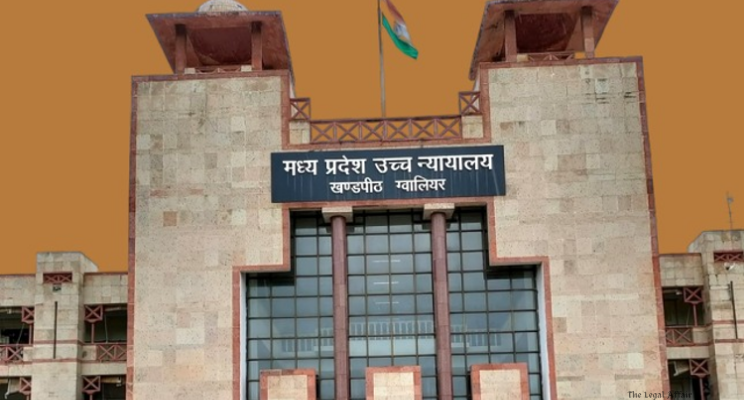
In Shailendra Verma v. State Bar Council, reported as 2025:MPHC-JBP:69882, the Madhya Pradesh High Court delivered a stern and precedent-setting judgment reaffirming that statutory bodies, including State Bar Councils, are bound by their own rules and cannot resort to administrative convenience, personal discretion, or institutional inertia to bypass mandatory qualifications and prescribed procedures. A Division Bench comprising Chief Justice Sanjeev Sachdeva and Justice Vinay Saraf set aside the orders granting out-of-turn promotions to Geeta Shukla, who was elevated directly from the post of Lower Division Clerk (LDC) to Assistant Secretary, and subsequently to Secretary of the Madhya Pradesh State Bar Council, despite being unqualified and having secured abysmally low marks in the prescribed suitability examination. The Court found that the promotions were granted solely on the ground that she had been discharging the duties of Acting Secretary, and not on the basis of merit, seniority, or compliance with the Advocates Act, 1961, and the Bar Council’s General and Service Rules. The petitions were filed by elected members of the MP State Bar Council, who challenged the legality of the promotions as arbitrary, unconstitutional, and destructive of institutional integrity, especially given the critical role of the Secretary in the functioning of a statutory body governing the legal profession.
Arguments of the Petitioners:
The petitioners, represented by Senior Advocate Shashank Shekher, assisted by Advocates Amanulla Usmani, Bhoopesh Tiwari, and Greeshm Jain, argued that the promotion of Geeta Shukla was a textbook case of abuse of power and colourable exercise of authority. It was contended that she was granted an unprecedented and impermissible jump of six hierarchical posts, directly from LDC to Assistant Secretary, and then to Secretary, without following any procedure prescribed under the General Rules and Service Rules of the Bar Council. The petitioners emphasized that promotions within the Council are governed by the principle of merit-cum-seniority, based on recommendations of the Executive Committee and approval of the General Body, and that a Suitability Test, conducted every two years under Rule 9, is mandatory to assess competence. In the suitability test conducted in 2019, Shukla allegedly scored only 5 marks, securing the 12th rank, whereas the highest scorer obtained 40 marks, clearly demonstrating that she was far from meritorious. Despite this, no appointment was made on the basis of the test results, and the entire recruitment process was inexplicably abandoned. The petitioners further submitted that Shukla did not possess the mandatory qualifications for the post of Secretary, which requires a law degree and enrolment as an advocate with requisite standing. It was specifically asserted that she was in full-time employment while pursuing a law course, making her enrolment as an advocate itself questionable. The petitioners argued that Section 11 of the Advocates Act mandates the appointment of a qualified Secretary, and allowing an unqualified person to occupy such a vital post undermines the credibility of the Bar Council and the legal profession as a whole.
Arguments of the Respondents:
Appearing for Geeta Shukla, Senior Advocate Sanjay K. Agrawal, assisted by Advocate Sharon Agrawal, defended the promotions by asserting that Shukla was a law graduate, enrolled as an advocate, and had efficiently discharged the responsibilities of Acting Secretary for several years, demonstrating administrative competence, control over staff, and sound knowledge of accounts. It was argued that her appointment was not arbitrary but based on her proven experience and the institutional need to ensure continuity in administration. The MP State Bar Council, represented by Senior Advocate K.C. Ghildiyal with Advocate Warija Ghildiyal, contended that the Chairman acted within his powers under Rule 9 of the General Rules, which confers general control and supervisory authority over the affairs of the Council. It was submitted that no one else was willing to take up the responsibilities of Secretary, and therefore, Shukla was appointed as Acting Secretary in the interest of smooth functioning. The Bar Council of India, through Advocate Aditya Veer Singh, broadly supported the institutional autonomy of State Bar Councils, arguing that internal administrative decisions should not be lightly interfered with unless there is clear illegality. The respondents attempted to justify the promotions as exceptional measures necessitated by administrative exigencies, rather than routine or mala fide actions.
Court’s Judgment:
The Madhya Pradesh High Court categorically rejected the respondents’ contentions and held that administrative convenience cannot override statutory mandates. The Bench emphatically ruled that the power of general control and supervision vested in the Chairman does not authorise him to ignore or bypass the General Rules, Service Rules, and the Advocates Act, 1961. The Court observed that Section 11 of the Advocates Act expressly mandates the appointment of a Secretary possessing prescribed qualifications, and such requirements are mandatory, not directory. The Bench found no merit in the argument that Shukla was appointed because no one else was willing to shoulder the responsibility, holding that if that were the case, the Council ought to have immediately initiated a lawful recruitment process instead of allowing an unqualified person to continue as Acting Secretary for nearly four years. The Court noted that there are only two permissible modes of appointment—promotion and direct recruitment—and both require strict adherence to qualifications and procedure. It took serious note of the fact that although an advertisement for direct recruitment was issued in January 2019 requiring five years’ practice as an advocate, the process was abandoned for unexplained reasons, after which Shukla was elevated through a series of irregular orders. The Bench held that even an exceptionally meritorious candidate cannot be granted a jump of six posts, and Shukla could not, by any standard, be described as meritorious given her extremely low examination score. The Court concluded that her promotions were granted solely because she was already discharging the duties of Acting Secretary, which is legally impermissible. Consequently, the Bench set aside the promotion orders, reinstated Shukla to the post of Lower Division Clerk, and directed the MP State Bar Council to appoint a qualified Secretary strictly in accordance with the Rules within two months, thereby restoring the primacy of merit, qualification, and rule of law in statutory appointments.