


Introduction:
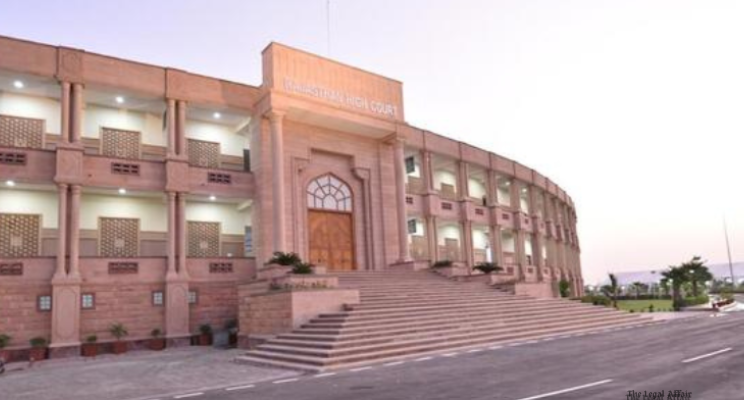
The Rajasthan High Court in a significant judgment emphasized the importance of family welfare, education of children, and compassionate governance by setting aside the order of the Central Administrative Tribunal (CAT) that had rejected a plea filed by an employee seeking deferment of his transfer on account of his daughter’s upcoming Class 12 board examinations. The case titled Pushkar Naraian Sharma v Union of India & Ors., 2025 LiveLaw (Raj) 317 was decided by a division bench comprising Justice Sanjeev Prakash Sharma and Justice Sanjeet Purohit, who underscored that while the Central and State Governments publicly promote the campaign of “Beti Bachao, Beti Padhao”, their own officers often remain immune to the genuine requirements of young girls who are preparing for critical examinations. The petitioner, Pushkar Naraian Sharma, a Sub-Divisional Engineer working in Rajasthan Circle, was transferred to Karnataka but he approached CAT with the request to postpone his transfer until March 2026 so that his daughter could appear in the Class XII Board examinations in Jaipur without disruption. CAT, however, dismissed his plea, holding that service exigencies and administrative discretion prevailed. Aggrieved by this decision, Sharma approached the High Court.
Arguments:
The petitioner’s arguments before the High Court revolved around his fundamental right to family life and the need to ensure a stable academic environment for his daughter, who was about to face the most important phase of her schooling career. His counsel argued that sudden displacement of her father to a different state would cause mental and emotional turmoil both for the family and particularly for the girl child, who needed a conducive environment to concentrate on her studies and perform in her board examinations. It was submitted that education of a girl child is a priority not just for the family but is also a policy commitment of the Union and State governments, who cannot in practice disregard such considerations by mechanically ordering transfers. The petitioner highlighted that under Article 21 of the Constitution, the right to life includes the right to live with dignity, mental peace, and a balanced family environment, all of which would be jeopardized if he were forced to relocate during his daughter’s crucial academic phase. He further pointed out that he had already served for more than two decades in Rajasthan, his entire family was settled there, and uprooting them at this stage would cause disproportionate hardship compared to any administrative inconvenience to the respondents. He clarified that he was not seeking cancellation of transfer altogether but merely a deferment till March 2026, after which he would willingly comply with his new posting order.
On the other hand, the State and Union authorities strongly resisted the plea, arguing that transfers are an incidence of service and employees cannot claim exemption as a matter of right. It was contended that there were several similar applications pending from other employees and if the petitioner’s request were accepted, it would open floodgates for all such pleas, making it administratively impossible for departments to implement transfer policies. The respondents further pointed out that the petitioner had already worked in Rajasthan Circle for 23 years, which itself indicated that he had enjoyed long stability and could not now claim that transfer was oppressive. The government’s counsel stressed that personal hardships, while sympathetic, could not override administrative exigencies and that service discipline would collapse if every employee were allowed to postpone or avoid transfers based on family needs. They maintained that the CAT’s decision was correct, as courts and tribunals generally refrain from interfering in routine transfers unless mala fides or violation of statutory rules is proven, which was not the case here.
Judgement:
The High Court, after carefully evaluating the submissions, took a humanitarian and welfare-oriented approach. Justice Sanjeev Prakash Sharma, speaking for the bench, observed that while the authorities were right in pointing out the administrative challenges of entertaining multiple such requests, the role of the State as a welfare entity required a compassionate and case-sensitive approach, particularly when the issue pertained to the education of a girl child. The Court expressed dismay that the very government which vocally promoted the slogan of “Beti Bachao, Beti Padhao” was ignoring the lived realities of families whose daughters were at critical junctures of their education. The bench noted that forcing an employee to shift to another state during his daughter’s Class 12 examinations would not only disturb his mental well-being but also directly affect the child’s preparation and performance, thereby undermining the larger societal objective of empowering girls through education.
The Court emphasized that transfers, though an incidence of service, cannot be viewed in isolation from the constitutional rights of employees and their families. It reminded the authorities that Article 21 guarantees the right to life and liberty, which includes mental health, family life, and education of children. When administrative decisions directly impact these rights, the State must act with sensitivity rather than rigidity. The bench stated that if an employee of the level of Sub-Divisional Engineer or lower rank is transferred from one state to another, it naturally affects the entire family unit. The well-being of children, particularly when they are about to face board examinations, becomes a matter of paramount concern and cannot be brushed aside as a mere personal hardship. The Court rejected the slippery-slope argument of the State that granting relief in one case would have catastrophic effects on all others, stating that each case must be evaluated on its own facts and the presence of a crucial educational milestone like Class 12 Board exams was a unique and weighty circumstance.
The High Court also observed that forcing employees to work under conditions of mental distress caused by separation from their families or disruption of their children’s education would ultimately impact their work efficiency and performance. Thus, compassionate decision-making is not only in the interest of employees and their families but also in the interest of the administration itself. The Court highlighted that transfers should not become instruments of hardship but must balance organizational needs with humane considerations. In its analysis, the bench concluded that Sharma’s request was reasonable, time-bound, and in harmony with constitutional values, and therefore deserved acceptance.
Accordingly, the High Court set aside the CAT’s order and directed the respondents to allow the petitioner to continue his posting in Rajasthan Circle at Jaipur until March 2026, thereby enabling his daughter to complete her Class 12 board examinations in a stable environment. The Court clarified that after March 2026, the authorities would be free to relieve him and direct him to join at his transferred place of posting. This balanced approach preserved the administrative right of transfer while simultaneously safeguarding the educational and emotional needs of the petitioner’s family.
The judgment stands out as a reaffirmation of the judiciary’s role in ensuring that administrative decisions respect constitutional rights and welfare values. It places education of children, especially girls, at the center of service jurisprudence and reminds the State that slogans like “Beti Bachao, Beti Padhao” must translate into real action on the ground. The ruling also reinforces the principle that compassionate governance enhances rather than diminishes administrative efficiency. By treating education as a vital factor in transfer disputes, the Rajasthan High Court has set an important precedent for future cases where family welfare and children’s needs intersect with service exigencies.