


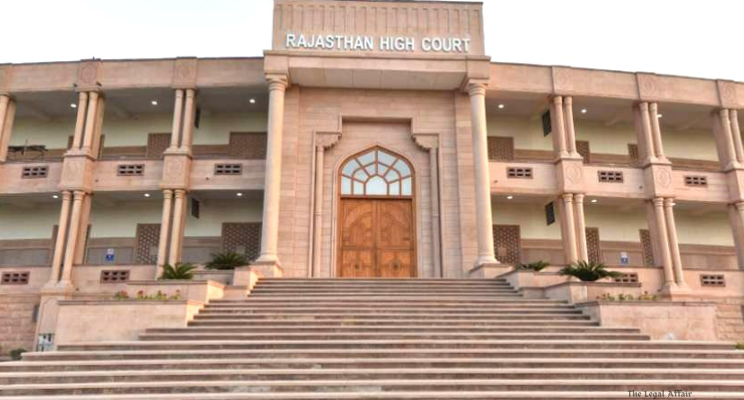
Introduction:
In a notable decision, the Rajasthan High Court directed the admission of a student into the Shri School Jawahar Navodaya Vidyalaya, despite the student not completing a full academic session in the 3rd standard due to COVID-19-related delays. The case, titled Devendra Prajapat v. Union of India and Ors., centered around a writ petition filed by the student’s natural guardian challenging the decision of the School’s principal to deny admission. The petitioner had completed the necessary academic years in the 4th and 5th standards but was unable to meet the condition of attending a full academic session in the 3rd standard due to the delays in the commencement of the 2021-22 academic year, which had been affected by the global health crisis. The School had refused admission based on the guideline which required the candidate to have attended three full academic sessions in the 3rd, 4th and 5th standards. The denial of admission was rooted in the argument that the petitioner had not completed a full academic year in the 3rd standard, as stipulated by the guidelines, despite having completed full academic sessions in the 4th and 5th standards.
Arguments:
The counsel for the petitioner contended that the delay in the commencement of the 3rd standard session, caused by the unprecedented COVID-19 pandemic, was beyond the control of the student. They argued that it was unreasonable and arbitrary to deny the student admission based on this technicality, especially when the student had met the requirements for the 4th and 5th standards.
On the other hand, the respondents, represented by the counsel for the School, argued that the guidelines specified that a candidate must have completed one full academic session in each of the three standards—3rd, 4th, and 5th—to be eligible for admission. They emphasized that this requirement was set out to maintain uniformity and fairness in the selection process and that the petitioner did not meet these criteria.
Judgement:
The court, however, took a sympathetic view, recognizing the exceptional circumstances surrounding the pandemic. It observed that the global health crisis and the subsequent disruption to education constituted a case of force majeure, a situation beyond the petitioner’s control. The court noted that educational institutions were closed, admission processes were delayed, and the usual academic schedule was disrupted for several months. Given these unprecedented challenges, the court found that denying admission to the petitioner on the grounds of not completing a full academic session in the 3rd standard was unreasonable.
Justice Vinit Kumar Mathur, in his ruling, held that the interpretation of the guideline in question should be liberal, particularly in a situation where the student’s inability to fulfil the requirement was due to circumstances beyond his control. The court emphasized that the petitioner had completed full academic sessions in the 4th and 5th standards, and that should have been sufficient to allow for his admission. The court further pointed out that a rigid application of the guidelines in this case would result in an unfair outcome, contradicting the principles of justice and equity.
The court also acknowledged the need for flexibility in the interpretation of such admission guidelines, particularly in the context of primary and upper-primary education, where a degree of leniency could be afforded. The bench reasoned that providing the petitioner with the opportunity to complete his education at the School would not undermine the integrity of the admission process but would rather serve to support the student’s right to education, especially in light of the extraordinary circumstances of the pandemic.
In its final order, the Rajasthan High Court directed the respondents to immediately admit the petitioner to the Shri School Jawahar Navodaya Vidyalaya, allowing him to attend classes without further delay. The decision highlighted the need for educational institutions to adopt a compassionate and reasonable approach, especially when the applicant’s failure to meet certain criteria is due to factors beyond their control.