


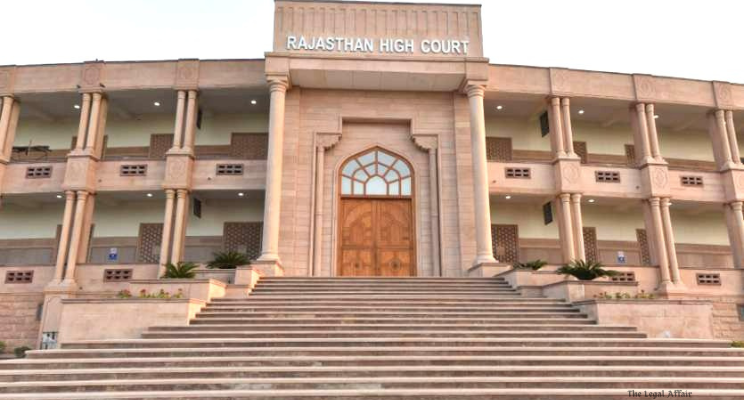
Introduction:
In a matter concerning delays in essential infrastructure projects at AIIMS Jodhpur, the Rajasthan High Court, Jodhpur Bench, expressed serious discontent over the State Government’s prolonged inaction. The case, Chandra Shekhar v. State of Rajasthan, revolved around critical deficiencies in healthcare facilities, particularly the delayed construction of a trauma centre. A division bench comprising Justice Pushpendra Singh Bhati and Justice Munnuri Laxman strongly criticized the State Government for its apathy, attributing the delays to bureaucratic hurdles, including the failure to relocate high-tension electrical lines for over 16 years. The Court underscored the fundamental nature of the Right to Health as an integral aspect of the Right to Life under Article 21 of the Constitution of India. It further observed that the State’s inability to remove these impediments was tantamount to criminal negligence, causing unnecessary suffering to the public and denying them access to timely medical care. While the Court considered imposing a cost of Rs. 50 crore on the State and initiating criminal action against erring officials, it granted the government one final opportunity to file an affidavit addressing the concerns.
Arguments of Both Sides:
The petitioner, Chandra Shekhar, highlighted the severe infrastructural deficiencies at AIIMS Jodhpur, particularly the incomplete trauma centre, which was essential for providing critical medical care. It was argued that the delays in relocating the high-tension electrical lines had hampered the centre’s construction, depriving citizens of basic healthcare facilities and endangering lives. The petitioner also pointed out other issues, such as water contamination, inadequate spatial arrangements, and the need for additional land to meet expanding infrastructure requirements.
The State Government, represented by the Additional Advocate General (AAG), admitted to the delays but sought to justify them by citing procedural challenges and bureaucratic inefficiencies. The AAG requested additional time to resolve the issues, particularly the removal of high-tension lines, and assured the Court of the State’s commitment to expediting the pending projects. The AAG also opposed the imposition of costs and criminal action, arguing that such measures would further strain government resources and delay progress.
Court’s Observations and Judgment:
After examining the submissions, the High Court expressed its dissatisfaction with the State Government’s explanations, terming the 16-year delay in removing the high-tension electrical lines as “extreme apathy” and “gross negligence.” The Court noted that the trauma centre, which spanned an area of 54,358 square meters, could have saved countless lives had it been operational. Justice Bhati and Justice Laxman observed that such delays violated the citizens’ fundamental right to health and dignity under Article 21 of the Constitution.
The Court underscored that India, as a welfare state, has a constitutional obligation to provide effective healthcare facilities. It emphasized that the delays not only hindered the trauma centre’s construction but also led to significant deficiencies in medical and diagnostic services, forcing patients to endure long waiting periods of 1-2 months for basic treatments.
The Bench took a stern view of the State Government’s apathy, proposing the imposition of Rs. 50 crore as costs to enhance AIIMS Jodhpur’s facilities and criminal action against responsible officials. However, in the interest of justice, the Court granted the State one last opportunity to file an affidavit explaining the delays and outlining a concrete plan to remove the high-tension lines and complete the trauma centre.
The Court also framed six key issues to address the broader concerns regarding AIIMS Jodhpur’s infrastructure:
- The 16-year delay in removing high-tension electrical lines has stalled the trauma centre’s construction.
- Water contamination issues within the AIIMS campus.
- The feasibility of transferring land from the Central Arid Zone Research Institute (CAZRI) to AIIMS to address spatial constraints.
- Exploring short-term parking solutions to accommodate the growing number of visitors.
- Utilizing the recently vacated HPCL campus to support AIIMS’s infrastructure needs.
- Relocating Transport Nagar to facilitate AIIMS’s expansion.
The Court directed the State to collaborate with the Union Government, AIIMS authorities, and other stakeholders to ensure timely resolution of these issues. It emphasized that the development of medical infrastructure was a joint responsibility and required coordinated efforts from all government bodies.
In conclusion, the Court adjourned the matter to February 6, 2025, directing the State to submit its affidavit by then. The Bench warned that failure to comply with the directives would result in the imposition of costs and legal action against the erring officials.