


Introduction:
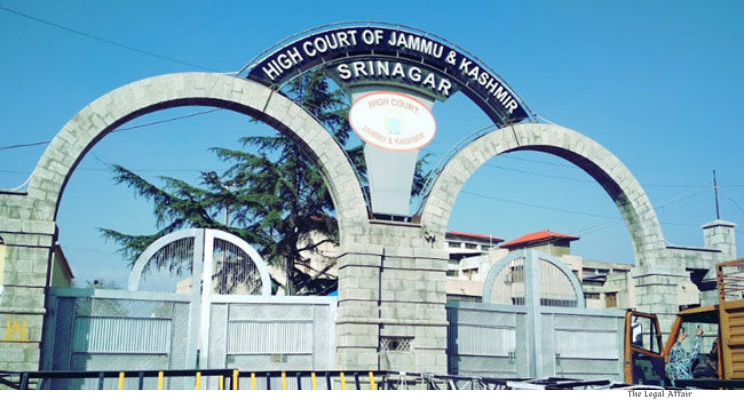
The Jammu and Kashmir and Ladakh High Court, in Building Operation Controlling Authority (BOCA) v. Renu Gupta, reinforced the foundational principle of administrative law that authorities must adhere strictly to the grounds mentioned in a show cause notice. Justice Wasim Sadiq Nargal ruled that expanding allegations beyond the scope of the notice undermines principles of natural justice and renders subsequent actions unsustainable. The dispute arose when the BOCA of the Jammu Municipal Corporation accused Renu Gupta, a resident of Greater Kailash, Jammu, of unauthorized construction. Initially, a show cause notice under Section 7(1) of the Jammu & Kashmir Control of Building Operations Act, 1988 (COBOA), was issued for constructing an unauthorized second floor. Later, the demolition order under Section 7(3) expanded to include violations on the ground and first floors, leading Gupta to challenge the order before the J&K Special Tribunal, which quashed it. BOCA contested this decision before the High Court, leading to significant deliberations on procedural safeguards and natural justice.
Arguments by the Petitioner:
BOCA, represented by counsel, argued that Gupta had committed significant violations of COBOA, including constructing an unauthorized second floor, exceeding permissible ground coverage by 21% on the ground floor and 16.3% on the first floor, and encroaching upon setback areas. BOCA contended that these violations were major and non-compoundable under COBOA regulations, posing a threat to planned urban development. It argued that the Tribunal erred in quashing the demolition order and overlooked the gravity of the infractions. The petitioner asserted that Gupta’s actions warranted immediate demolition to protect urban planning principles, and the Tribunal failed to adequately address the seriousness of the breaches. BOCA maintained that procedural deficiencies cited by the Tribunal were minor and did not invalidate the demolition order, especially given the scale of the violations. BOCA further urged the High Court to prioritize the need for planned development over procedural technicalities, emphasizing that the violations disrupted zoning and public interest.
Arguments by the Respondent:
Renu Gupta, represented by her counsel, argued that the demolition order violated her right to natural justice as it introduced allegations not mentioned in the original show cause notice. She contended that the notice under Section 7(1) only alleged unauthorized construction on the second floor, but the demolition order under Section 7(3) expanded the scope to include violations on the ground and first floors. Gupta argued that this procedural transgression deprived her of an opportunity to respond to these new allegations, making the order unsustainable. She maintained that any deviations from the approved plan were minor and arose from practical on-site challenges, with no significant impact on public interest or urban planning. Gupta also relied on legal precedents to argue that authorities cannot transgress the boundaries of a show cause notice and that such procedural violations invalidate subsequent actions. She urged the Court to uphold the Tribunal’s decision, which had quashed the demolition order due to procedural defects and violations of natural justice.
Court’s Judgment:
Justice Wasim Sadiq Nargal began by emphasizing the importance of procedural safeguards in administrative actions under COBOA. The Court highlighted that actions taken against individuals must strictly adhere to the grounds mentioned in the show cause notice, as any deviation undermines principles of natural justice. Reviewing the facts, the Court noted that the initial notice under Section 7(1) only alleged unauthorized construction on the second floor, but the demolition order under Section 7(3) expanded to include violations on the ground and first floors and encroachment upon setback areas. This procedural irregularity, the Court held, violated statutory mandates and deprived the respondent of a fair hearing. The Court observed that Section 7(1) of COBOA requires authorities to issue a notice detailing specific violations and allow the concerned party to respond before taking punitive action under Section 7(3). By including additional allegations in the demolition order, BOCA contravened these statutory requirements.
Justice Nargal referred to legal precedents to strengthen the ruling. The Court cited the Madras High Court’s decision in R. Ramadas v. Joint Commissioner of C. Ex. Puducherry (2021), held that show-cause notices must be specific and aligned with subsequent orders. The Court reproduced key observations, emphasizing that the foundation of administrative actions lies in the show cause notice, and authorities cannot traverse beyond its scope. The Court also referred to the Supreme Court’s judgment in the State of Punjab v. Davinder Pal Singh Bhullar & Ors. (2011), which stated that procedural illegality in initial actions invalidates all subsequent proceedings. Justice Nargal reiterated the legal maxim sublet fundamental cadit opus, meaning that when the foundation is removed, the structure falls. Applying this principle, the Court held that BOCA’s demolition order, being procedurally defective, was legally unsustainable. The Court underscored that procedural safeguards are essential in administrative actions to protect individuals’ rights and ensure fairness.
Concluding that BOCA’s actions violated statutory provisions and natural justice principles, the Court upheld the Tribunal’s decision and dismissed the writ petition. Justice Nargal emphasized that procedural compliance is not a mere technicality but a fundamental requirement of lawful administrative action.